
For most of the past 30 years, investing in the stock market was like hitting a golf ball with a 25 mph wind at your back. Even a duffer like me could reach the fairway.
The reason: borrowing money got cheaper almost every year. The ZIRP era, they called it – short for Zero Interest Rate Policy. The Federal Reserve and central banks around the globe made it so money was essentially free to borrow.
More News from Barchart
And whenever there was a hiccup, like in 2008, policymakers rushed in with emergency cash. Wall Street and corporate profits soared; stock prices exploded; and an entire generation of investors was taught that you don’t need a strategy: You just buy the SPDR S&P 500 ETF (SPY) or the Invesco QQQ Trust (QQQ) and let gravity do the rest.
Asset allocation – the art and science of deciding what to own, and how much of it, in your investment portfolio – was regarded in much the same way as badges in the Mel Brooks classic “Blazing Saddles”: We don’t need no stinkin’ asset allocation.
Then, that easy-money era officially hit a brick wall, starting in 2022.

Bond investors would have experienced this as the joy of higher rates, while prospective homebuyers likely experienced more of a sinking feeling, with mortgage rates uncomfortably elevated.
A third group – investors with balanced portfolio exposure – might have experienced something that’s in all too short supply these days: a good night’s sleep.
The Cockroach Portfolio: Origins
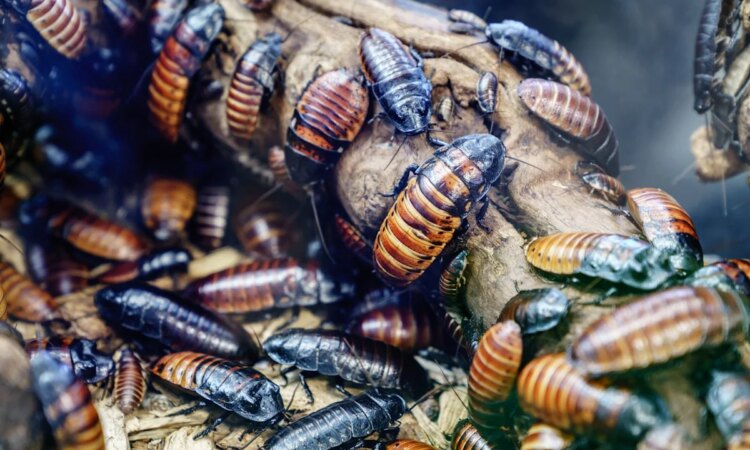
The inspiration for this week’s column comes from both nature’s ultimate survivor and from Société Générale strategist Dylan Grice, who in 2013 popularized the concept of the Cockroach Portfolio.
Cockroaches, as Bloomberg notes, have survived three planetary mass-extinction events (that we know of!). They can withstand 15 times the radiation levels lethal to humans, survive underwater for 30 minutes, and live without air for nearly three-quarters of an hour.
A cockroach does not attempt to forecast the next mass-extinction event nor the next CEO scandal. It simply maintains an evolutionary architecture capable of surviving whatever catastrophic shock hits the environment next.
To that end, Grice’s solution was an equal, four-part asset split: