“A major project doesn’t need to be in Yellowknife to create impacts for Yellowknife or opportunities for Yellowknife.”
The sole current staff member of the City of Yellowknife’s major projects and opportunities secretariat says she is looking at the collective impacts that promised federal investment in the North could have on the municipality.
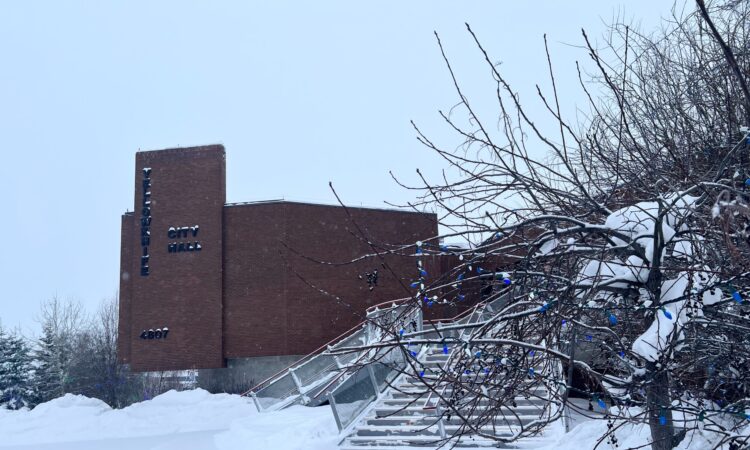
Kerry Thistle, the city’s director of economic opportunities, investments and partnerships, gave councillors an update on the secretariat at City Hall on Wednesday. She said she is working to ensure the city understands what’s coming and what Yellowknife needs, and that it retains the most benefit possible.
“The secretariat positions Yellowknife to move forward from reacting to our individual projects to actively shaping how this period of northern investment can benefit our community,” she said.
“Our objective is not just to host major projects, it’s to ensure they leave lasting infrastructure, employment and economic benefits in Yellowknife.”
Advertisement.
Advertisement.
While not all planned major projects and Arctic security investments will be located in Yellowknife, Thistle noted the capital city is a northern hub for transportation, government and other services. She said impacts on Yellowknife could include greater demand for flights, cargo, workers, accommodation, utilities and municipal services.
Federal investment could also help the city advance municipal priorities, Thistle said, such as more reliable power, reduced reliance on diesel, housing-enabling infrastructure and stronger transportation systems.
Completed and future work
City council approved the new secretariat in September, which aims to handle promised federal investment while allowing other municipal departments to continue their work.
So far, the secretariat has established a mandate, reporting structure, governance framework and an initial three-person team model. Thistle said she hopes Chris Greencorn, the city’s director of public works and engineering, will soon join her on the secretariat.
Advertisement.
Advertisement.
The city also entered into two contribution agreements with the Department of National Defence earlier this year related to work to expand municipal sewer and water infrastructure to the airport. According to Yellowknife’s 2027 draft budget, that included an $8.3 million agreement for potable water distribution and an $8.1 million agreement for linear distribution.
Thistle added the secretariat has worked to strengthen Yellowknife’s relationship with federal departments, the territorial government, Indigenous partners, other northern municipalities and industry.
“This preparatory work is extremely necessary before any major construction and long-term commitments can proceed responsibly,” she said.
Thistle said water and sewer engineering work is now an immediate priority. The city is expected to award a contract for that work before the end of the year.
The secretariat is next planning to quantify the cumulative effects of investment and identify where federal objectives align with long-term community benefits.
“Our approach is not to create projects just because there’s funding available,” Thistle said. “We’re going to begin with municipal needs, align it with federal priorities, develop the project and ensure that it meets our current needs and addresses the opportunities available.”
Thistle’s presentation included some details about plans for Arctic defence expansion in Yellowknife.
Joint Task Force North is expected to increase its number of personnel from 140 to 300 by 2030. It is also planning a phased infrastructure program that will require an estimated 40 to 70 hectares of land and 10 to 12 megawatts of power.
The Department of National Defence plans to begin construction of an expansion at Yellowknife Airport around 2030.
Last month, the territorial government published a strategic land use plan for the airport dated May 2025. It includes plans for land to accommodate an extended runway, federal infrastructure, and a new public airport terminal.