
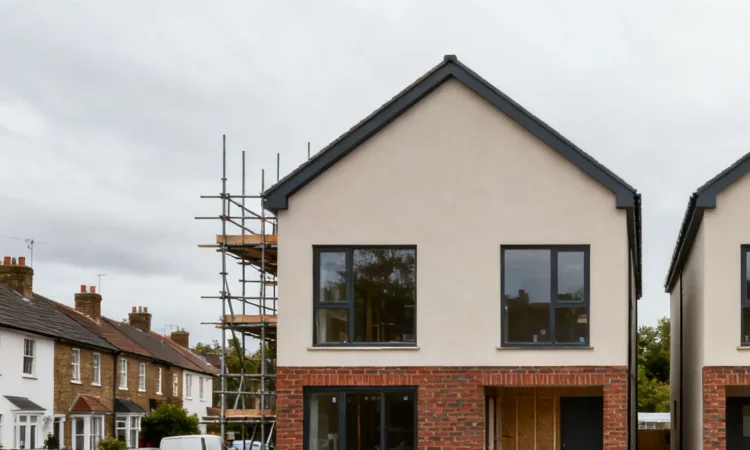
Specialist property finance lender Lendhub has completed a £1.22 million development finance facility for the construction of two four-bedroom semi-detached houses in the London Borough of Havering.
The 18-month facility funds a ground-up development on unencumbered land owned by the borrower, with full planning permission in place and a projected gross development value of £1.75 million. The deal was introduced by Nigel Hakkak of Cobalt Financial.
Facility structure
The facility was structured at 13% loan-to-value against the £195,000 market value of the land on day one, and 70% loan-to-gross development value against the scheme’s projected value. Interest will be rolled across the 18-month term, which comprises 12 months for construction and six months for sale or refinance.
The borrower owns the land outright, which provided an equity buffer that influenced the credit structure. Planning consent was granted in June 2025, with three personal guarantees in place. The scheme will be delivered on a self-build basis through REA Construction Ltd, an associated contractor under common ownership.
Edward Scott of London’s Surveyors & Valuers undertook the valuation, with IESIS Consult acting as monitoring surveyor. The transaction follows similar specialist lending activity in the development finance sector.
Market context
Lendhub structured the facility to fund 100% of construction costs against the land equity, with drawdowns calibrated to the build programme and monitoring conditions standard for a development of this size.
Jack Hoad, relationship associate at Lendhub, said the structure reflected the borrower’s position. “Development cases tend to be discussed in terms of leverage ratios, but the structure here was driven by what the borrower brought to the table,” he said. “A clean planning consent, owned land, and a credible PG covenant give a credit team a lot to work with, and the facility was sized to fund the build rather than to stretch the day-one position.”
Nigel Hakkak of Cobalt Financial said the case required a lender willing to move quickly. “The client had everything in place: land, planning, contractor, and the equity, and needed a lender who could move on the build funding without re-litigating the underlying case,” he said. “Lendhub engaged with the structure on its own terms and delivered the facility the client needed to start on site.”
The transaction adds to recent activity in the London property finance market, where lenders have been active across both bridging and development finance segments.


