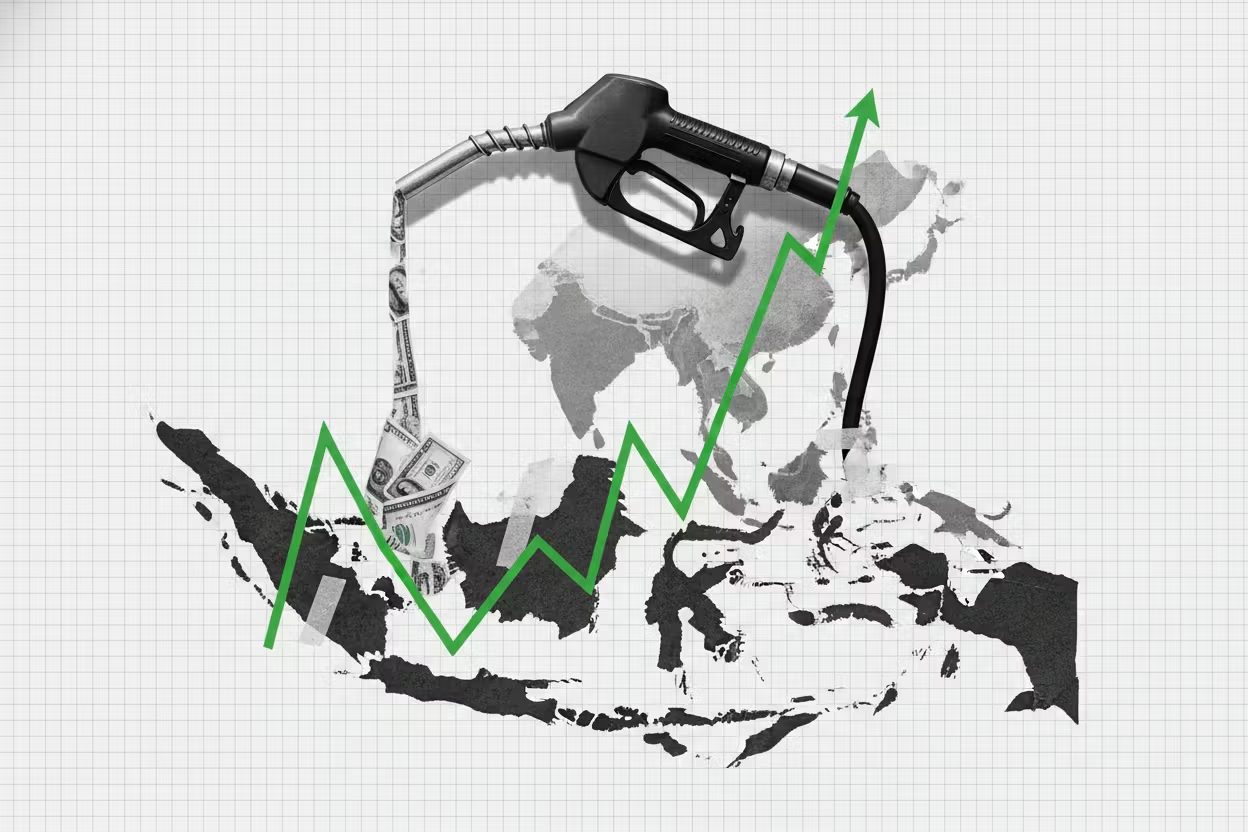
ies and storage capacity, which can make price spikes feel more urgent. The stress showed up across markets: Indonesian stocks fell and the Philippine peso and Indian rupee also hit fresh lows as investors pulled money from riskier assets and priced in higher, longer-lasting energy costs.
Why should I care?
For markets: Oil shocks often show up first in currencies, then in everything else.
Currency swings can be an early warning for local bonds and stocks. When oil rises, importers like Indonesia, India, and the Philippines usually see heavier demand for dollars from refiners and utilities, which can widen trade deficits and pressure exchange rates. Central banks can lean on foreign-exchange reserves – the stockpile of hard currency held to smooth market stress – but intervention mostly buys time if the underlying issue is persistently expensive oil plus cautious global sentiment.
Zooming out: Japan’s rates could matter almost as much as Middle East headlines.
Separately, the Bank of Japan (BoJ) has been debating when to raise interest rates again. Higher Japanese yields can tempt global investors to shift money back toward Japan, reducing the flow of capital into emerging Asian markets. Put alongside oil-driven pressure on importer currencies, that rate backdrop can make regional performance diverge quickly – even if some markets are still holding up better than others.