
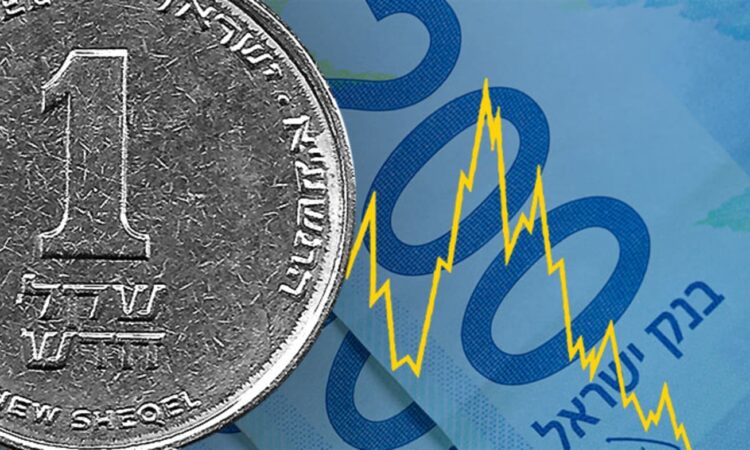
The shekel-dollar exchange rate, which only a month ago fell to NIS 2.80/$, has risen 7% in recent weeks and is approaching NIS 3/$, although this is still low by historic standards at a level not seen since the 1990s. Some believe that the pressure on the local shekel will continue, and that the dollar will continue to strengthen against the Israeli currency. In a memorandum sent by Bank of America to its clients obtained by “Globes”, it recommends opening a long position on the dollar against the shekel and against Hungary’s forint.
“We are opening buy positions on the dollar against the forint and the dollar against the shekel in equal measures, and are targeting a 5% move. A tough policy by the US central bank means a weakening of emerging market currencies,” the bank’s memorandum states. The time window recommended by the bank is three months.
Later in the memorandum, Bank of America’s analysts detail how the expected tight monetary policy in the US will continue to cloud financial markets around the world and neutralize other positive effects.
“The near-term backdrop for emerging market currencies has become more challenging. We expect these markets’ currencies to weaken ahead of the US Federal Reserve’s rate hikes, which are expected to begin in September. A more hawkish approach by the central bank, driven in part by the AI investment cycle, is tightening financial conditions at a time when global growth is led by the US – offsetting potential positive factors such as the Iran deal.”
“Overpricing of the shekel justifies depreciation”
The bank refers to the structural factors that move the shekel and its almost complete dependence on the performance of the S&P 500 index, for which the bank presents a particularly gloomy forecast for the coming year. The connection between the shekel and the US index stems from the hedging activity of institutional entities in Israel. When the US stock market falls, the value of the institutional entities’ dollar assets shrinks, and to maintain the foreign currency exposure ratios (hedging) that they have set for themselves, they are forced to purchase dollars in huge amounts, which pushes the shekel-dollar exchange rate upwards and weakens the shekel. A rise in the US flagship index has the opposite effect and strengthens the shekel. “Our US equity team expects the S&P 500 to reach 7,100 points this year, which, combined with the overpricing of the shekel and the weakening of emerging markets, is expected to push the dollar-shekel rate higher,” the memo states. This compares to the current level of 7,350 points – meaning they are pricing in a decline of over 3%.
RELATED ARTICLES
The combination of these conditions creates, in their assessment, the potential for a depreciation in the Israeli currency: “The S&P 500 at 7,100 points this year, the weakening of emerging market currencies and the overpricing of the shekel justify a depreciation of approximately 5% in the currency’s value.”
They add that investors are not correctly assessing the magnitude of the risk facing the shekel at current price levels, and point out that the Israeli currency is negatively disconnected from the real economic environment: “There are two main structural drivers for the dollar-shekel rate. The first is US stocks, which is the more important factor. The second is emerging market currencies. Both drivers point to a weaker shekel. In addition, the shekel appears overvalued relative to the current level of emerging market currency markets and the S&P 500 index.”
While the current rate is NIS 2.99/$, Bank of America sees the rate at NIS 3.14/$ in three months.
Published by Globes, Israel business news – en.globes.co.il – on June 25, 2026.
© Copyright of Globes Publisher Itonut (1983) Ltd., 2026.


