
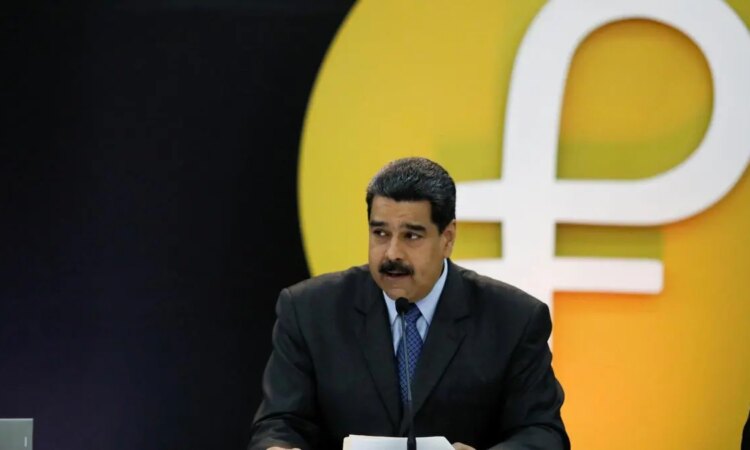
Lost in the din of spurious explanations for Trump’s assault on Venezuela is the real crime: Maduro’s defiance of the dollar order.
The official explanations for the destruction of Saddam Hussein, Muammar Gaddafi, and the prolonged asphyxiation of Nicolás Maduro’s Venezuela vary in detail but converge in tone. Each was framed as a moral intervention: weapons of mass destruction, protection of civilians, restoration of democracy, the war on drugs. Each was accompanied by an avalanche of humanitarian rhetoric, legal justifications stretched to breaking point, and an obedient media chorus. Yet history has a way of stripping power of its disguises. When the dust settles, a far less noble pattern becomes visible. These leaders did not merely defy US foreign policy preferences; they committed a far graver transgression. They challenged the monetary architecture of American power by daring to sell oil outside the dollar system. That, more than any human rights concern, marked them for punishment.
At the heart of US global dominance lies not simply military might, but monetary hegemony. The dollar’s status as the world’s default reserve and trading currency is the invisible scaffolding that sustains American imperial reach. It allows the United States to run chronic trade deficits without consequence, finance wars without domestic sacrifice, and weaponise sanctions with devastating effect. De-dollarisation is therefore not a technical adjustment; it is a political heresy. States that flirt with it are not treated as economic innovators but as existential threats. Saddam Hussein, Gaddafi, and Maduro learned this lesson at catastrophic cost.
Also Read | 20 years on, the shadow of the Iraq war remains
The modern architecture of dollar supremacy took shape after the collapse of the Bretton Woods system in 1971. When the United States abandoned the gold standard, it faced a problem: how to sustain global demand for an unbacked currency. The solution was geopolitical rather than economic. Through strategic arrangements with Saudi Arabia and other Gulf monarchies, oil—the most critical commodity of industrial civilisation—was priced exclusively in dollars. In return, the US provided military protection and political support. Thus emerged the petrodollar system. Any country needing oil needed dollars; any country holding dollars funded US deficits; any country clearing transactions passed through US banks. Monetary power was fused with military power, and global finance became a tributary of American sovereignty.
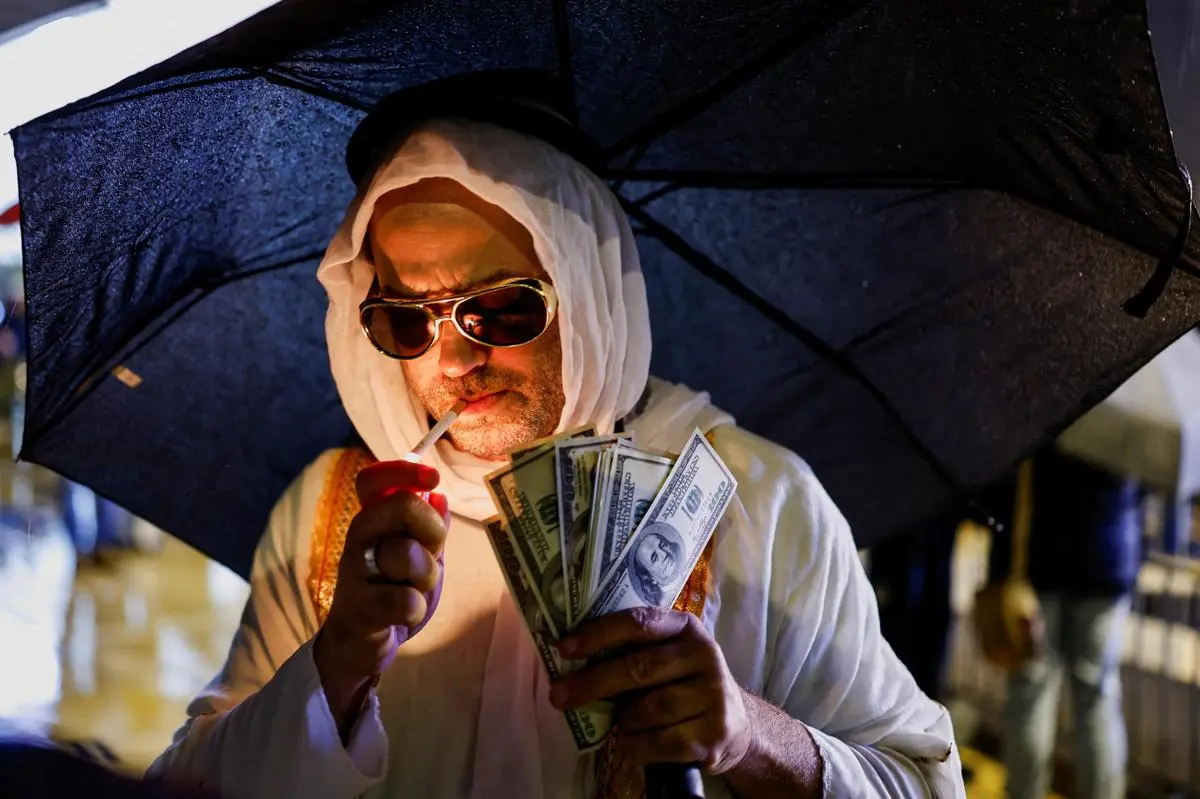
A protester holding mock dollar bills at a demonstration against Israeli Prime Minister Benjamin Netanyahu and his government, in Tel Aviv, on December 27, 2025.
| Photo Credit:
Amir Cohen/REUTERS
This system transformed the dollar into a tool of empire. It enabled the United States to externalise inflation, live beyond its productive base, and discipline adversaries through financial exclusion rather than conventional warfare. Sanctions became more effective than bombs, and access to dollar clearing more decisive than diplomatic recognition. Against this backdrop, attempts to trade oil in non-dollar currencies were not mere economic experiments. They were challenges to the central nervous system of US power.
Saddam and Gaddafi: Early transgressions
Saddam Hussein was the first to commit this modern sin openly. In 2000, Iraq announced that it would sell oil under the UN’s Oil-for-Food Programme in euros rather than dollars. The volumes were not large enough to destabilise global markets, but the symbolism was explosive. Here was a sanctioned state demonstrating that oil trade could bypass the dollar. By 2002, Iraq had accumulated billions in euro reserves. After the US invasion in 2003, one of the occupation authority’s first acts was to revert Iraqi oil sales back to dollars. The war was sold to the world as a campaign against imaginary weapons of mass destruction. Its monetary subtext went largely unmentioned. Saddam paid not only with his regime but with his life.
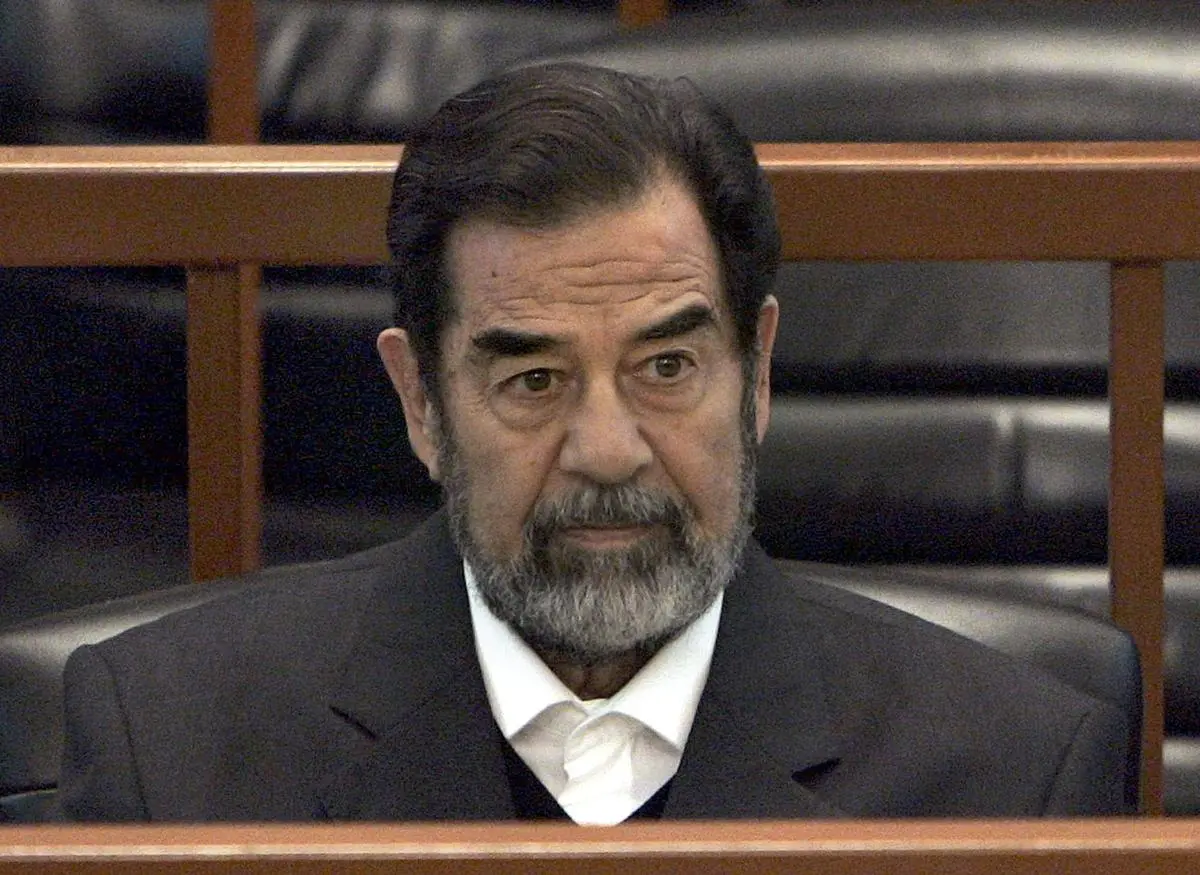
In 2000, Iraq announced that it would sell oil under the UN’s Oil-for-Food Programme in euros rather than dollars. The volumes were not large enough to destabilise global markets, but the symbolism was explosive. In the picture, Iraq leader Saddam Hussein at a court in Baghdad on December 6, 2006.
| Photo Credit:
CHRIS HONDROS/AP
Muammar Gaddafi pushed the challenge further. Libya was not merely discussing alternative settlement currencies; it was proposing a new monetary order for Africa. Gaddafi advocated a gold-backed dinar to be used in oil trade and intra-African commerce, directly undermining both the dollar and the euro. Libya possessed vast gold reserves, substantial oil wealth, and influence across the African continent. A successful African monetary bloc independent of Western currencies would have threatened the financial architecture of post-colonial dependency. The NATO intervention of 2011 was framed as a humanitarian rescue mission. In reality, it obliterated a state that had dared to imagine monetary sovereignty. Libya was destroyed, Gaddafi was lynched, and the idea of an African alternative currency was buried beneath rubble.
Venezuela’s symbolic defiance
Venezuela’s case is different in form but not in essence. Unlike Iraq and Libya, Venezuela did not initiate de-dollarisation as an ideological project. It was forced into it by sanctions. Beginning in 2017, the United States systematically cut Venezuela off from the dollar system: freezing assets, criminalising transactions, blocking Venezuela’s state-run oil company PDVSA’s access to financial markets, and seizing overseas holdings such as CITGO. Dollar trade became impossible. Survival required alternatives. China, already Venezuela’s largest creditor, became the obvious partner. Oil-for-loans arrangements evolved into yuan-denominated settlements, barter trade, and non-Western clearing mechanisms. Venezuela also experimented, unsuccessfully, with crypto instruments like the Petro. What mattered was not the efficiency of these mechanisms but their precedent. A country with the world’s largest proven oil reserves was selling crude outside the dollar system and surviving.
This crossed a red line. Venezuela’s oil exports to China in yuan were not large enough to dethrone the dollar, but they demonstrated a path others could follow. If Venezuela could do this under sanctions, so could Iran. If Iran could do it, Russia could scale it. If Russia could scale it, Gulf producers could experiment. De-dollarisation spreads not through volume but through contagion. The US response was predictable: intensified sanctions, attempted coups, recognition of parallel governments, threats of arrest, and now increasingly reckless rhetoric about military action. The charges—drug trafficking, authoritarianism, democratic failure—are interchangeable props. The real offence is monetary disobedience.
The Dollar, Empire, and the World Order
The American obsession with de-dollarisation cannot be understood without grasping how deeply the dollar underwrites the U.S. economy. Dollar dominance allows the United States to import more than it exports, consume more than it produces, and borrow without fear of currency collapse. It allows Wall Street to siphon global savings, the Pentagon to operate hundreds of overseas bases, and Washington to impose unilateral sanctions with extraterritorial reach. If countries begin trading oil and strategic commodities in non-dollar currencies at scale, this privilege erodes. Demand for dollars falls, borrowing costs rise, inflation becomes domestic rather than exported, and military adventurism becomes fiscally constrained. De-dollarisation, in short, threatens not American prosperity alone but American imperial behaviour.
This explains the ferocity with which even symbolic challenges are crushed. The United States does not need the dollar to collapse to feel threatened; it needs only to see alternatives becoming normalised. Monetary hegemony depends on habit as much as force. Once countries realise that trade can occur without dollars, the psychological spell is broken. That is why punishment is exemplary. Iraq was reduced to ruins. Libya was turned into a failed state. Venezuela has been subjected to a decade of economic siege that has inflicted mass suffering while being cynically blamed on the victim.
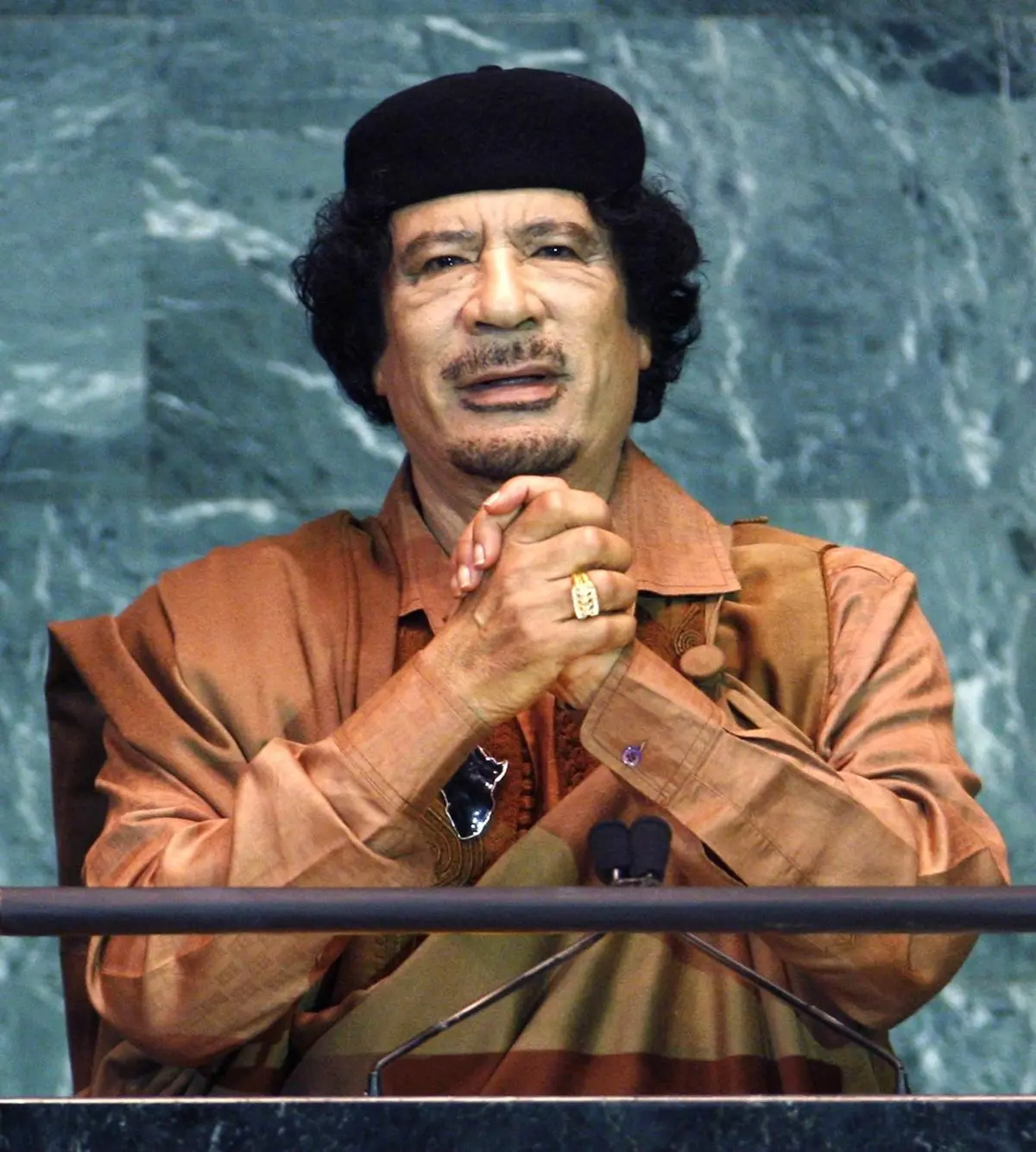
Gaddafi advocated a gold-backed dinar to be used in oil trade and intra-African commerce, directly undermining both the dollar and the euro. In the picture, Libyan leader Muammar Gaddafi addresses the 64th United Nations General Assembly at the UN headquarters in New York on September 23, 2009.
| Photo Credit:
Mike Segar/REUTERS
The implications extend far beyond these three cases. India, for instance, has cautiously experimented with non-dollar trade, particularly in purchasing Russian oil in rupees. It has framed these moves as technical adjustments, not ideological statements, carefully avoiding any rhetoric that challenges dollar primacy. This caution is telling. India understands the cost of crossing the line. De-dollarisation may be economically rational, but it is geopolitically dangerous. Only states with sufficient resilience, alliances, or strategic value can attempt it—and even they pay a price.
Also Read | Tariq Ali: ‘Democracy is largely a set of rituals now’
What emerges from this history is a brutal truth. International law, sovereignty, and human rights function selectively when monetary power is at stake. There are no effective constitutional checks within the US system to restrain the use of force against monetary deviants. Congressional authorisation is routinely bypassed; international law is invoked or ignored as convenient. The global order that claims to be rule-based reveals itself as currency-based. Rules apply to those who comply with the monetary hierarchy.
The original sin
Saddam, Gaddafi, and Maduro were not saints. They governed flawed states, made grievous mistakes, and presided over systems marked by repression and inequality. But their destruction cannot be explained by these failures alone. Many regimes with worse human rights records remain protected allies. The difference lies not in morality but in monetary obedience. These leaders challenged, directly or indirectly, the dollar’s monopoly over oil—the lifeblood of global capitalism. For that, they were treated not as errant rulers but as heretics.
De-dollarisation is thus the original sin of the contemporary world order. It is the one transgression that cannot be forgiven, negotiated, or reformed away. Those who commit it are not corrected; they are destroyed. The lesson is written in the ruins of Baghdad, the chaos of Libya, and the suffering of Venezuela. As more countries quietly seek alternatives to the dollar, the question is no longer whether the system will fracture, but how violently the guardian of that system will react. Empire rarely retreats gracefully. It punishes first—and explains later.
Anand Teltumbde is a former CEO of Petronet India Limited (PIL), a professor at IIT Kharagpur and Goa Institute of Management, a civil rights activist, and the author of over 30 books.


