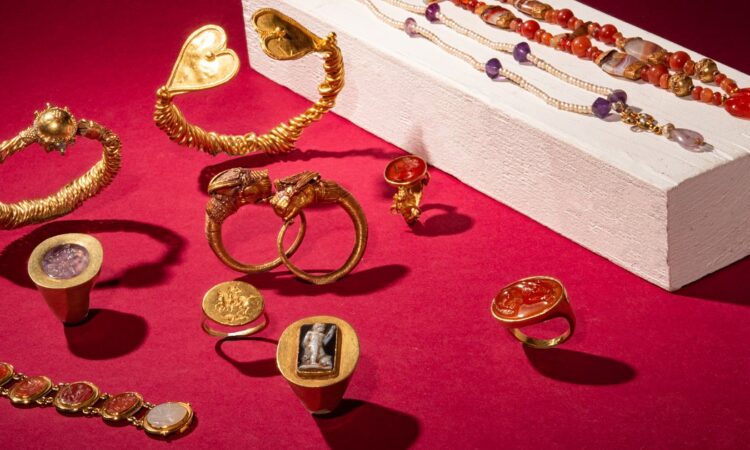
LONDON, UK – June 12, 2026 – On June 20th, Apollo Art Auctions, a specialist house founded in 2010, will bring the gavel down on a curated collection of ancient jewellery. With an estimated value between £500,000 and £1 million, the sale is a spectacle of rare artifacts. But beyond the shimmer of 2,000-year-old gold and rock crystal lies a masterclass in market mechanics. The auction is less a simple sale of old trinkets and more a strategic play in the burgeoning market for tangible history, where the true currency isn’t gold, but verifiable narrative.
This isn’t merely about collecting; it’s about the sophisticated conversion of historical significance into a distinct asset class. In an economic landscape hungry for alternative investments, the antiquities market is demonstrating how to package, authenticate, and sell the past to a new generation of buyers. What Apollo Art Auctions is orchestrating is a microcosm of a broader shift where the lines between museum-quality artifact, luxury good, and investment portfolio asset are deliberately and profitably blurred.
The Allure of Wearable History
The core appeal is undeniable. The auction’s highlights read like a museum catalog, offering a direct, physical link to the power structures and belief systems of ancient civilizations. Consider Lot 288, a Roman ring carved from a single piece of rock crystal, its gold bezel holding the portrait of an emperor. This was not just an adornment; it was a mobile symbol of allegiance, a declaration of one’s proximity to the imperial court. Its value lies not only in its material composition but in the story of power it tells.
Similarly, Lot 250, an Egyptian faience broad collar, speaks to a civilization’s deepest convictions about status and the afterlife. These were not simply necklaces but intricate maps of social standing and spiritual insurance. The enduring vibrancy of their colours resonates with modern collectors, but their true weight comes from their cultural context. As one specialist noted, demand is growing for such pieces as both collectibles and “wearable statement pieces.” This dual identity is crucial; it allows an object to transcend the display case and enter the world as a unique luxury item, exponentially increasing its potential market.
This trend is a deliberate market cultivation. The desire for unique, story-rich possessions is a powerful antidote to the mass-produced luxury that dominates the modern market. An ancient Roman ring isn’t just an accessory; it’s a conversation, a piece of tangible history that its owner becomes the temporary custodian of. This narrative value is what auction houses are now expertly monetizing, transforming history enthusiasts and art connoisseurs into active market participants.
The Power of Provenance
In the high-stakes world of antiquities, authenticity and ownership history—provenance—are everything. An object without a clear and ethical backstory is not just a risky purchase; it’s a potential liability. This is where the real mechanics of power and profit in the antiquities market are revealed. Apollo Art Auctions’ press release is a case study in building market confidence through meticulous documentation.
The mention of authentication by leading authorities like Dr. Jack Ogden and Barbara Deppert-Lippitz, verification by the Art Loss Register, and the use of scientific methods like XRF testing is not mere boilerplate. It is the construction of a firewall against doubt. In a market where the shadow of illicit trade is long, this level of due diligence is a strategic imperative. It transforms a beautiful object into a secure asset.
Furthermore, the named provenances—the Foxwell Family Collection, the Leo Biaggi de Blasys Collection, and the renowned Prince Collection—function as their own form of branding. These collections carry their own prestige and a history of discerning taste, adding a layer of value and assurance. Owning a piece from the Prince Collection, with its royal associations, is to acquire not just the object but a fragment of its distinguished lineage. This is the art of layering narrative upon narrative, with each layer adding to the final hammer price. For a specialized auction house like Apollo, which has built a reputation over more than a decade, mastering the science and art of provenance is its core business model.
A Calculated Bid for a Broader Market
Perhaps the most telling strategic decision is the auction’s pricing structure. The announcement that many lots will open with bids below their pre-sale estimates is a calculated move to democratize entry into this exclusive market. Offering a Roman gold ring depicting Mars (Lot 287) with a starting bid of just £3,000 is not an act of charity; it is a shrewd investment in market expansion.
This strategy accomplishes several goals simultaneously. It lowers the psychological and financial barrier for first-time collectors, drawing them into the bidding ecosystem. These new buyers are the future lifeblood of the market, potentially graduating to higher-value lots in subsequent auctions. Secondly, the lure of a potential bargain generates excitement and encourages wider participation, which can trigger bidding wars that drive the final price far beyond the modest starting point. It’s a classic auction-theory tactic designed to maximize engagement and, ultimately, profit.
By making bidding available across multiple platforms—in person, online, and through several third-party services—the auction house is casting the widest possible net. This is not just about convenience; it is about creating a competitive global arena where a collector in New York can bid against a buyer in the London showroom and an investor in Asia. This accessibility, combined with the accessible starting prices, is a powerful formula for unlocking latent demand and establishing a broader, more resilient market for these ancient treasures.