
WTI Oil Prices Expected to Fall into the $70 Range
Easing Inflationary Pressure and Stabilizing Bond Yields
Dollar Weakens, Asian Currencies Set to Recover
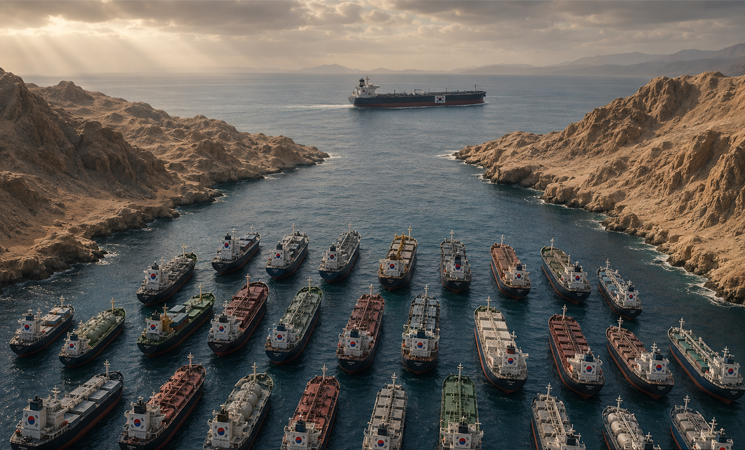
If a peace agreement between the United States and Iran leads to the reopening of the Strait of Hormuz, it is expected to have a significant positive impact on the global economy and financial markets.
![If the Strait of Hormuz Reopens...The Impact [Weekend Money]](https://www.asiae.co.kr/news/img_view.htm?img=2026052113581972504_1779339498.png)
According to iM Securities on May 31, if the Strait of Hormuz is opened, concerns over oil inventory shortages in global markets, especially in Europe, are expected to be greatly alleviated first. While it will take considerable time for oil supply chains to fully return to pre-war levels, even the expectation of eased supply chain disruptions is highly likely to cause a significant drop in international oil prices. Based on West Texas Intermediate (WTI), oil prices are projected to fall at least to the high $70s to the mid $80s per barrel.
The decline in oil prices will ease inflationary pressures, which in turn will help stabilize government bond yields. While government bond yields may not plummet, they are at least expected to show a mild downward trend. The substantial reduction in the risk of further rate hikes by major central banks, including the U.S. Federal Reserve, is also seen as a positive factor for bond yield stability.
In the foreign exchange market, the U.S. dollar is expected to turn weaker, while Asian currencies are likely to strengthen. Since the Iran war, major Asian currencies—excluding the Chinese yuan—such as the Korean won, Indian rupee, Indonesian rupiah, Thai baht, and Philippine peso have experienced relatively sharp declines. The reopening of the Strait of Hormuz is expected to have a positive effect on the value of Asian currencies.
!["I Almost Missed Out on Hundreds of Thousands of Won... I Was the Only One Who Didn't Know" How to Find Hidden Government Benefits [The Essentials of Benefits]](https://cwcontent.asiae.co.kr/asiaresize/93/2026052915221681901_1780035736.png)
Park Sanghyun, a researcher at iM Securities, stated, “If the reopening of the Strait of Hormuz breaks the vicious cycle of high oil prices, high inflation, and high interest rates and leads to a virtuous cycle, it will put upward pressure on various risk assets.”
This content was produced with the assistance of AI translation services.
© The Asia Business Daily(www.asiae.co.kr). All rights reserved.


