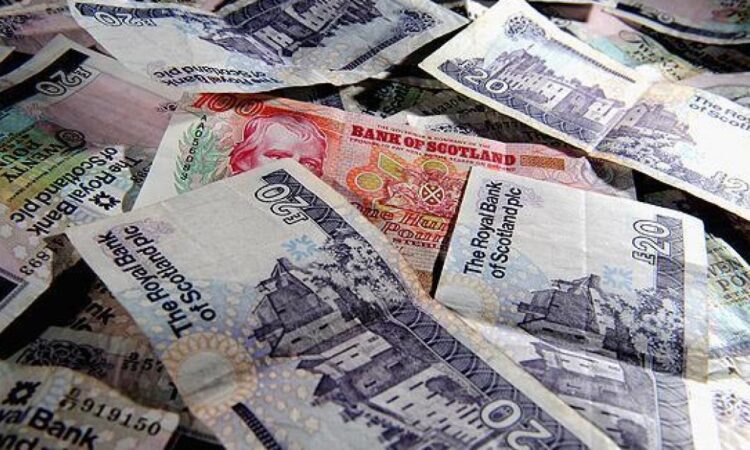
What currency? The simple answer is that until all fiscal transfers from the previous UK to Scotland are completed, we will use Sterling while running the pound Scots on a one-to-one exchange rate.
At such point when it is beneficial for Scotland to do so, we will disengage from Sterling and establish the pound Scots as our sovereign fiat currency. If we join the EU the preference is for new members to join the Eurozone, yet there is no compulsion to do so and it is unlikely the European Central Bank would want the major problems for the euro that would be created by the current Scottish economy being absorbed into the Eurozone.
READ MORE: The forces opposed to Scottish independence have not gone anywhere
Bloomberg is speculating that a future Scottish pound, trading on the international markets, would quickly rise to £1.20p Sterling buying £1 Scots, raising the worry that de-linking from Sterling could rapidly increase the cost of Scottish goods to importing countries.
As to defence: at present the Royal Navy has five serviceable Type 23 frigates, one serviceable destroyer, six offshore patrol vessels and a couple of Astute class submarines available to defend all current UK waters.
The British Army would struggle to put together a second-tier armoured brigade and keep it supplied, while the RAF has the F35 STOVL stealth fighter it shares with the Fleet Air Arm and a delivery of F-35As which it really wanted in the first place. The Typhoon squadrons are showing their age, but upgrades have kept them effective in the fighter bomber role and after years of political failure at Westminster and unending pressure from Nato, the RAF have finally received Poseidon maritime patrol aircraft on lease from the United States Army Air Forces to fulfil one of their key treaty anti-submarine Nato roles.
READ MORE: The Scottish constitutional debate must now ask deeper questions
The question is, given the changes arising from the Ukraine Defence Forces’ success against Russia and the failure of the USA’s “Might is Right” approach in Iran, would an independent Scotland be better starting from scratch when it came to defence issues?
The other option is to be given some past-their-sell-by-date Royal Navy frigates, a destroyer and submarine type which spend more time undergoing “extended maintenance” than they spend at sea, an updated tank originally designed 40 years ago, some armoured fighting vehicle that do not work and a Typhoon squadron whose airframes are hurtling towards the end of their designed airframe life.
In simplistic terms, Scotland’s defence requirements are maritime with fishing grounds, oil and gas fields, offshore wind farms and the as-yet-untapped tidal power resource around our coasts. The main focus of a future Scottish defence force should be on sea and air assets for both patrol and active defence of our shores and waters.
READ MORE: Scots would vote for independence in second referendum, poll finds
If we think logically, what would be the use of a Scottish army in the future? We are not likely to go invading other nations. I sense the hackles rising at this suggestion, and cries of all the proud Scottish regiments this would do away with, while forgetting the British Army has already collapsed this particular house of cards with the remnants of all these “proud” regiments left as companies in the “Regiment of Scotland” and the colours of all the rest laid up in churches across Scotland. The other possibility is that the successor Royal Regiment of Scotland becomes the drone and missile operating arm of Scotland’s defence force while retaining a ground force capability.
We could look to the Saab Swordfish maritime patrol aircraft, more cost effective to operate than the USA’s Poseidon. Type 26 Frigates from BAE Scotstoun and Type 31s from Rosyth make sense in the current world. The Type 26s would work in concert with Norway and the future English Navy Type 26s. Type 212a diesel/electric submarines from Germany (we do not need the Astute class capabilities and it cuts out nuclear-powered submarines and their high maintenance and operating costs) while operating the more flexible and cost-effective Gripen aircraft in conjunction with Canada and Sweden rather than Typhoon cast-offs.
Defence will cost around 2-3% of an independent Scotland’s GDP, a GDP which was recently stated being worth upwards of £1trillion. This is part of the price of being an independent country in an uncertain world, where we are still a very long way away from beating weapons into ploughshares.
Peter Thomson
via email
THE Crown Prosecution Service (CPS) will not be seeking the extradition of Kenneth Law, who sold toxic chemicals to assist suicides, despite his 79 known victims in the United Kingdom. Were they all in England or Wales? If not, then might an extradition to Scotland or Northern Ireland be possible? The CPS is serving notice. If it will not prosecute this, then it would not prosecute any assisted suicide. Is that also true of the Crown Office and Procurator Fiscal Service, or the Public Prosecution Service for Northern Ireland?
David Lindsay
Lanchester, County Durham