
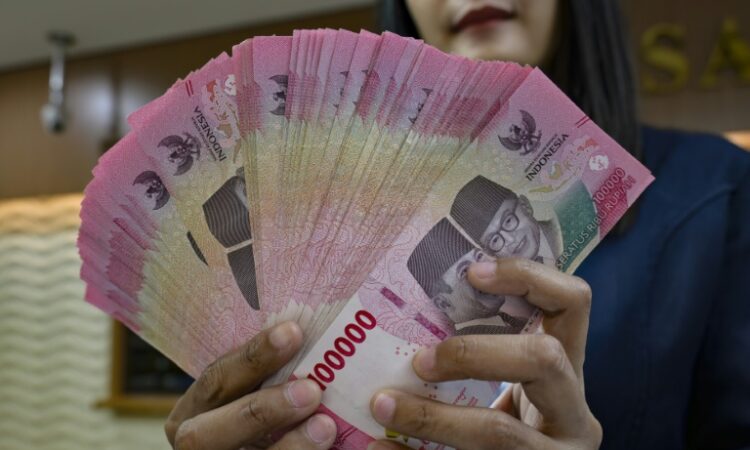

Indonesia’s rupiah hit more than 18,000 per dollar for the first time Thursday as the country is stung by surging energy costs, while lawmakers passed a bill expanding oversight of the central bank that raised concerns over its independence.
Bank Indonesia has in recent weeks taken several measures to try and bolster the currency by hiking interest rates, which has been hammered this year amid mounting concerns about the state of Southeast Asia’s biggest economy.
But on Thursday morning, the unit broke the psychological 18,000 barrier to hit 18,047 against the greenback. The country’s stock market sank nearly four percent and has lost a third of its value in 2026.
That came hours before parliament gave the green light to a legislative amendment that expands the bank’s mandate to include responsibility for economic growth, but also allows lawmakers to evaluate its performance.
The parliamentary oversight will also apply to the Indonesia Deposit Insurance Corporation (LPS), tasked with guaranteeing bank deposits and ensuring banking system stability, and the Financial Services Authority (OJK) financial regulator.
The vote came a day after Finance Minister Purbaya Yudhi Sadewa told parliament the legislative amendment was aimed at boosting economic growth and enhancing global competitiveness as the economy is hit by a spike in global oil prices.
“It’s not just about exchange rate stability, or just about inflation. It’s also about paying attention to economic growth and creating jobs,” he said.
Economist Yose Rizal Damuri, of the Centre for Strategic and International Studies (CSIS), said the move raised the “question of independence”, especially if parliamentary intervention becomes “routine”.
“Amid global geopolitical pressures, the market needs certainty that monetary policy, financial supervision and market stabilisation remain independent and free from political intervention,” added Central Bank Asia chief economist David Sumual.
“If independence is perceived to be weakening, the risk could trigger an increase in risk premiums and put pressure on financial markets,” he told AFP.
– ‘Costly populist programmes’ –
The rupiah has tumbled more than seven percent this year and has been Asia’s worst-performing currency, according to Bloomberg News, as the US-Israel war on Iran sent global oil prices surging.
Permata Bank chief economist Josua Pardede said an exchange rate of 18,000 was a “psychological threshold” for market investors.
The weakening, he told AFP, was fuelled by high dollar demand caused by the surge in oil prices and a narrowing trade surplus.


