
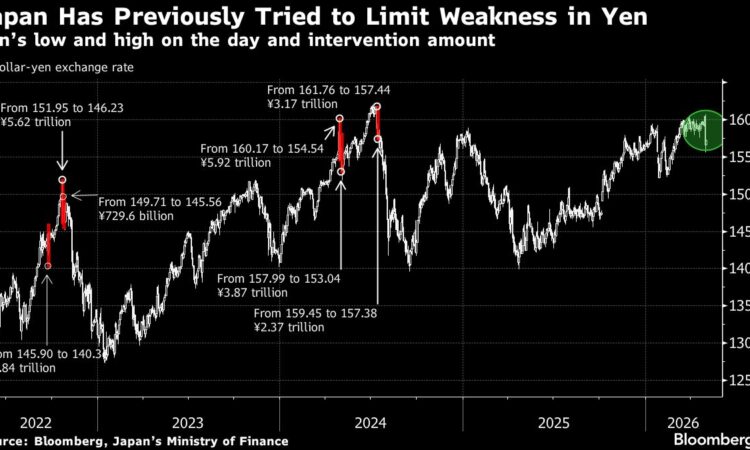
(Bloomberg) — Japan can conduct only two more sessions of three-day interventions by November if it wants to maintain its status of having a freely floating exchange rate, based on International Monetary Fund guidelines.
Most Read from Bloomberg
A Japan Finance Ministry official cited an IMF rule on Monday noting that three days of intervention count as a single market operation. The comments came after the yen surged Thursday following reported intervention by the authorities, and also saw a number of intraday rallies on the following days.
Still, market participants are largely of the view the yen will resume its weakening trend with or without official intervention. The Iran war is negative for Japan’s energy-import-reliant economy, and wide interest-rate differentials with the US are denting sentiment, ensuring the currency remains under pressure.
“Whether the yen can hold onto its gains will probably depend on two factors,” said Matthew Ryan, head of market strategy at Ebury. “Firstly, the willingness of authorities to continue to intervene should the USD/JPY cross continue to test the 160 level. Additionally, whether or not the Bank of Japan will raise rates, and signal an openness to do more, at its June meeting.”
The yen strengthened as much as 0.8% in Asia Monday before paring gains, sparking discussions across trading floors as to whether officials had waded into markets once again to bolster the currency. The surge came after Japan likely spent around ¥5.4 trillion ($34.3 billion) last week to support the yen after it had weakened past 160 per dollar.
On Tuesday, the Japanese currency was about 0.4% weaker at 157.88 per dollar in late afternoon trading in New York.
What Bloomberg Strategists Say…
“The question now is whether authorities are forced back into action, but the bar looks higher in an environment where active war is the main driver”
Brendan Fagan, Markets Live strategist
IMF rules state that conducting up to three episodes of currency interventions within six months is consistent with a free-floating exchange-rate regime, the Japanese Finance Ministry official said on Monday. If the authorities exceed that number, then the IMF tends to classify the exchange-rate regime as floating rather than free floating, the official said.


