
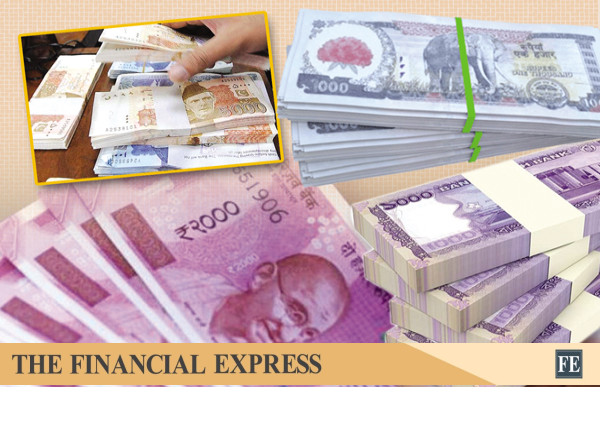
The idea of countries with similar economic structures adopting a common currency became popular in the late 1990s. This idea came about following the successful introduction of the Euro in 1999 for most members of the European Economic Union (EEU). The theoretical basis of the formation of a currency union is Robert Mundell’s Optimum Currency Areas (OCA). He wrote a paper titled ‘A Theory of Optimum Currency Area’ which was published in American Economic Review in September 1961. The OCA comprises of some sovereign nations in one or more regions which are integrated in both the product and factors markets and affected by common economic shocks. Members of a currency union, like the European Economic Union, discard individual currencies and adopt a common currency to achieve economic-and political integration.
Over the past two decades, some political leaders in India have argued for the establishment of a currency union in South Asia. However, not many citizens outside India have taken this idea seriously. Aside from currency union, India does not show much enthusiasm for economic and political integration among South Asian countries. After the South Asian Association for Regional Cooperation (SAARC) summit of the heads of government in Islamabad in 2004, where the South Asian Free Trade Area (SAFTA) agreement was signed, some Indian politicians started arguing for the establishment of a currency union in South Asia. This followed former Indian Prime Minister Vajpayee’s vision statement where he urged South Asian nations to put aside mistrust and dispel unwarranted suspicion to work for the integration of South Asian economies facing the challenges of globalisation. This positive sentiment was carried forward to the 11th SAARC summit in Kathmandu, Nepal in 2002. During this summit, a vision statement was adopted for the purposes of setting up the South Asian Economic Union in 2020, with the possibility of establishing a monetary union with a common currency. Not much has changed since then.
Since the idea of a currency union in South Asia continues to flare up and down, this article argues that Bangladesh should avoid joining any monetary arrangement that undermines its ability to conduct independent monetary policy for price stability. This argument is developed here and analysed from a broader perspective.
REVIEW OF LITERATURE & ARGUMENTS: The issue of establishing a currency union in South Asia can be debated through the following areas: (1) the extent of trade integration among South Asian countries; (2) the extent of factor mobility among South Asian countries; (3) the nature of economic structures and the patterns of shocks to South Asian economies, and (4) the extent to which wages and prices are flexible within a country.
Accordingly, several studies have investigated the feasibility of a currency union in South Asia. For example, N.M Maskay (at an IMF working paper in 2003) has examined the appropriateness of a currency union based on economic characteristics in South Asian countries. His analysis suggests that South Asian countries are the least integrated and unsuitable candidates for the establishment of a currency union. B Gauchan and V Sarin (Journal of Economic Integration, 2018) have also reviewed the issues and argued for monetary cooperation but not for establishing a currency union in South Asia. They have stated: “The increased number of positive correlations of output growth, inflation, exchange rates movement and supply shocks in the last two and half decades compared to earlier studies suggest that there is macroeconomic convergence among the countries. This underpins the basis for moving towards greater monetary cooperation in South Asia in spite of the fact that it is not feasible to pursue a goal of a monetary union with single currency immediately.”
In the extant literature on currency union, there is a view that even when economic characteristics do not justify the formation of a currency union, if there is political will, the countries involved can change economic structures such that economic conditions needed for the establishment of a currency union are met ex post. This raises the question of whether there have been any concerted efforts in South Asia over the past few decades to integrate product and factor markets. The answer is no, and the prevailing condition is unlikely to change in the near future. South Asian countries as a matter of historical legacy have developed economic and political institutions un-conducive to economic cooperation and integration.
While an argument could be made that the removal of tariff and non-tariff barriers to trade in goods and services would expand intra-industry trade in South Asian countries, such trade is unlikely to be large unless these countries dismantle the existing tariff and non-tariff barriers to trade in goods and services. This is a big ask and not a realistic one within the existing economic and political configurations.
Under the present global trading arrangements, smaller economies remain in an advantageous position with respect to the import of high-quality capital and intermediate goods from advanced countries. Such imports are growth promoting as they raise productive capacity and economic efficiency. Since exports and imports are mutually dependent as high-quality imports lead to high-quality exports. The main benefit of economic openness is that technological progress is transmitted through foreign trade in goods, services and assets. The formation of currency union undermines this channel of raising economic efficiency and growth.
Under a currency union with the option of forming an economic union, the smaller economies of South Asia would have to shift their sourcing of capital and intermediate goods from many advanced countries to India for example. Since the quality of capital and intermediate goods of India is lower than those of advanced countries, any trade diversion from advanced countries to India would invariably lower the quality of products destined for consumption or exportation or both. Smaller South Asian countries would therefore lose from trade diversions to larger economies, such as India.
Nevertheless, in the absence of a currency union, there would still have some potential for intra-industry trade in South Asian countries. This is because these countries with similar technological base and level of development can produce differentiated products and then export and import among themselves simultaneously. Although traditional theories suggest that foreign trade emerges from the principle of comparative advantage, recent trade theories suggest the possibility of intra-industry trade among countries with similar endowments and comparative advantage in products that they can export and import simultaneously.
Unfortunately, the volume of intra-industry trade would not increase much until the mercantilist outlook of certain, if not all, South Asian countries changes. The present state of the bilateral trade between Bangladesh and India can be used as an example. As a small country, Bangladesh has the potential to produce and export many labour-intensive, differentiated products that India produces and consumes. However, Bangladesh has maintained huge trade deficits with India over several decades. The major obstacles of Bangladesh’s exports trade to India are tariff and non-tariff barriers. This indicates that the difficulties in the removal of tariffs and non-tariffs are obstacles to the expansion of regional trade than any transaction costs of trade arising from the use of international currency. Bangladeshi businesses are aware of the difficulties in exporting goods to India due to tariff and non-tariff barriers.
Finally, although goodwill among leaders in South Asia may create opportunities for institutionalising initiatives for economic integration, the political and economic aspirations of South Asian countries remain fundamentally different.
As a historical legacy, South Asian countries are guarding their national independence and remain unwilling to surrender policy autonomy to the bureaucracy of any institution operating within a currency union that could be dominated by one or two larger countries such as India and Pakistan. Furthermore, although India, by virtue of economic size and resources, expects to be the natural leader in South Asia, this situation is unacceptable to other regional countries. The moribund state of the SAARC is an example of political non-cooperation among South Asian countries and there are other issues as well. For example, there is not much scope for large-scale labour mobility among countries in South Asia. Each country in this region guards its borders zealously and remains suspicious of citizens from other countries. Similarly, capital mobility among these countries is seen with suspicion and these countries consider it harmful to domestic industrial development. There is also fear that if capital moves from the poorer regions to the relatively developed areas, they can cause uneven economic growth and adverse distributions of income and wealth.
Therefore, in summing up, the idea of economic integration among South Asian economies is unlikely to make any progress in the near future as all South Asian countries are bound by their own traditions, languages, religions and cultures. Cooperation among them is desirable but not inevitable. Since the idea of economic and political integration remains politically sensitive, not much is expected under the present economic and political configurations.
FINDINGS & END NOTE: In general, when some individual countries integrate product and factor markets and experience common shocks, they can benefit from establishing a currency union. The presumption is that the loss of monetary policy under a currency union would be smaller than the benefits they could gain from the reduction of transaction costs in trade of goods and services. An increase in the mobility of both labour and capital and any technological progress within the region is expected to raise productivity and hence economic growth. However, this is unlikely in the case of South Asia. This note has highlighted key issues in labour and capital mobility that would influence the success of a currency union in South Asia. Mundell (1961) made the point that unless factors of production (labour and capital) move freely between regions, any shifts in demand facing one region relative to another would lead to unemployment if the nominal exchange rate is not made flexible. Here follows the policy implication of the issues reviewed above for Bangladesh.
The formation of a currency union in South Asian countries would create a constraint on monetary policy for an emerging market economy such as Bangladesh. As one of the major economies in South Asia, Bangladesh should retain monetary policy independence for price stability under a flexible exchange-rate system. Since the early 1990s, Bangladesh has integrated with the global trading system. Bangladesh’s economy has therefore become exposed to external shocks. In an open economy, exchange rates act as a shock absorber and hence can be deployed for macroeconomic adjustment to external shocks. As wages and prices are generally rigid, the exchange rates are considered more effective in adjusting aggregate demand in response to external shocks. For a country like Bangladesh, fiscal policy is equally important as an instrument of demand management and economic stabilisation. More significantly, fiscal policy supports monetary policy and raises its credibility and effectiveness in sustaining price stability. Overall, despite different trade-offs and uncertainties, fiscal, monetary and exchange rate policies, individually and jointly, remain useful in managing both internal and external balances. Below additional comments are made on the desirability of an independent monetary policy for Bangladesh from a longer-term context.
Bangladesh’s economy has steadily grown since the mid-1980s when it became deregulated and opened to foreign trade and investment. To conduct independent monetary policy, the exchange rate became flexible. Bangladesh Bank (Bangladesh’s central bank) has also enhanced technical capacity to formulate a rules-based monetary policy for price stability. Finally, under IMF-World Bank surveillance, the formulation of fiscal policy has improved and become disciplined although there is scope for institutionalising a rules-based fiscal policy needed for making fiscal policy compatible with the stance of monetary policy. Therefore, it is possible to say that if Bangladesh can avoid major economic and political crises, it has the potential to become an advanced middle-income country within the next two decades. To consolidate its economic standing, Bangladesh needs to formulate and sustain disciplined monetary, fiscal and exchange rate policies and avoid inflation and debt problems. While it is true that monetary policy cannot be used to promote long-term economic growth, the availability of monetary policy as the instrument of monetary policy gives confidence to policy-makers that they can deploy monetary policy for demand management as and when needed. In contrast, the main benefit that a currency union provides to a small country is the reduction of trade costs, including any costs that originate from transactions in foreign currency. It seems that Bangladesh would do better if it avoids joining in any monetary arrangement in South Asia that would restrict its monetary policy independence.
The author is Chief Economist at the Bangladesh Bank (Bangladesh’s central bank). The views expressed in this article are his own, and they do not necessarily represent the views of the Bangladesh Bank. makhtar.hossain@bb.org.bd


