
With won nearing 1,500 per dollar again, Seoul seeks stronger financial safety net from Washington
South Korea is again pushing to establish a bilateral currency swap arrangement with Washington to help stabilize the local won amid mounting pressure from the Middle East conflict and an anticipated surge in investment flows to the US.
President Lee Jae Myung reportedly proposed the idea in a meeting with US Treasury Secretary Scott Bessent, who met with Lee at Cheong Wa Dae on Wednesday.
Korea had previously proposed an unlimited currency swap arrangement following trade talks last year, but Washington reportedly rejected the idea.
The renewed push comes as the Korean won faces fresh pressure from escalating tensions in the Middle East.
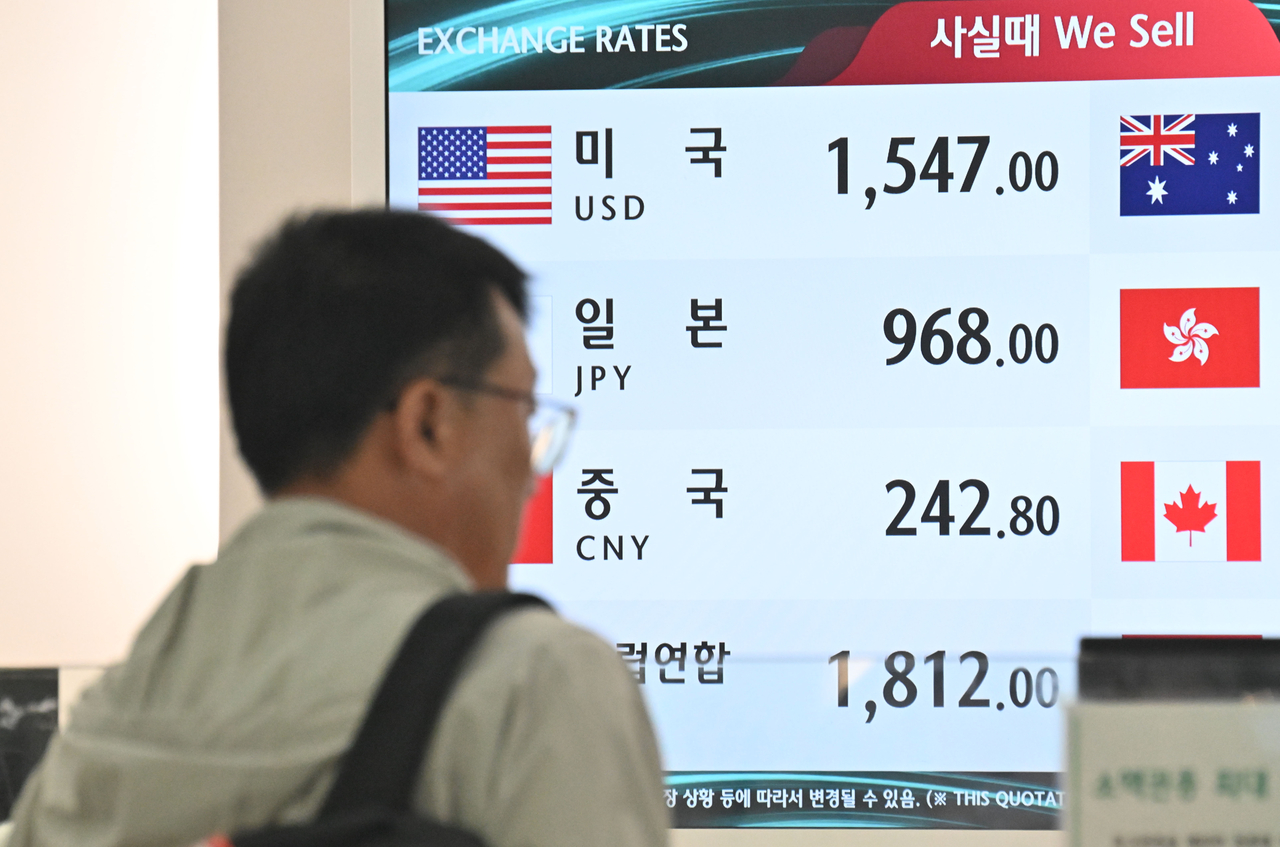
The won touched an over one-month low of 1,499.7 per dollar during Wednesday daytime trading, just before the key 1,500-per-dollar threshold. The currency weakened by over 35 won per dollar from its close of 1,454 on May 7. It was quoted at 1,492.68 per greenback during onshore trading at 2 p.m., Thursday.
With the won already depreciating toward the key 1,500-per-dollar threshold, the currency is expected to face further downward pressure as Korea’s outbound investment into the US accelerates with the Korea-US Strategic Investment Corp. set to launch next month. The resulting capital outflows, estimated at up to $20 billion annually, are expected to add to volatility in the foreign exchange market.
Against this backdrop, a currency swap deal is viewed as a key safety mechanism for Korea, helping ease market volatility by ensuring access to dollar liquidity at a predetermined exchange rate.
“Currency swap agreements are significant because they allow central banks to quickly secure dollars and supply them to the market during times of crisis,” a researcher at a local think tank said.
“The mere existence of a currency swap line provides a strong psychological stabilizing effect on the market, regardless of the size or the terms of the arrangement itself.”
Meanwhile, the US government has reportedly been trying to expand swap lines with allies in the Gulf and Asia, following the war, in a bid to reinforce the dollar’s dominance, according to a recent report from The New York Times.
Though Washington has traditionally taken a cautious approach toward establishing standing currency swap arrangements with countries that do not issue reserve currencies, the latest move is seen as an effort to counter the growing influence of the Chinese yuan — potentially creating an opening for Korea.
Currently, the US maintains permanent swap lines with only five counterparts — Canada, Japan, the EU, UK and Switzerland.
Limited pool of dollar allies
While Korea maintains currency swap agreements with several counterparts, its channels for directly securing dollar liquidity remain limited to arrangements including a $10 billion currency swap line with Japan and a $38.4 billion facility under the Chiang Mai Initiative.
With Korea lacking a currency swap line with the US, the dollar issuer, the world’s dominant reserve currency, such a deal is viewed as a key financial backstop for the country.
During the 2008 global financial crisis, Korea signed a $30 billion currency swap deal with the US Federal Reserve. In March 2020, the two countries established a temporary $60 billion swap arrangement amid the COVID-19 pandemic. Through the tool, Korea secured around $19.87 billion in funding.
silverstar@heraldcorp.com


