
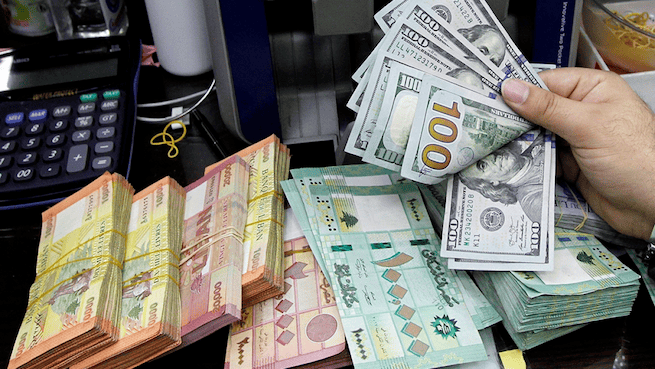
As Lebanon edges towards a fragile political reset under President Joseph Aoun and Prime Minister Nawaf Salam, a more subtle form of confrontation may already be under way: a renewed campaign against the Lebanese lira.
The danger facing Lebanon today is not merely military escalation or political paralysis. It is the deliberate weaponisation of economic collapse.
For Hezbollah, direct mobilisation against the government carries risks it did not face in previous years. Any attempt to send supporters into the streets to openly challenge the state could backfire dramatically. After years of economic devastation and successive wars, many Lebanese- including within the Shia community- increasingly blame the armed militia for the country’s isolation and collapse. Open street demonstrations by the group would risk uniting rival Lebanese factions, alienating international partners and reinforcing the image of Hezbollah as the militia obstructing state recovery.
Far more effective, from the group’s perspective, would be the engineering of financial chaos.
Lebanon has seen this script before. Between 2021 and 2023, the lira entered a spiral devaluation that destroyed purchasing power, paralysed businesses and pushed public sector workers into desperation. Hyperinflation hollowed out salaries, accelerated dollarisation and pushed ordinary citizens towards the streets in anger. The collapse appeared spontaneous. In reality, Lebanon’s currency market has always been deeply vulnerable to political manipulation.
Today, that vulnerability remains acute.
The Lebanese state still lacks meaningful external financial support. The Banque du Liban has few tools left to defend the currency beyond absorbing dollars from remittances and the retail foreign exchange market. Businesses and citizens needing Lebanese pounds to pay taxes or local expenses sell dollars through exchange houses, which then indirectly feed dollar liquidity back into the central bank’s reserves.
But much of Lebanon’s foreign exchange sector has long operated within political networks aligned with Hezbollah and its allies. Should major exchange houses begin hoarding dollars, slowing conversions into lira or amplifying panic expectations, the effects could rapidly become self-fulfilling. Lebanon’s monetary system remains too fragile to absorb another confidence shock.
Recent developments suggest precisely such a narrative is being cultivated.
On April 27, Al Akhbar newspaper — the mouthpiece of Hezbollah and the Iranian Revolutionary Guard Corps — published an article warning that the exchange rate was “on the verge of collapse”. Since then, pro-Hezbollah commentators and aligned social media networks have intensified attacks on the central bank governor and while amplifying speculation over an imminent lira crash.
The campaign has not remained confined to openly pro-Hezbollah media. L’Orient-Le Jour the French newspaper published in Lebanon has also maintained sustained criticism of the central bank governor and echoed concerns surrounding monetary stability, contributing, intentionally or otherwise, to a broader atmosphere of financial anxiety.
The stakes extend far beyond the currency market itself.
Lebanon’s public sector remains heavily exposed to lira instability. Civil servants, the armed forces and police services continue to rely predominantly on currency payments in Lira. Under the 2026 budget, security institutions and military personnel account for roughly 27 per cent of total state expenditures, a smaller share than the roughly 69 per cent seen before the crisis in 2018, but still large enough that any sharp depreciation would devastate household incomes across the security apparatus.
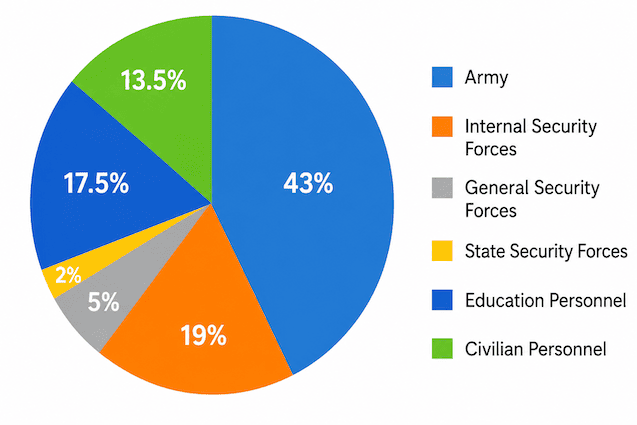
That is precisely why a currency collapse would become politically explosive.
If soldiers, police officers and civil servants once again find their salaries rendered worthless, demonstrations could quickly spill into the streets under the banner of economic frustration rather than overt political affiliation led by Hezbollah. What begins as monetary instability could evolve into nationwide unrest, creating pressure on the Salam government to resign and weakening President Aoun at a moment when Lebanon is attempting to navigate sensitive regional diplomacy, including direct discussions linked to de-escalation and potential future peace arrangements with Israel.
Economic destabilisation offers a plausible route to achieve political paralysis without firing a shot.
The risk for Lebanon is that the country may once again underestimate the extent to which financial systems can be manipulated as instruments of political warfare.
For Washington, the lesson should be straightforward. If the US wants to preserve Lebanon’s fragile transition and shield it from renewed Iranian leverage, stabilising the monetary front is no longer secondary policy, it is central to national security.
That may require emergency financial mechanisms to strengthen the central bank’s capacity to absorb market pressure, including forms of temporary dollar liquidity support or swap arrangements. Without external backing, the Lebanese state remains dangerously exposed to a pressure point that the Iranian linked militia understand all too well.
Lebanon’s next confrontation may not just be on the southern border. It may begin at the currency exchange counter.


