Malaysia to ‘seriously’ look into expanding settling foreign trade payments in local currencies — Anwar
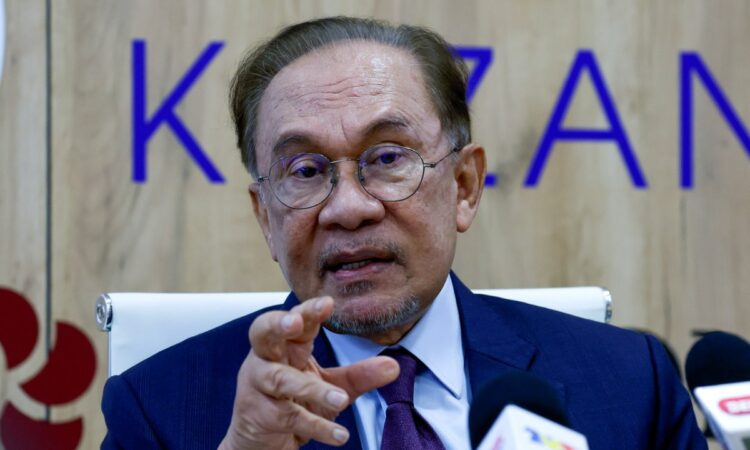
KUALA LUMPUR (June 18): Malaysia will “seriously” explore using local currencies with trading partners to mitigate volatile foreign exchange risks, Prime Minister Datuk Seri Anwar Ibrahim said.
He said that Malaysia was already trading significantly with China and Russia, while India had agreed to start trading in its currency or undertake barter trade.
Anwar, who is also the finance minister, cited the success of such bilateral payment arrangements in domestic currencies, such as with China. He noted that trading in local currencies with China has expanded to around 22%-23% of total bilateral trade, “which is actually a large volume” from a low of about 16% some years back.
“In our negotiations bilaterally with many countries, we are now starting to explore this very seriously. And India has agreed, finally, to start either some form of barter, if not for the local currency, but the option is, of course, local currency,” Anwar said on Thursday in response to a question by Donald Courter, a correspondent at RT, the Russian state-backed television news channel.
Earlier, Courter said there had been talks about creating alternative payment systems against Western-dominated systems and whether Asean countries are doing the same.
Malaysia has been actively expanding cross-border trade settlements in local currencies to reduce dependence on the US dollar and minimise exchange rate risks. There had been significant milestones achieved, led by Bank Negara Malaysia, including bilateral frameworks with major partners such as China, Indonesia, and Thailand, as well as recent discussions with Russia.
Anwar and Russian President Vladimir Putin on Thursday discussed using local currencies in bilateral trade as part of efforts to strengthen economic ties during their meeting in Kazan, Tatarstan. The leaders also discussed “exploring mechanisms” to expand bilateral trade and investment using the ringgit and ruble.
When asked whether future cooperation with Russia on energy would further solidify Malaysia’s national interests, Anwar said Malaysia’s move to enter into energy supply agreements with certain countries, including Russia, was “critical for our economic survival” and to fulfil its national needs since the country is now a net-importer of crude oil.
“I will certainly push this agenda forward and give it priority,” he added.
Anwar explained that although Malaysia produces 50% of its oil, it exports liquefied natural gas to countries such as China, South Korea and Japan through long-standing agreements, and “actively exploring in many countries in Central Asia as well as Canada”.
On pursuing business linkages with Russia, Anwar said there is huge potential with Moscow, which is relatively untapped, ranging from artificial intelligence, cybersecurity, digital, and modern agriculture.
“I’m extremely thankful to President Putin, who’s given a very supportive view on this, and even the Rais of Tatarstan in my discussions, where we could enhance our bilateral relations.
“And we have got teams now going to not only facilitate, but accelerate the process,” said Anwar, adding that despite challenges faced over payment systems and procedures due to restrictions previously, Russia has never breached any business and trade agreements.
RT sat down with Anwar on the sidelines of the Russia-Asean Summit in Kazan to discuss a wide range of topics, including the West Asia conflicts, the economy, and cooperation with Russia. The summit is being held to mark the 35th anniversary of relations between Russia and the regional organisation.
The prime minister is currently leading the Malaysian delegation to the Asean-Russia Commemorative Summit in Kazan, which ends on Thursday.
Uploaded by Chng Shear Lane