Markets rally 1.4%, rupee rises to 95.23; Experts pin hopes on US-Iran deal to reverse foreign outflows | Business News
4 min readMumbaiUpdated: May 25, 2026 10:27 PM IST
Indian equity markets rallied sharply on Monday, with benchmark indices surging more than 1.4%, while the rupee extended its winning streak for a third consecutive session against the US dollar.
Investor sentiment improved significantly amid growing optimism over a potential peace agreement between Iran and the US, easing concerns surrounding geopolitical tensions in West Asia.

The drop in oil prices below $100 per barrel gave a boost to market confidence, particularly for import-dependent economies like India, where lower crude costs can help ease inflationary pressures and improve fiscal stability.
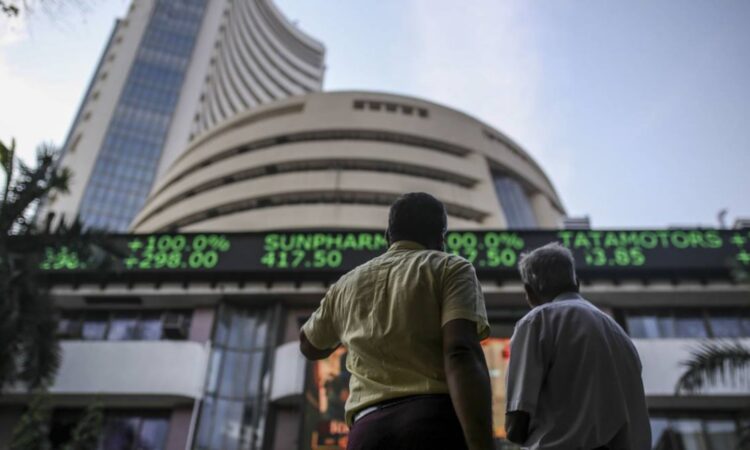
The NSE’s Nifty 50 ended the session at 24,031.70, up 312.40 points or 1.3% from its previous close. The BSE’s Sensex closed 1,073.61 points or 1.4% higher at 76,488.96.
The gains were broad-based, with over 66% of the stocks trading on the NSE ending higher, with almost all sectoral indices gaining as well. These gains were led by banking, financial services, and automobile stocks.
Other global markets, led by the Nikkei of Japan which rose 2.87%, also gained ground.
The rupee ended at 95.23 against the dollar on Monday and has now gained over 1.5% since hitting a record low of 96.96, aided by hopes of peace in West Asia and reported heavy intervention from the central bank. However, the currency is still down around 5% against the greenback from its pre-war levels. The sharp fall from the pre-war levels has arguably left the currency undervalued both nominally and in terms of the real effective exchange rate (REER), Reserve Bank of India Governor Sanjay Malhotra told Mint in an interview.
Story continues below this ad
The REER is a mechanism to compare the weighted average value of a currency against a basket of global currencies. Malhotra’s comment also boosted sentiment in the forex market. “The rupee traded strongly, gaining around 0.45%, as improving sentiment around the US-Iran conflict supported risk assets and eased pressure on crude oil prices. Reports suggesting progress towards a possible peace framework and reopening of the Strait of Hormuz helped strengthen the rupee and other emerging market currencies,” said Jateen Trivedi, VP Research Analyst, Commodity and Currency, LKP Securities.
However, uncertainty still remains elevated after US President Donald Trump stated that the Hormuz blockade would continue until a final agreement is formally signed, keeping markets cautious despite positive negotiations. The improved sentiment in markets came after Trump said a memorandum of understanding for a peace deal with Iran had largely been negotiated. While he did not provide details of the agreement, Trump on Saturday said on Truth Social that “final aspects and details of the Deal are currently being discussed, and will be announced shortly.”
Some experts also expect an announcement to be imminent. “Clearly, neither the US nor GCC countries want a re-escalation of the conflict, and it is hard to see what this would achieve anyway, apart from guaranteeing that Hormuz stays closed for weeks or months more,” Ian Mitchell, Executive Director at JPMorgan said on Friday. “But continued delays are also no longer an option — US 10 year yields are +60bps since the war began to 4.6%, Trump (rightly) cares about bond markets (and not equities as some have argued). He has previously pivoted when yields break 4.5% (Liberation Day, Chinese tariff discussion etc.),” Mitchell said in his note.
In India, experts are cautiously optimistic regarding a deal between the two countries. “Hopefully a deal is finally signed, but it is too soon to say anything until a concrete agreement is announced. We have seen talks stalling before. But if a deal is announced, foreign outflows would hopefully be reversed or at least curbed to an extent,” said an investment head at a domestic fund house.
Story continues below this ad
Foreign institutional investors (FIIs) have persistently pulled out money from the Indian capital markets since the war began in late February, adding pressure on both the equity and forex markets. FIIs have pulled out nearly $3.3 billion so far in May, having pulled out a combined $21.2 billion in the previous two months.
© The Indian Express Pvt Ltd