
Non-US dollar stablecoins can thrive where financial inefficiencies remain, including in Asean: StanChart
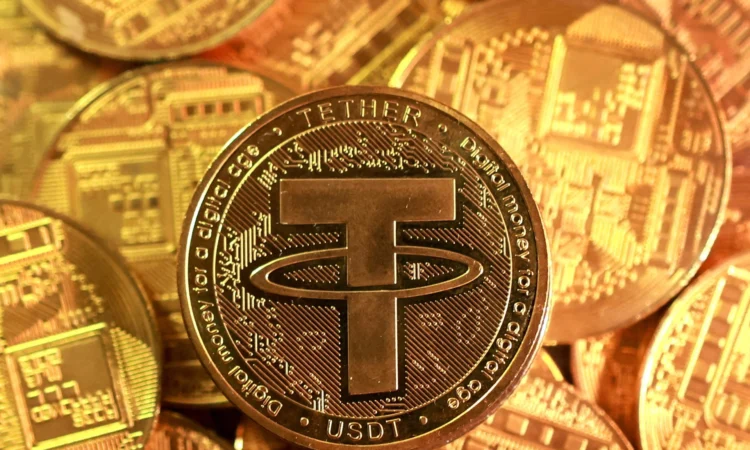
The bank’s digital assets executives back faster settlement across remittance corridors as a main use case
[SINGAPORE] Despite the greenback’s dominance of the global stablecoin market, the use of local currency-pegged stablecoins could accelerate further in the coming years – including in South-east Asia.
Notable use cases are emerging in the region through remittance corridors and corporate treasury management.
Executives from Standard Chartered’s digital assets division and institutional cryptocurrency exchange Zodia Markets told media on Tuesday (Jun 2) that demand for non-US dollar stablecoins is likely to emerge in markets where they can address inefficiencies in cross-border payments, remittances and trade settlement.
A stablecoin is a cryptocurrency designed to maintain a steady value. This is done most reliably through an issuer holding equivalent amounts of reserve assets in cash or cash equivalents.
Currently, about 98 per cent of the stablecoin market is made up of US dollar-pegged crypto assets.
“We’re at a point where stablecoins are no longer just being used for settling crypto transactions, but they’re very much part of real-world cross-border transactions, including retail and commercial payments,” said Rene Michau, global head of digital assets at StanChart.
The bank published a report on the topic in late April, concluding that growing trade and capital flows across global emerging markets – particularly in Asia and Africa – could create demand for local currency-pegged stablecoins where financial infrastructure remains lacking.
“Conventional logic would suggest that liquid G10 currencies (such as the euro, franc or yen) would be the next step forward after the dollar,” said Geoffrey Kendrick, global head of digital assets research at StanChart.
Instead, he suggested that demand for local currency-pegged stablecoins is likely to proliferate in regions where local financial infrastructure may be weaker or less efficient.
SEE ALSO

Nick Philpott, interim CEO of Zodia Markets, revealed that the second-most transacted currency in terms of stablecoins after the greenback on the platform last year was the Turkish lira, rather than any of the G10 currencies.
Clients in Turkey found that using lira-pegged stablecoins was simply faster, cheaper and more reliable than traditional correspondent banking, Philpott said. Zodia Markets is a digital asset platform majority-owned by StanChart.
Remittances a notable use case
Within South-east Asia, signs of that demand are beginning to emerge.
The Philippines stands out as a potential hot spot for non-US dollar stablecoin use, with the country’s heavy remittance flows.
StanChart said it has observed interest in stablecoin payment rails from remittance companies, which are banking on the quicker settlement times of the crypto asset to transfer foreign-worker funds across borders.
Philpott said that transfers to markets such as the Philippines often face greater settlement frictions than flows between countries operating in similar time zones.
This has resulted in growing interest in issuing local currency-pegged stablecoins to facilitate flows across common remittance corridors, such as transfers from Hong Kong and the Middle East to the Philippines.
Local currency-pegged stablecoins offer round-the-clock settlement, allowing transactions to occur instantly without depending on clearing systems, while enabling conversions of one currency to another without the need for an intermediary such as the US dollar.
“For remittances to the Philippines, the originating currencies are often Gulf currencies like the dirham – and we’ve started to see lots of initiatives there around dirham-backed stablecoins,” he added. “We think that this can bring material enhancements to the way people transact.”
The country’s central bank, Bangko Sentral ng Pilipinas (BSP), also acknowledged the potential utility of such settlement rails.
In late April, BSP governor Eli Remolona told The Banker that it was in the pilot stage of developing a central bank-issued stablecoin, particularly a peso-backed stablecoin that can support remittance flows.
But Philpott acknowledged that providing sufficient foreign-exchange liquidity across these stablecoin pairs remains a significant challenge.
Beyond remittances, Mark Willis, head of emerging payments at StanChart, said that the bank sees growing interest from multinational companies, commodity traders and exporters – many of whom operate in Asia, the Middle East and Africa, where payment frictions tend to be highest.
Willis added that the emerging “megatrend” of agentic artificial intelligence commerce will increasingly demand the use of programmable money – such as stablecoins – to execute transactions on behalf of businesses in local currencies.
“The volume of machine-initiated payments will be significant,” he said.
Meanwhile, several South-east Asian companies have developed interest in local currency-pegged stablecoins for corporate treasury management, noted Philpott.
He explained that multinational corporations with operations across the globe could find utility in local currency-backed tokens to move treasury funds across borders – particularly in jurisdictions where US dollar-backed stablecoins trade at a premium to fiat deposits.
In December 2025, the bank set up a regulatory sandbox with Capital A, the parent company of Malaysian airline AirAsia, to develop a ringgit-backed stablecoin for wholesale digital asset use.
“There’s a very obvious use case there,” noted Willis. “There’s a couple of business lines in the treasury function that would like to use a ringgit-backed stablecoin.”
Michau noted that the bank continues to see growing interest in adoption across the region, from clients including corporates, and in wealth and retail banking. “There are definitely conversations happening across South-east Asia,” he said.
“We’re seeing demand across the markets, but whether or not there’s supply – the regulatory landscape can make that challenging.”
Decoding Asia newsletter: your guide to navigating Asia in a new global order. Sign up here to get Decoding Asia newsletter. Delivered to your inbox. Free.


