The Reserve Bank of India is once again mulling to introduce polymer currency notes, with the proposal coming up during recent board meetings held in Patna and Mumbai.
This move towards polymer currency is being driven by a clear data trend which indicates printing costs remain high and currency wear is persistent in India, as per RBI annual report data.
What Are Polymer Notes?
Unlike paper currency, polymer notes are more durable and resistant to dirt and moisture, factors that are especially relevant in India’s climate and usage conditions.
Their longer lifespan reduces the need for frequent reprinting, potentially lowering costs over time despite higher initial production expenses.
The Cost Of Printing Currency
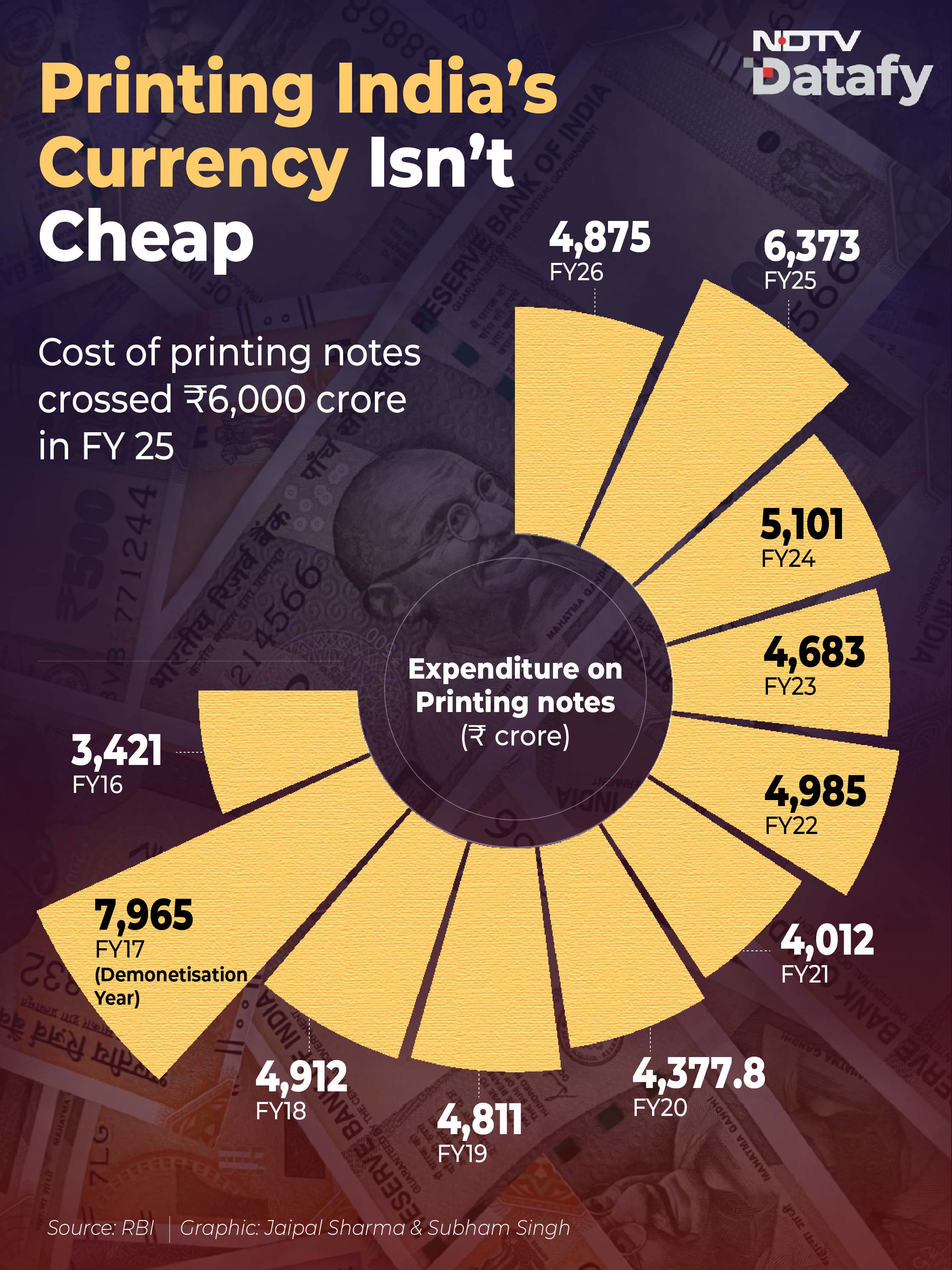
India’s currency printing costs remain elevated, even with year-to-year fluctuations. RBI data shows spending on printing currency notes rose to a peak of Rs 6,372 crore in FY25, before falling to Rs 4,875 crore in FY26.
Earlier, costs had surged up to Rs 7,965 crore in FY17, an exception driven by demonetisation and the rollout of new currency notes.
But printing is only one of the problems.
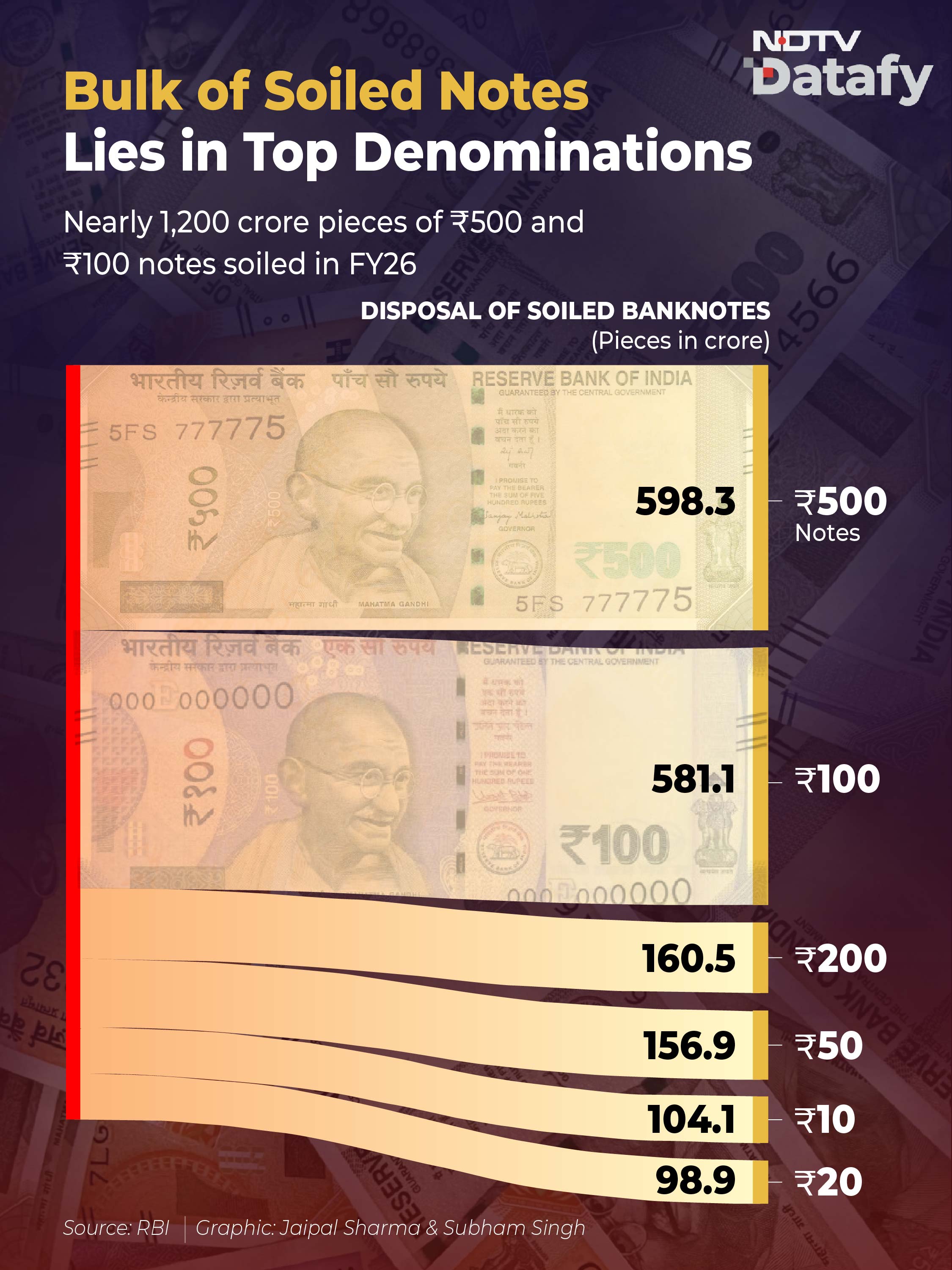
The bigger strain comes from the volume of damaged and soiled notes that need constant replacement. Data from RBI on note disposal highlights how high-circulation denominations drive this cycle.
In the latest figures, Rs 500 notes (598.3 crore pieces) and Rs 100 notes (581.1 crore pieces) account for the bulk of currency withdrawn from circulation in the financial year 2026.
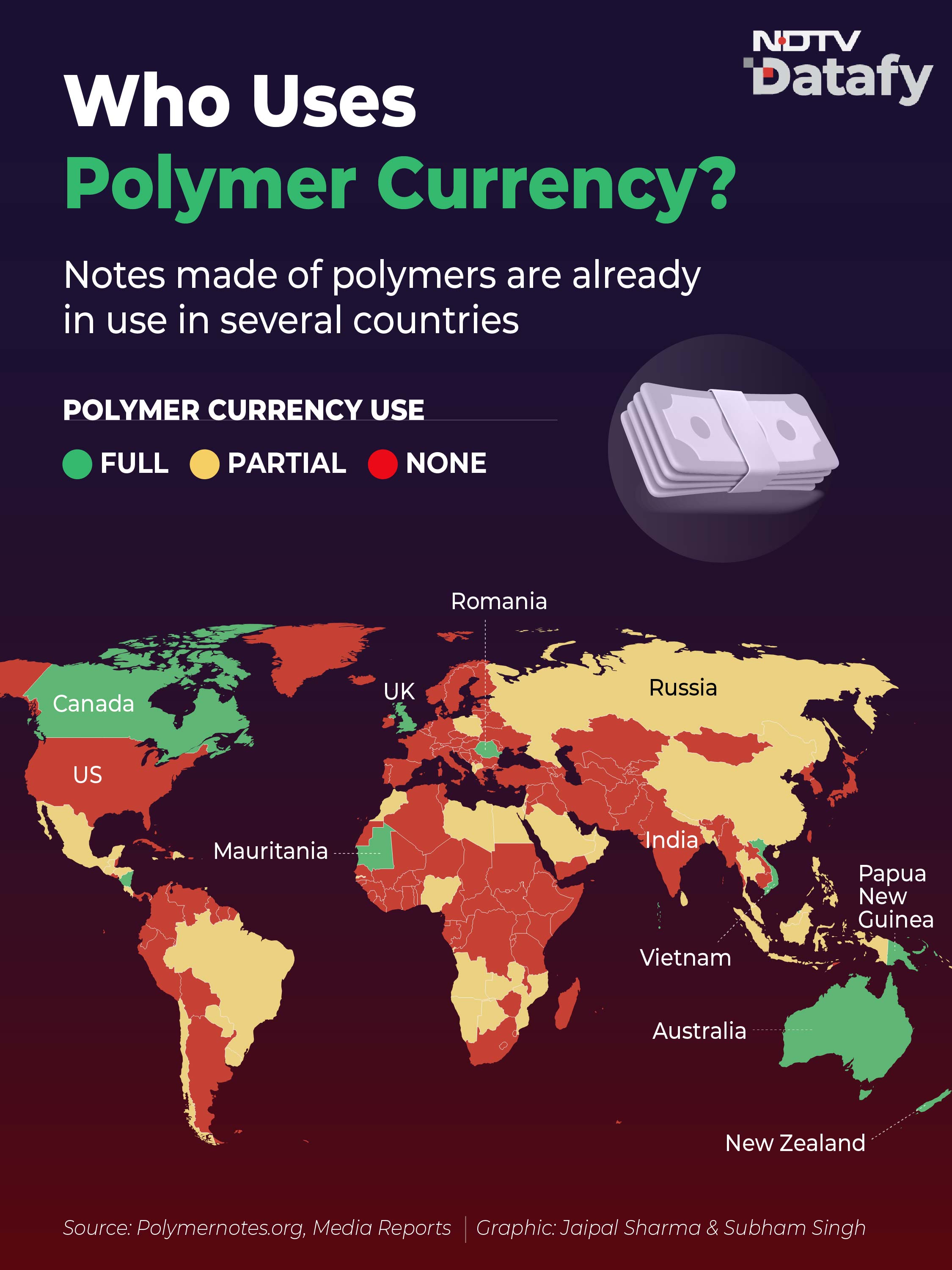
Globally, the shift is already underway. Countries such as Australia, Canada and the UK have fully transitioned to polymer currency, while several others have adopted it partially. However, large parts of the world including India still rely primarily on paper notes.
India had previously tested polymer notes in 2012, but the move did not progress beyond the pilot stage.
Now, with RBI actively reviewing the proposal again and the data pointing to persistent cost and durability challenges, the case for polymer currency has strengthened. For India, the question is no longer just about printing more currency but how to make it last longer and cost less to maintain.