
By Jaspreet Kalra
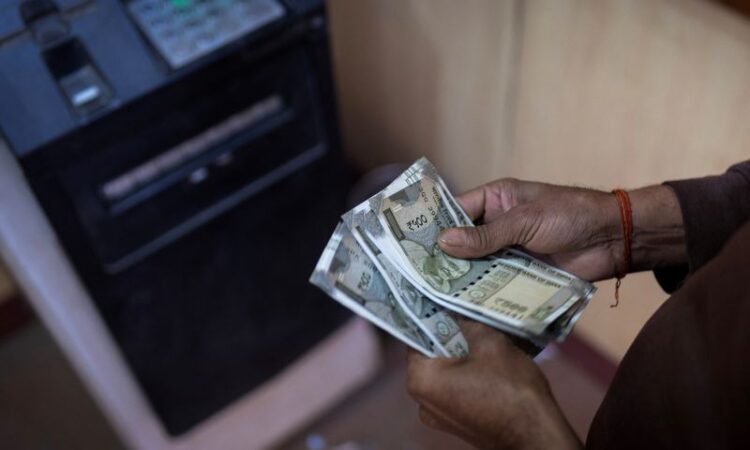
MUMBAI, April 22 (Reuters) – The Indian rupee weakened on Wednesday along with other oil-sensitive Asian currencies as energy prices remained on the boil amid lingering uncertainty about the trajectory of the Iran war, despite an indefinite ceasefire extension.
The rupee declined to an intra-day low of 93.8450 per dollar, its weakest level since March 30, before recovering slightly to 93.75, down 0.3% versus its previous close.
The currency’s losses were limited by likely dollar selling intervention by the Reserve Bank of India, traders said. The central bank’s market intervention also follows a partial rollback of rupee-supportive regulatory measures.
Asian currencies sensitive to ructions in oil prices – such as the Philippine peso and Indonesian rupiah – were weaker as well after oil prices rose 3% to over $98 per barrel.
Even though the U.S. has announced what appears to be a unilateral ceasefire extension, President Trump has also said he would continue the U.S. Navy’s blockade of Iran’s trade by sea, considered an act of war by Iran.
“Volatility in markets is likely to pick up as both sides look to strengthen their leverage for negotiations, but any USD rebound should be restrained as a re-escalation into conflict remains unlikely for now,” analysts at DBS said in a note.
Regional equities were under pressure on Wednesday as MSCI’s gauge of Asia Pacific stocks fell 0.7% while India’s benchmark Nifty 50 declined 0.8%.
Dollar-rupee forward premiums, which bake in the cost of hedging, drifted higher with the 1-year implied yield up 3 bps at 3.13%.
Traders also pointed to heightened hedging appetite from importers in the onshore market while exporters were keen to sell dollars in the NDF market.
Banks, though, are proceeding cautiously on offering clients NDF contracts following the central bank’s recent regulatory crackdown on arbitrage traders between local and NDF markets.
(Reporting by Jaspreet Kalra; Editing by Sonia Cheema and Ronojoy Mazumdar)


