If there is one thing that can be pointed to with certainty in the course of the Modi government, now in its third consecutive term, it is the fall and fall of the rupee. Ironic that the Prime Minister’s first foray to the Centre came with strongly loaded attacks on then Congress government’s mismanagement of the currency and its collateral impact on India’s national pride.
But time, as they say, is the longest distance between two places. And there is much distance now between our currency’s dismal showing and it being a barometer of our country’s pride and stature. It is a facile association to begin with, so let’s focus on the very real impact this one-way ride for the rupee is bringing with it.
As long as India continues to import most of its crude and geopolitical tensions play out amongst the US, Israel and Iran, the rupee will remain both highly vulnerable and deeply unpopular.
2025 saw the highest ever equity outflows by foreign institutional investors (FIIs), of nearly 19 billion dollars, from the Indian market. That figure is being quickly put to shame this year; in the matter of three months, FIIs have already pulled out close to the same amount even as domestic investors rush to buy—and support the stock market’s floor.
Even if domestic players have tried to soak up the stress, the mood on Indian equities and their “glory run” has for now soured. Global brokerage house Nomura described India as “one of the biggest” underweights across Asia as money switches out to North Asian markets like Taiwan, Hong Kong, China, and South Korea.
In some ways, the hand of foreign investors is clear and the direction they’re headed is out of this market. Foreign portfolio investor ownership in Indian equities fell to a 16-year low in the March quarter. That’s not good news for the stock market, but it is even worse for the rupee.
There’s a second more vulnerable pocket for India. More than nine million Indians work in countries like the United Arab Emirates, Saudi Arabia, Qatar, Oman, Kuwait, and Bahrain. That amounts to about 50 billion dollars in annual remittances back home. Any disruption to the region comes at a cost, both in the size of remittances and, importantly, in terms of the economic stability for these Indian workers.
For policymakers, it’s a tough one. While the RBI had earlier chosen to let market forces determine the rate of exchange, there are now reports of “aggressive”, perhaps, alarmed intervention to curb the currency’s slide. Recent reports of a clampdown on rupee derivatives trading have made banks wary, and not hugely pleased with this more interventionist avatar of the Central bank.
Talking sentiments up isn’t helping either. The country’s Chief Economic Advisor to the government says the rupee is fundamentally undervalued and now an attractive proposition for investors. He’s called for an agile fiscal policy. But the truth is that may not cut it for a country that is now staring at a quite significant trade deficit driven by high import costs with crude oil that in turn will strain the fiscal account. For the mood and the trade to change, potential investors will judge the currency against the risk of protracted rupee weakness, trade policy uncertainty and signs that India’s “goldilocks” phase of low inflation and sustained growth is flailing.
Two things are clear at this point. The first is that the Indian rupee is currently the worst-performing currency in Asia and the second is that in India’s case, resets have never meant reversions.
And the second, that in India’s case, the last decade’s rupee resets have hardly ever seen reversions. What that means is, every time the rupee has seen a knock, it has—barring a bumper flow of foreign money—only gone on to settle at lower levels each time.
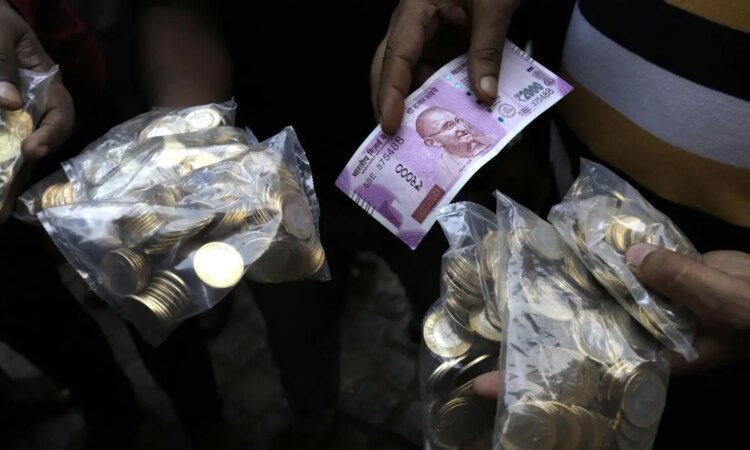
Since May 2014, the rupee has gone from around Rs.60 to a record low near Rs.94–95 per dollar in March 2026, slicing through the psychological “90” mark without so much as a whimper. In the last decade, the rupee has depreciated about 40 per cent. Like a slide projector, the rupee’s levels bear witness to India’s economic stumbles. And like several other instances from the past ten years, there is no admission of the problem and no concentrated approach to plan for the crisis that has arrived along with a falling rupee, rising crude prices and their impact on retail users and farmers, a second migrant labour exodus on the back of a cooking gas crisis, and a deeply vulnerable lower and middle class in India.
Perhaps it is because all crises pale before election season. Because the Central government machinery is oiled to perfection for election mode—from roadshows to boat rides to “jhal muri” stalls. But more than ten years on, it is yet to find its step when it comes to managing an economic shock. So even as oil marketing companies stand against fuel price hikes like the archetypal boy and the dyke, there is an expectation that fuel prices will almost certainly rise after this round of State elections, as perhaps will many other costs.
What is the plan then to divert attention from the rupee being washed away in this current storm? Whataboutery for example, has always been a preferred option. It would be so much easier to point to the flailing fortunes of our neighbours. When things start to get hairy, the government has always found comparisons to Pakistan quite handy. Look at them, they say, look what a beleaguered state they’re in compared with us.
Unfortunately, for the government, that’s a tricky call in this environment because our easiest target Pakistan is currently on a geopolitical high in the region and comparisons may draw more attention to their diplomatic triumphs.
Where shall we look then but at the rupee’s state of collapse?
Mitali Mukherjee is Director of the Journalist Programmes at the Reuters Institute for the Study of Journalism, University of Oxford.
Also Read | Trump’s oil war sets fire to his own economy
Also Read | Notes from Noida