State-by-State: How Crypto Kiosk Regulation Is Reshaping the Virtual Currency Industry – Duane Morris Government Strategies
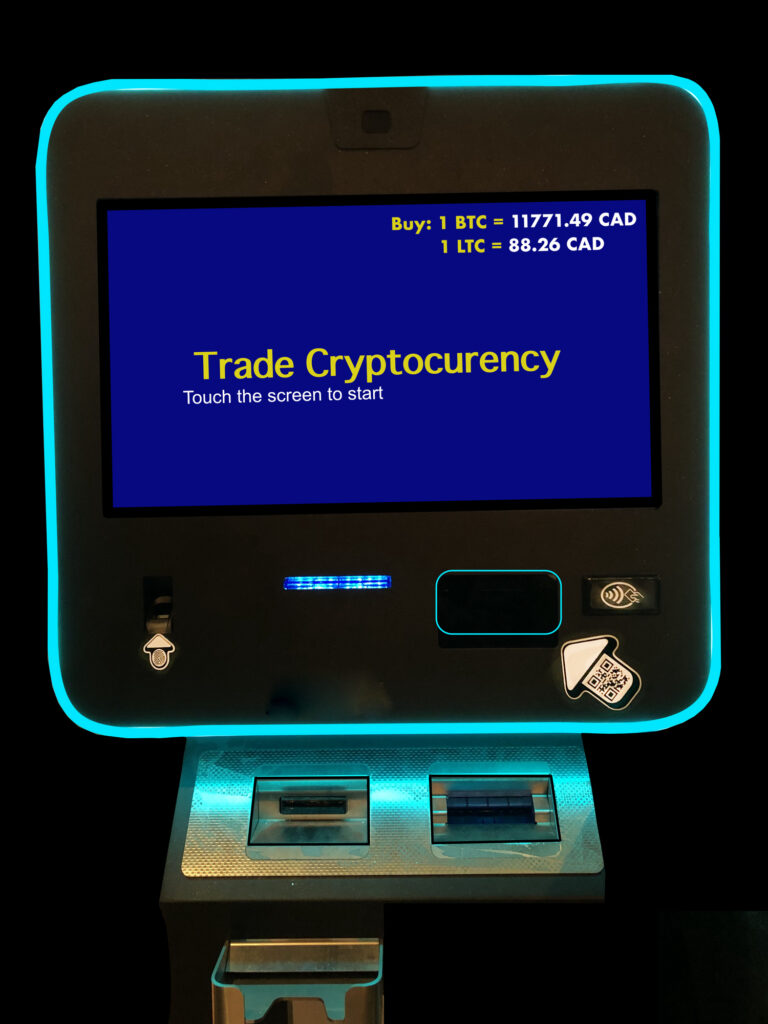
Virtual currency kiosks — the ATM-like machines found in gas stations, convenience stores, and grocery stores that allow customers to buy and sell cryptocurrency with cash — have drawn the attention of state legislatures across the country. Lawmakers in nearly 30 states have introduced or passed crypto kiosk regulations in recent years. The emerging framework across most states centers on a common set of requirements: mandatory fraud warning disclosures, daily transaction limits, refund rights for fraud victims, blockchain analytics to screen for known bad actors, licensing under existing money transmission laws, and location reporting to state regulators. A small number of states have moved further, with outright bans or multi-year moratoria.
Indiana Takes the Most Aggressive Approach — An Outright Ban
Indiana became the first state in the country to ban virtual currency kiosks entirely when Governor Mike Braun signed House Enrolled Act 1116 into law on March 9, 2026. The legislation had an unusual path to passage — it was originally drafted as a regulatory bill that would have required kiosk operators to obtain licenses, verify customer identities, and operate under transaction limits and fee restrictions. After operators testified that those requirements would effectively push them out of Indiana, and law enforcement and consumer advocates highlighted the kiosks’ documented role in fraud against seniors, the legislature pivoted and rewrote the bill as an outright prohibition.
The enacted law states plainly that no person may operate a virtual currency kiosk in Indiana, and defines operators broadly to cover anyone who owns or operates a kiosk and facilitates transactions on behalf of users for compensation. Enforcement authority rests with the state Attorney General under Indiana’s existing consumer protection statutes, and liability can extend to property owners who knowingly permit a kiosk on their premises. Courts finding a knowing or intentional violation may order forfeiture of all fees collected, seizure of any kiosks located in the state, and payment of the Attorney General’s investigative costs.
Michigan Lawmakers Introduce Bipartisan Crypto Kiosk Package
Michigan legislators introduced a two-bill package in 2026 to establish statewide regulation of crypto kiosks. House Bill 5469, sponsored by Representative Joseph Aragona, would create a new, standalone Virtual Currency Kiosk Consumer Protection Act. House Bill 5470, sponsored by Representative Mike McFall, would amend Michigan’s Money Transmission Services Act to subject kiosk operators to that law’s existing licensing and surety bond requirements. The two bills are linked — HB 5470 cannot take effect unless HB 5469 is enacted as well. As of early March 2026, both bills remained in committee.
HB 5469 would require pre-transaction disclosure of material risks, a plain-language fraud warning, post-transaction receipts, blockchain analytics screening, written anti-fraud and enhanced due diligence policies, full-time compliance and consumer protection officers, and quarterly location reports to the Department of Insurance and Financial Services. A notable provision would preempt local governments from enacting their own kiosk ordinances, establishing the state framework as the sole regulatory authority. Operators that knowingly and willfully violate the law would face civil fines of up to $1,000 per violation.
New Hampshire Senate Passes Kiosk Protections
New Hampshire’s Senate passed SB 482 during the 2026 session, establishing a new chapter in state law governing digital asset transaction kiosks. The bill opens with a legislative finding that scammers have used kiosks to induce consumers — particularly older adults — to convert cash into digital assets and transfer the value irreversibly to criminals. As of late April 2026, the bill remains pending.
The bill’s core provisions include a $2,000 daily transaction limit per customer, a 48-hour hold on every first-time customer transaction during which the customer may cancel and receive a full refund, mandatory identity verification, and blockchain analytics to block transfers to flagged wallet addresses. Before accepting funds, kiosks must display prominent warnings — including that no government agency, law enforcement entity, court, utility, or bank will ever demand payment by crypto kiosk — and require customers to answer fraud-screening prompts. If a customer’s responses indicate fraud risk, the kiosk must block the transaction and display law enforcement contact information. Under the bill, fraud victims are entitled to a full refund if they contact both the operator and a law enforcement or government agency within 14 days.
Pennsylvania Moves to Regulate Virtual Currency Kiosks
Pennsylvania is pursuing crypto kiosk regulation on two fronts. In the Senate, Senator Tracy Pennycuick, along with Senators Vogel and Brown, introduced Senate Bill 1015 — the Virtual Currency Kiosk Regulation Act — in September 2025. The bill received a committee hearing in April 2026. On the House side, Representative Liz Hanbidge circulated a cosponsor memo in March 2026 signaling her intent to introduce companion legislation. However, formal bill language had not yet been filed at the time of this writing.
SB 1015 would require pre-transaction disclosures covering the material risks of cryptocurrency, a plain-language fraud warning, written anti-fraud policies, a specific policy protecting elderly and vulnerable adults from financial exploitation, blockchain analytics, live 24-hour customer service, and quarterly kiosk location reports to the Department of Banking and Securities. Operators would also be required to designate full-time compliance and consumer protection officers and obtain a money transmitter license from the state. Representative Hanbidge’s forthcoming House bill would similarly require risk disclosures and fraud warnings. It would add a maximum daily transaction limit per customer. The Pennsylvania Attorney General’s office testified in support of SB 1015. It recommended additional safeguards, including requiring state-issued identification and mandating larger on-site fraud warning signage.
Washington State Senate Passes Crypto Kiosk Bill, House Does Not Act
Washington State took up crypto kiosk regulation during the 2025-2026 session through Senate Bill 5280, introduced by a bipartisan group of senators at the request of the state’s Department of Financial Institutions. The bill’s findings note that the Federal Trade Commission received more per capita reports of imposter scams from Washington than from any other state in 2023. The Senate passed the bill, but it failed to receive a vote in the House before the session ended.
The bill would have prohibited operators from accepting or dispensing more than $2,000 per customer per day, capped fees at the greater of five dollars or 15 percent of the dollar equivalent of the transaction, and required pre-transaction disclosure of operator contact information, customer service availability, a fraud alert, and a notice that fraudulent transactions may result in unrecoverable loss. Operators would also have been required to register all kiosk locations with the nationwide licensing system at least 30 days before commencing business at each site and to provide detailed transaction receipts. The bill amends Washington’s Money Services Act, meaning operators would also remain subject to its broader disclosure and licensing requirements.
Wisconsin Enacts Virtual Currency Kiosk Protections
Wisconsin became one of the first states to enact crypto kiosk regulation in 2026 when Governor Tony Evers signed Assembly Bill 968 into law on April 9, 2026. The law adds a new section to Wisconsin’s existing money transmission statutes, requires operators to obtain a state license, and emphasizes fraud warnings and customer identification. Operators must affix a physical fraud alert — printed in no smaller than 20-point type — to the front of each kiosk, display that same warning on screen before any other content, and require customers to affirmatively acknowledge it before proceeding. Before an initial transaction, operators must collect full customer identification information, obtain a copy of a government-issued ID, and photograph the customer at the kiosk for each subsequent transaction.
The law caps transactions at $1,000 in fiat currency per customer per day. It entitles fraud victims to a full refund — including fees — if they notify the operator and a law enforcement or government agency within 30 days. Operators must notify local law enforcement of each kiosk location before conducting any transactions at that site, are prohibited from placing a kiosk within five feet of a traditional ATM, must provide live toll-free customer service during all hours of operation, and must maintain a written anti-fraud policy covering risk identification, controls, monitoring responsibilities, and periodic review procedures.
Frequently Asked Questions: Crypto Kiosk Regulation
- What states have banned crypto kiosks? Indiana is currently the only state to have enacted an outright ban on virtual currency kiosks. Governor Mike Braun signed the prohibition into law on March 9, 2026. Vermont has taken a different approach, extending a moratorium on new kiosks rather than banning existing ones.
- Which states have enacted crypto kiosk regulations in 2026? Indiana (an outright ban), Wisconsin, Virginia, Wyoming, and South Dakota enacted crypto kiosk laws in 2026. Nebraska enacted legislation in 2025. Legislation is pending in Pennsylvania, New Hampshire, Michigan, and several other states.
- What are the most common requirements in state crypto kiosk regulation bills? The most common requirements across state legislation include mandatory fraud warning disclosures before each transaction, daily transaction limits (typically ranging from $1,000 to $2,000), refund rights for fraud victims, blockchain analytics to screen for known fraudulent wallet addresses, licensing under state money transmission laws, and quarterly reporting of kiosk locations to state regulators.
- Do crypto kiosk operators need a money transmitter license? In states with enacted crypto kiosk regulation, operators are generally required to obtain a money transmitter license or register under an equivalent state financial services framework. Pennsylvania’s SB 1015, Wisconsin’s AB 968, and Michigan’s HB 5470 all include licensing requirements of this nature.
- What is blockchain analytics, and why do these bills require it? Blockchain analytics refers to software that analyzes transaction data on cryptocurrency networks and assigns risk ratings to specific digital wallet addresses. State legislators are requiring kiosk operators to use it as a tool to prevent transactions from being sent to wallets known to be associated with fraud, theft, or other illicit activity.