Taiwan Dollar Reverses Gains to Close at NT$31.874 as Dollar Rebounds, Pressuring Asian Currencies; Yen Extends 39.5-Year Low — BigGo Finance
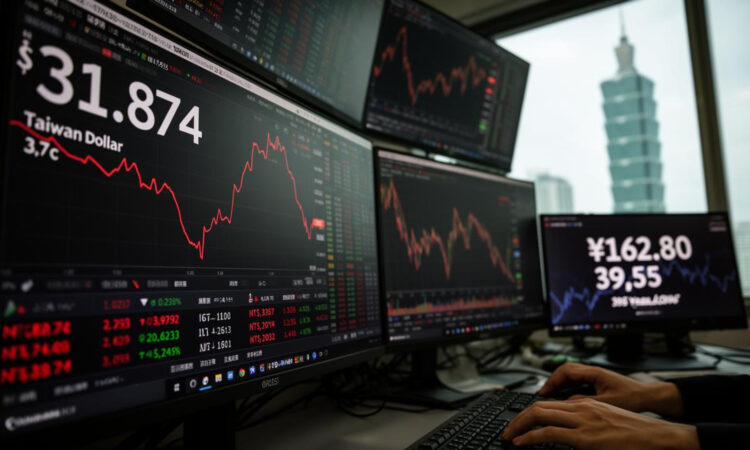
Taipei Forex Market Update
The Taiwan dollar reversed early gains against the US dollar in Taipei forex trading on Wednesday (July 1), closing at NT$31.874, a decline of 3.7 cents from the previous session. Market participants noted that the US dollar index rebounded from the prior day’s lows ahead of public remarks by incoming Federal Reserve Chair Kevin Warsh, triggering broad-based weakness across Asian currencies and sending the Taiwan dollar into a choppy, weaker range.
Interbank trading saw the Taiwan dollar reach an intraday high of NT$31.801 and a low of NT$31.900, with turnover remaining elevated at US$1.793 billion. Currency traders said foreign capital inflows during the morning session initially pushed the Taiwan dollar higher, but the currency surrendered its gains by the afternoon as dollar buying emerged, including demand from importers, ultimately breaching the NT$31.85 level.
Market sources indicate that Warsh is widely viewed as a relatively hawkish figure, and expectations are building that US interest rates may stay higher for longer under his leadership — a dynamic that is providing support for the dollar. Against this backdrop, short-covering in the greenback has intensified, placing broad depreciation pressure on Asian currencies.
Separately, S&P Global released Taiwan’s June Manufacturing Purchasing Managers’ Index (PMI) on the same day. The reading slipped to 55.2 from 56.1 in May, cooling modestly but remaining above the 50 threshold that separates expansion from contraction for a seventh straight month.
Analysts noted that while Taiwan’s manufacturing sector continues to expand, the deceleration in growth momentum, coupled with a strengthening dollar, is providing insufficient near-term support for the Taiwan dollar. However, with Taiwan’s export performance remaining solid and the market entering the peak season for listed-company dividend payouts, demand for dollars from foreign investors repatriating dividends is offsetting selling pressure from exporters. The Taiwan dollar is expected to trade in a range-bound pattern in the near term.
Yen Weakens to ¥162.80, Hitting 39.5-Year Low
Another focal point in Asian currency markets is the trajectory of the Japanese yen. According to market data, the dollar-yen pair held steady around ¥162.80 during Wednesday afternoon trading in Tokyo, briefly dipping toward the ¥162.70 area before recovering those losses. Warsh’s perceived hawkish lean has reinforced the view that dollar selling pressure is limited and a significant pullback is unlikely.
In the prior New York session on June 30, the dollar briefly touched ¥162.52 — the yen’s weakest level since December 1986, marking a roughly 39-and-a-half-year low. Market analysts view the stark Japan-US interest rate differential as the core driver behind the yen’s persistent weakness.
Market sources noted that US economic indicators released last week bolstered optimism about the American economy while also fueling expectations that the Fed could raise rates further this year. Against this backdrop, investors anticipating a continued widening of the Japan-US rate gap have maintained carry trades — selling yen to buy dollars — keeping any yen rebound firmly capped.
The dollar-yen pair traded in a range of ¥162.52 to ¥162.84 during the Tokyo session; the euro-yen cross fluctuated between ¥185.45 and ¥185.74; and the euro traded between $1.1401 and $1.1422 against the dollar.
Dollar Rebound Pressures Asian Currencies as Markets Focus on Fed Policy Path
Overall, a cautious mood prevails ahead of Fed Chair Warsh’s remarks, with the dollar index’s rebound exerting broad pressure on Asian currencies. Beyond the yen languishing near multi-decade lows, the Taiwan dollar has also snapped its recent short-term uptrend.
Currency traders noted that markets are closely watching how Warsh will frame the outlook for US inflation and monetary policy. If his remarks reinforce expectations that the Fed will keep rates elevated or even tighten further, the dollar could find continued support in the near term, keeping Asian currencies under pressure against the greenback. Conversely, any dovish signals could offer Asian currencies some breathing room.