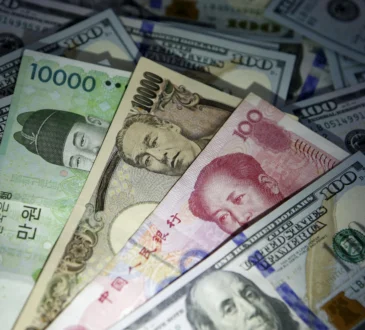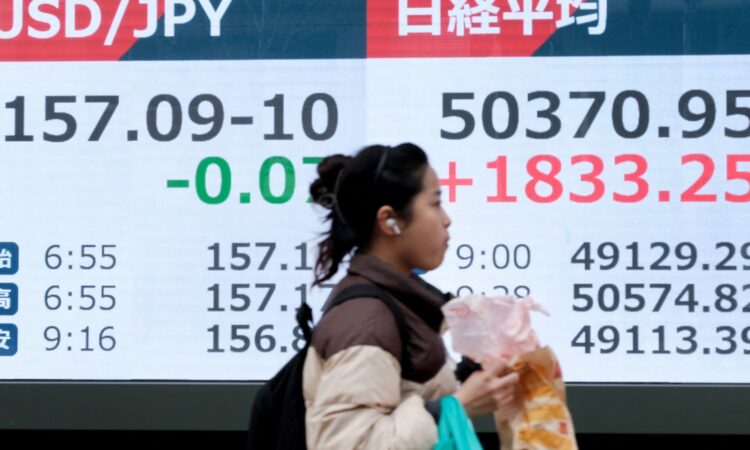
One of the big economic stories of the year has been the weakening of the U.S. dollar. The greenback’s value plummeted in the first half of 2025, largely on concerns about tariffs and the destabilizing effect they’re having on global trade and the U.S. economy.
But in recent months, the dollar’s value has been moving in the opposite direction. Its value — relative to other currencies, is up more than 3% since mid-September.
Throughout the last few weeks, investors have been betting that the Federal Reserve will hold interest rates steady next month, because it doesn’t have much government data to help guide its decision.
“They may push it off, and wait for confirmation of economic data, before they actually look to cut rates again,” Chuck Tomes with Manulife Investment Management.
He said that expectation actually caused interest rates on short-term government bonds to rise. That boosted demand for those bonds, and by definition, for the dollars you need to buy them.
“People want to look at where you can get the highest yielding opportunities in a lot of times. So you saw the U.S. dollar be a little bit more attractive to people looking to where they want to allocate capital,” Tomes said.
But he said in the last few days, many investors have gone back to thinking the Fed will lower rates next month. That’s after a few Fed officials said a cut in December would be appropriate.
That said, there are plenty of factors that are continuing to boost the dollar’s value.
“I think it’s the least dirty shirt in the laundry basket,” said Sebastian Mallaby, senior fellow at the Council on Foreign Relations.
He said many other currencies in that laundry basket have been getting weaker, thanks to stagnant economic growth.
“Growth in Germany in the third quarter has been flat. And France has been in sort of a permanent budget-cum-political crisis. And so the two main economies in Europe have been very sluggish,” Mallaby said.
The Japanese yen has been weakening, too, after the Japanese government approved a big round of stimulus.
“And stimulus means the government is promising more government spending, therefore more bond issuance, and that is negative for the yen,” he said.
To be clear, Mallaby said the factors that eroded confidence in the dollar this year are still at play, including President Donald Trump’s tariffs, his attacks on central bank independence, and the growing national debt.
But overall, Mallaby said, investors are getting more accustomed to those risks.
“There may be long-term attrition in the competitiveness of the U.S. economy if there are tariffs, but we’re not panicking anymore,” he said.
The Trump administration’s policies will continue to affect the dollar’s value.
Ed Gresser, director of trade and global markets at the Progressive Policy Institute, said if tariffs cause consumer spending to drop off in the coming year, “that means we are buying fewer yen, or euros, or yuan, or pesos, so the value will tend to diminish a little bit.”
And that would cause the dollar’s value to rise even more.