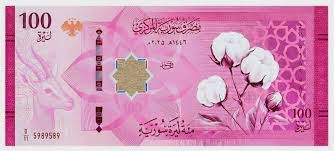
The Syrian Pound has now surpassed the Egyptian Pound as one of the world’s weakest currencies against the US Dollar. Even as the dollar retreats globally from the initial shock of the U.S.–Israeli confrontation with Iran, the SYP continues its steep descent with no sign of stabilization.
By Wednesday, the dollar traded in Damascus at roughly 13,600 (old) SYP. On February 28, at the outset of regional hostilities, the rate stood at 11,750. The currency has therefore lost 15.74 percent of its value in a matter of weeks. Over the same period, the Egyptian Pound narrowed its war-related losses from 12 percent to 8.88 percent.
War Fallout or Evidence of Deeper Decay
Exchange-house employees in Damascus, speaking anonymously, attribute the collapse to regional tensions. Economic experts, however, argue that the conflict merely accelerated a decline rooted in long-standing structural failures. The Central Bank of Syria has remained silent, offering neither explanation nor intervention.
Dr. Razi Mohieddin, head of Rawabet for Business Solutions, describes the Pound’s fall as a sensitive indicator of profound financial imbalances. He notes that regional instability has sharply reduced tourism and remittances, Syria’s primary sources of foreign currency, while investors have frozen capital amid pervasive uncertainty.
Dr. Amer Kharboutli, Director General of the Damascus Chamber of Commerce, points to a psychological dimension. Citizens are rushing to convert their savings into dollars as a hedge against further deterioration. Yet he maintains that the roots of the crisis long predate the current conflict.
Researcher Mohammad Albi, based in Germany, characterizes the situation as a “Catch Up” moment. In his view, the exchange rate is finally adjusting to reflect the currency’s true, degraded value after a period of artificial suppression.
The Trade Balance: The Pound’s Most Vulnerable Point
Analysts identify the chronic trade deficit as the Pound’s most damaging weakness. Imports remain high while exports stagnate, creating constant pressure on the dollar. Dr. Kharboutli notes that the 2025 decision to permit imports of thousands of items, including cars, caused the import bill to surge. Meanwhile, industrial and agricultural sectors have not recovered sufficiently to generate export revenues that could offset the imbalance.
Albi explains that the Syrian economy now relies on the dollar as a medium of consumption without possessing the productive capacity to earn it. He adds that the brief period of stability following the fall of the previous regime was an “administrative illusion” driven by frozen liquidity and a one-time spike in remittances estimated at four billion dollars.
Market Shock: Prices Rising Faster Than the Dollar
The consequences for ordinary Syrians have been immediate and severe. Retailers in Damascus report that prices of cleaning supplies and plastic goods have risen 20 to 30 percent, outpacing the dollar’s 16 percent increase.
Merchants have begun adopting “preemptive pricing.” Syria TV confirmed that wholesalers are now setting prices based on an exchange rate of 14,000 pounds per dollar, anticipating further collapse. Dr. Mohieddin warns that such an environment makes long-term planning impossible and erodes public confidence in both the currency and the government’s economic management.
A Path Forward: Structural Reform, Not Quick Fixes
Experts agree that the crisis cannot be resolved through monetary measures alone. They outline several priorities:
- Expanding the production base: Shifting from a consumption-driven economy to one capable of generating foreign currency through exports.
- Reforming the banking sector: Restoring trust so that financial institutions can resume their mediating role.
- Improving governance and transparency: Enacting investment-friendly legislation and activating legislative oversight to signal a credible reform trajectory.
- Rationalizing imports: Dr. Kharboutli recommends temporarily halting non-essential goods that continue to enter the country through multiple channels.
The current collapse stands as a stark reminder of the Syrian economy’s fragility. Without addressing these deep structural wounds, the livelihoods of Syrians will remain vulnerable to geopolitical shocks far beyond their control.
This article was translated and edited by The Syrian Observer. The Syrian Observer has not verified the content of this story. Responsibility for the information and views set out in this article lies entirely with the author.