
Why Asian Currencies Are Falling After US-Iran War? Rupee, Peso and Rupiah Under Heavy Pressure; Check Latest Status of CNY, JPY, INR & More
1
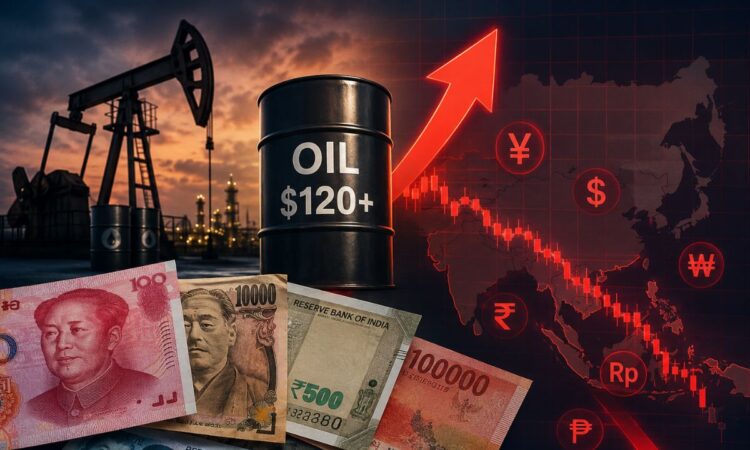
Asian Currencies Falling: Asian currencies are facing renewed pressure as rising crude oil prices and uncertainty around the Iran conflict continue to shake financial markets. The Indian rupee, Indonesian rupiah and Philippine peso have emerged among the weakest-performing currencies in the region as investors worry about inflation, slowing growth and rising import costs.
The Indian rupee touched a fresh record low against the US dollar on Tuesday after crude oil prices remained elevated due to tensions in the Middle East. Analysts say the prolonged energy shock is hurting oil-importing economies across Asia and increasing fears of wider economic stress.
Why Are Asian Currencies Falling Amid the Oil Shock?
Asian currencies have weakened sharply because rising crude oil prices are increasing pressure on oil-importing economies. Countries like India, Indonesia, Thailand and the Philippines rely heavily on imported fuel, which means they need more US dollars to buy oil when prices rise. That increases demand for the dollar and weakens local currencies.
The ongoing US-Iran conflict has also pushed investors toward safer assets like the US dollar, leading to heavy capital outflows from emerging Asian markets. Analysts say the combination of expensive oil, weaker investor sentiment and slowing growth expectations has created strong pressure on regional currencies.
Why Has the Indian Rupee Hit a Record Low Against the US Dollar?
The Indian rupee has emerged as one of Asia’s worst-performing currencies in 2026. The rupee recently fell to record lows near 95.6 against the US dollar after oil prices surged following renewed tensions in the Middle East.
India imports more than 80% of its crude oil requirements, so rising energy prices increase the country’s import bill and widen the current account deficit. Foreign investors have also withdrawn over $20 billion from Indian equities since the conflict intensified, adding further pressure on the currency.
Analysts warn that if oil prices remain elevated and geopolitical tensions continue, the rupee could weaken further toward the 97-100 range against the dollar.
How Major Asian Currencies Have Weakened Against the USD Since the Start of the US-Iran War?
| Currency | Before US-Iran War | Current Status | Change |
| Chinese Yuan (CNY) | Around 7.08 per USD | Around 7.32 per USD | Nearly 3.4% weaker |
| Japanese Yen (JPY) | Around 148 per USD | Around 160 per USD | Nearly 8% weaker |
| Indian Rupee (INR) | Around 90.80 per USD | Around 95.60 per USD | Nearly 5.2% weaker |
| South Korean Won (KRW) | Around 1,320 per USD | Around 1,435 per USD | Nearly 8.7% weaker |
| Singapore Dollar (SGD) | Around 1.34 per USD | Around 1.39 per USD | Nearly 3.7% weaker |
| Hong Kong Dollar (HKD) | Around 7.81 per USD | Around 7.83 per USD | Marginally weaker |
| Indonesian Rupiah (IDR) | Around 16,200 per USD | Around 17,850 per USD | Nearly 10.2% weaker |
| Thai Baht (THB) | Around 35.8 per USD | Around 38.4 per USD | Nearly 7.3% weaker |
| Malaysian Ringgit (MYR) | Around 4.48 per USD | Around 4.82 per USD | Nearly 7.5% weaker |
How Are Rising Crude Oil Prices Hurting Asian Economies?
Higher crude oil prices are increasing inflation across Asia by raising fuel, transportation and manufacturing costs. Since many Asian countries depend heavily on imported energy, governments and businesses are paying significantly more for oil and gas supplies.
The oil shock is also hurting trade balances and increasing fiscal pressure on governments that subsidize fuel prices. Economists say prolonged high oil prices could slow economic growth, reduce consumer spending and force central banks to keep interest rates higher for longer.
Sectors like aviation, logistics, chemicals and transportation have already come under pressure because of higher operating costs. Meanwhile, financial markets across Asia have seen increased volatility due to fears of inflation and recession risks.
Foreign Investor Outflows Add to Currency Weakness
Foreign investors have also continued pulling money out of emerging Asian markets. In India alone, overseas investors have withdrawn more than $20 billion from equities since the Iran conflict escalated, increasing pressure on the rupee and local financial markets.
Analysts believe weakening capital inflows, combined with a widening current account deficit, could push Asian currencies lower in the coming months.
ANZ Bank recently lowered its rupee target for December to 97.5 per dollar from 93 earlier, while BMI, a Fitch Ratings unit, warned the rupee could even slide to 100 if the conflict worsens further.
Currency traders in derivatives markets are also pricing in a growing probability of further depreciation in the rupiah, peso and rupee over the next three months.
Could Oil Prices Above $120 Trigger More Currency Weakness Across Asia?
Analysts believe oil prices above $120 per barrel could deepen currency weakness across Asian markets. Higher energy prices would force countries to spend even more dollars on imports, increasing stress on foreign exchange reserves and current account deficits.
Currencies like the Indian rupee, Indonesian rupiah and Philippine peso are considered especially vulnerable because their economies rely heavily on imported crude oil. Traders in derivatives markets are already pricing in higher chances of further depreciation in several Asian currencies over the next few months.
Market experts also warn that any escalation around the Strait of Hormuz could trigger another sharp spike in oil prices and increase the risk of broader financial instability in emerging markets.
How Is the Iran Conflict Increasing Inflation Risks in Emerging Markets?
The Iran conflict has disrupted global energy supply chains and pushed oil prices to multi-year highs, increasing inflation risks across emerging markets. Higher fuel costs affect transportation, electricity, food production and manufacturing, making everyday goods more expensive for consumers.
Central banks in emerging economies now face a difficult situation. Raising interest rates could slow inflation but may hurt economic growth, while keeping rates low risks further currency weakness and imported inflation.
“The structural reality is brutal for most Asian currencies,” said Ashwin Binwani, founder of Alpha Binwani Capital and three-decade markets veteran.
“Risks from the stalled ceasefire, a ‘dual blockade’ on the Strait of Hormuz and surging inflation mean Asian currencies are far from out of danger — and a ceasefire collapse could trigger a recessionary spiral.”


