
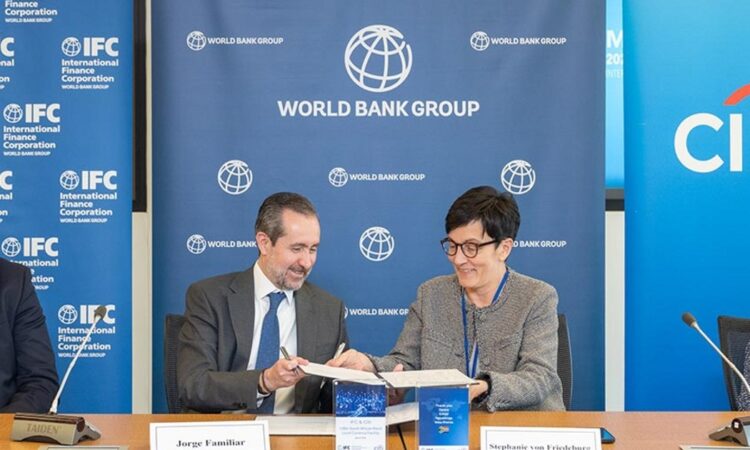
The facility, arranged through the World Bank’s private-sector arm, the International Finance Corporation (IFC), will allow the institution to lend more in South African rand rather than in foreign currencies like the U.S. dollar.
This is critical in emerging markets, where companies often earn revenue in local currency but are forced to borrow in dollars, exposing them to exchange rate shocks.
The deal has already been used to support IFC’s investment in a water-focused outcome-based bond issued by FirstRand Bank, marking the first such instrument issued by a commercial bank globally.
Jorge Familiar, Vice President and Treasurer at the World Bank Group, said local currency financing has become increasingly important amid global economic uncertainty.
“Local currency financing and capital markets development in emerging and developing markets are critical priorities for the World Bank Group.” Familiar said. “This facility is another example of what our partnerships with the private sector can deliver, from outcome bonds to local currency solutions, in support of long-term finance for job creation.”
He added that borrowing in foreign currency can create significant risks for companies whose revenues are denominated locally, making domestic currency funding a key tool for financial stability.
The transaction builds on a similar facility launched in Kenya in 2024, which both institutions describe as a successful pilot.
The South African deal is now being positioned as a scalable model that could be extended to other emerging markets.
Stephanie von Friedeburg, Citi’s Global Head of Public Sector Banking, said the structure adds to the toolkit available to development finance institutions seeking to deepen local capital markets.
The push comes as currency volatility continues to weigh on African economies, including Nigeria and South Africa, where sharp swings in exchange rates have raised borrowing costs and complicated investment planning.
By expanding local currency lending, institutions like the IFC aim to reduce these risks while supporting private sector growth.
Over the past decade, the IFC has committed more than $33 billion in local currency financing across 71 currencies, reflecting a broader shift among development lenders toward reducing dependence on hard currency debt.
The World Bank said the new facility is part of a wider effort to deepen domestic capital markets, improve access to long-term financing, and support job creation across emerging economies.


