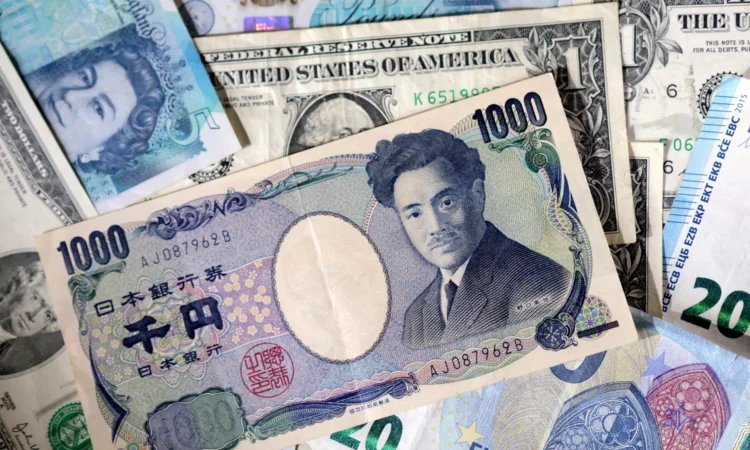
Finance Minister Katayama reiterates that authorities stand ready to act decisively against speculative moves
Published Fri, Jun 19, 2026 · 10:06 AM
[TOKYO] The yen traded precariously near the weakest level in nearly four decades on Friday (Jun 19), putting investors on guard for potential intervention from Japan to defend its currency.
With the Juneteenth trading break looming in the US, thin liquidity conditions could open the door for Japan to step into markets again, as it did during its own holidays in late April and early May, when it intervened to the tune of 11.7 trillion yen (S$93.8 billion).
Japanese Finance Minister Satsuki Katayama reiterated that authorities stand ready to act decisively against speculative moves, saying a recent G7 meeting reaffirmed that capacity. Japanese officials have frequently cited a joint statement signed with Washington last September that allowed for intervention to combat excessive market volatility.
The yen changed hands at 161.25 per US dollar in early trading in Tokyo after hitting 161.81 overnight, its weakest since July 2024, wiping out all gains from the previous intervention bout following a hawkish tilt by the US Federal Reserve. A break above the currency pair’s 2024 high of 161.96 would send the yen to its weakest level since 1986.
The yen has remained under downward pressure despite the Bank of Japan’s (BOJ) latest rate hike this week, as the move has done little to shift the fundamental drivers in foreign exchange markets. Japanese rates are still far below US levels, keeping the yield gap wide, supporting the US dollar and programme carry trades where investors borrow cheaply in yen to chase higher returns elsewhere.
Markets expect the BOJ to raise rates again by the end of this year. But that has failed to dispel pessimism in the yen, with speculative net short positions in the currency sitting at the highest level since July 2024, data showed on Friday.
Speaking in Japan’s parliament on Friday, BOJ deputy governor Ryozo Himino stressed that monetary policy does not target exchange rates, but cautioned that currency volatility is exerting a larger impact than before.
“As such, we need to be mindful of the chance currency moves could affect inflation expectations and underlying inflation,” Himino said. “We will scrutinise how market moves could affect Japan’s economy and prices.”
The yen’s downtrend has been exacerbated by the war in Iran, which has driven oil prices and inflation sharply higher, hitting energy importers like Japan hardest. The BOJ is no longer alone in tightening, with the European Central Bank joining the cycle, while the Federal Reserve’s meeting this week has cemented expectations that its next move will also be a rate hike.
“Clearly against the backdrop of a more hawkish Fed, the yen is vulnerable,” said Chris Scicluna, the head of economic research at Daiwa Capital Markets in London. “The yen is going to be under additional pressure to depreciate, in which case then I think the authorities are going to have to step in and intervene once again to support that currency.” REUTERS