

Warren Buffett retired as chief executive officer of Berkshire Hathaway (BRKA -2.10%) (BRKB -2.04%) at the end of 2025, but he still remains chairman of the holding company. Moreover, since taking over as CEO at the start of 2026, Greg Abel has largely kept Berkshire’s investing strategy the same as his predecessor.
Although Abel jettisoned positions in financial stocks such as Mastercard and Visa, Berkshire continues to hold large stakes in numerous other financial services companies. In fact, there may be as much opportunity, if not more, with some of these companies today as there is with Berkshire itself.
Three Berkshire holdings worth mentioning are American Express (AXP -0.40%), Chubb (CB +0.11%), and Moody’s (MCO -0.73%).
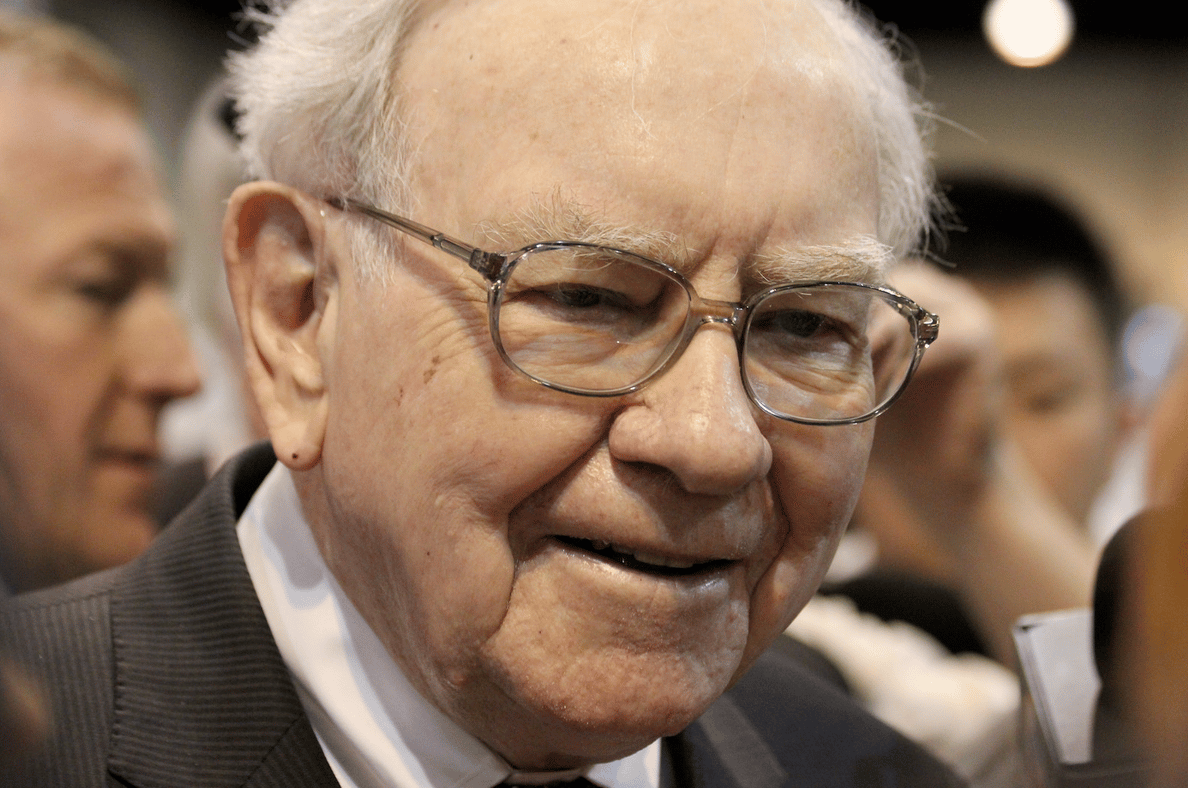
Image source: The Motley Fool.
1. American Express benefits from robust spending by affluent customers
American Express was one of the early Buffett investments. Back in 1964, Buffett’s investment funds made a big contrarian wager on the company following its involvement in the “Salad Oil Scandal.” However, it wasn’t until the 1990s that the stock, commonly known as Amex, became part of the Berkshire stock portfolio.

Today’s Change
(-0.40%) $-1.26
Current Price
$311.17
Key Data Points
Market Cap
Day’s Range
$310.97 – $316.74
52wk Range
$290.97 – $387.49
Volume
1.7K
Avg Vol
2.9M
Gross Margin
59.74%
Dividend Yield
1.14%
Berkshire has held on to it since then, with its 22.5% stake in the payments and financial services company accounting for about 13.5% of the overall portfolio. In recent years, the shares have performed well, doubling in price since 2021, but the mixed recent performance may have many investors thinking twice about buying right now.
However, this recent turbulence may work in your favor if you have a long investing time horizon. Even as the company, which profits from both its closed-loop payments network and fee revenue on its famed payment cards, continues to benefit from robust spending by high-income households, investors reacted negatively to Amex’s latest quarterly earnings release in July. While earnings of $4.53 per share came in ahead of forecasts, a slight shift in revenue mix and lukewarm outlook led to post-earnings weakness.
Considering some green shoots, such as CEO Stephen Squeri’s post-earnings commentary regarding successful membership growth among young and affluent spenders, the market’s recent reaction could prove overblown in hindsight. While not necessarily “cheap” at about 16 times forward earnings, the shares could rise in tandem with improved results. In the recent past, the stock, thanks to its affluent, spending-driven growth, has traded at well above 20 times earnings.
2. Chubb keeps climbing on underwriting gains
Compared to American Express, Chubb is a more recent Berkshire holding, with the position first disclosed in 2024. Then again, Berkshire is hardly a stranger to the industry. Since Buffett took control of Berkshire in the 1960s, this former textile company has made numerous investments in insurance stocks. It’s acquired so many insurance companies outright that many classify it as an insurance company rather than as a conglomerate or holding company.

Today’s Change
(0.11%) $0.37
Current Price
$341.90
Key Data Points
Market Cap
Day’s Range
$337.24 – $342.65
52wk Range
$265.30 – $365.91
Volume
86.9
Avg Vol
1.8M
Dividend Yield
1.16%
It’s unclear whether Berkshire ultimately plans to buy this property and casualty (P&C) insurer outright. For the time being, however, it owns 8.9% of Chubb’s shares outstanding. The position represents about 3.2% of Berkshire’s stock portfolio. So, what’s the big potential opportunity with Chubb shares? Over the past year, the stock has surged by nearly 25%.
Berkshire bought in because of Chubb’s economic moat in specialty insurance and its higher-than-average underwriting margins. Based on the latest financial results, the bull case for Chubb still stands. During Q2 2026, Chubb reported 18.2% growth in core operating income year over year, with book value and tangible book value increasing by 12.3% and 17.1%, respectively, year over year.
Chubb currently trades for less than 12 times forward earnings. As other P&C insurers well-respected for underwriting strength, like WR Berkley and Markel Group, trade at even higher forward multiples, don’t rule out the potential for Chubb to catch up.
3. A deep moat remains for Moody’s
Moody’s is one of just a handful of Wall Street credit raters. Due to this oligopoly, companies like this one have a deep economic moat because corporations and governments issuing debt must obtain credit ratings for institutional investors to buy the securities.

Today’s Change
(-0.73%) $-3.42
Current Price
$461.88
Key Data Points
Market Cap
Day’s Range
$461.86 – $469.18
52wk Range
$402.28 – $546.88
Volume
426.5
Avg Vol
841.9K
Gross Margin
68.82%
Dividend Yield
0.87%
It’s not surprising that Moody’s became a major Berkshire holding back in the early 2000s. Currently, Berkshire owns a 14.2% stake in Moody’s, an $11.5 billion position that accounts for 3.2% of its overall stock portfolio. If you’re looking at Moody’s shares for the first time today, they may seem a bit pricey. This financial services stock trades for about 24 times forward earnings.
Yet while that represents a premium to other credit rating stocks, like S&P Global, which trades for only 20 times forward earnings, keep in mind that S&P Global is far more diversified, with lower-margin, weaker-moat segments like Market Intelligence, where it competes with multiple financial data providers.
For Moody’s, as long as its core business keeps knocking it out of the park, with 15% annualized sales growth, operating margins nearing 50%, as well as adjusted earnings and operating cash flow growth exceeding 30%, the stock remains well positioned to sustain and increase its premium valuation.


