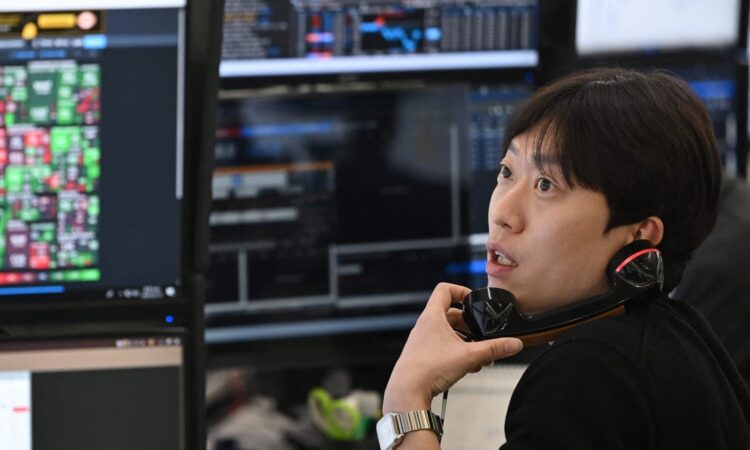
South Korea’s individual investors have long called themselves “ants” — small players navigating a market alongside much larger institutional investors.
In 2026, the ants became impossible to ignore.
South Korean stocks surged through much of the first half of the year, helped by booming demand for AI chips and huge gains in memory makers Samsung Electronics and SK Hynix.
As the market soared, active trading accounts surged, and individuals borrowed heavily to buy shares. Some piled into single-stock leveraged exchange-traded funds that amplify daily gains — and losses — of market favorites.
Then the rally unraveled. After more than doubling to a record high in late June, the benchmark Kospi index fell 22% in July and ended the month 30% below its peak.
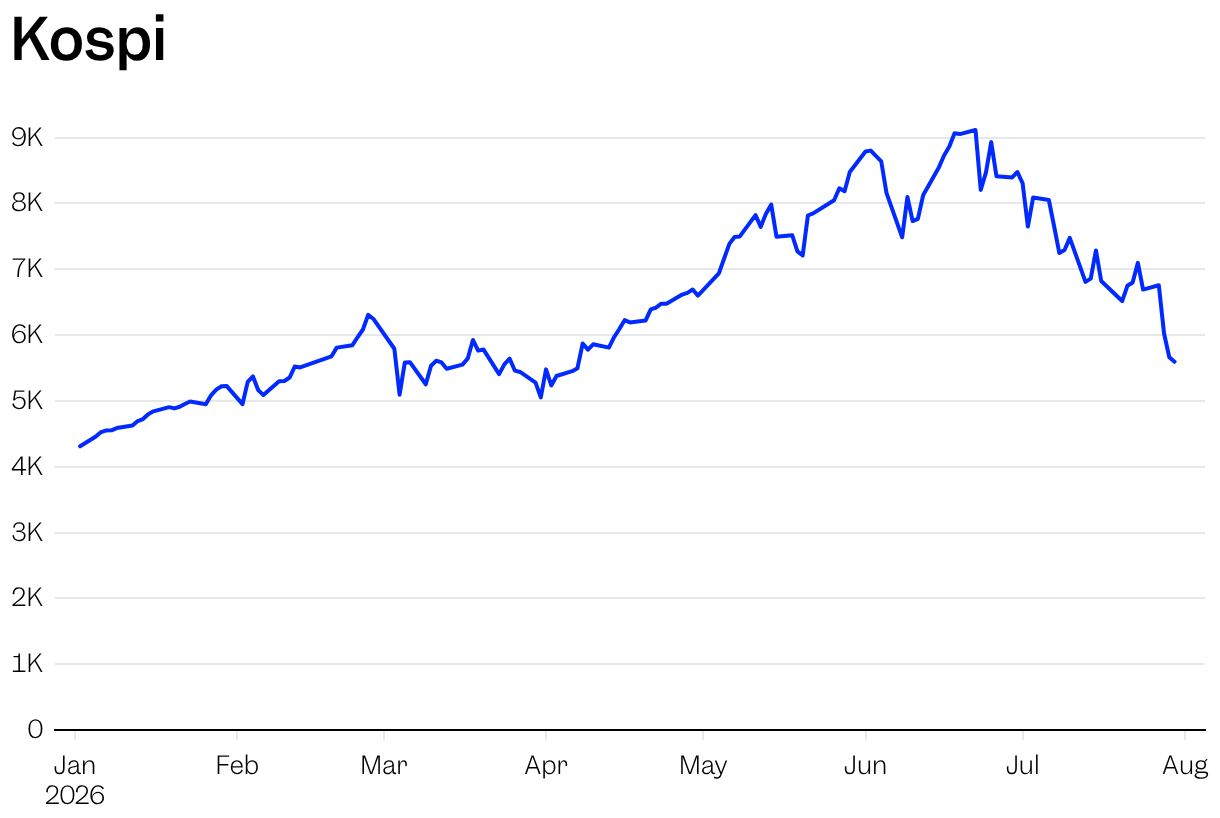
In August, South Korea’s stock market returned to a technical bull market on renewed AI optimism, while volatility has eased from July’s extremes.
In a note published after the wipeout, Goldman Sachs said market positioning looked “much cleaner” after retail investors cut borrowed positions and regulators tightened rules on leveraged products. Despite the rout, the bank remains bullish on Korean stocks.
These charts show how the frenzy built — and what happened when the trade went the other way.
1. Active stock-trading accounts surged
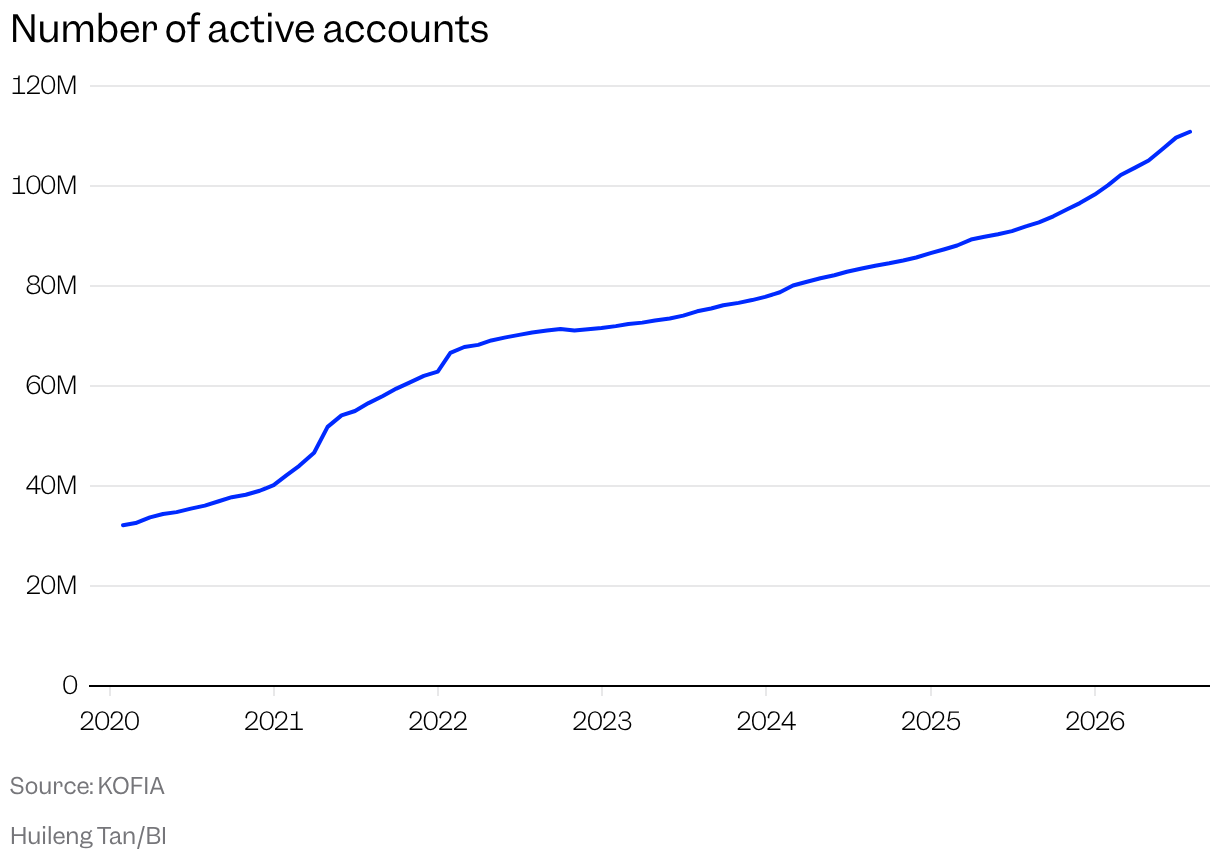
One sign of just how far South Korea’s stock mania has spread: active trading accounts now outnumber people more than two to one.
The number of active stock-trading accounts in South Korea rose from about 86.6 million at the end of 2024 to 110.8 million by July 2026, according to the Korea Financial Investment Association — an increase of about 28% in 19 months.
That’s more than two active trading accounts for every person in a country of about 51.6 million people, including infants and children, though individual investors can hold multiple accounts across brokerages.
An account is considered active if it holds at least 100,000 South Korean won in assets and has recorded at least one transaction in the previous six months.
2. Cash piled up at securities firms
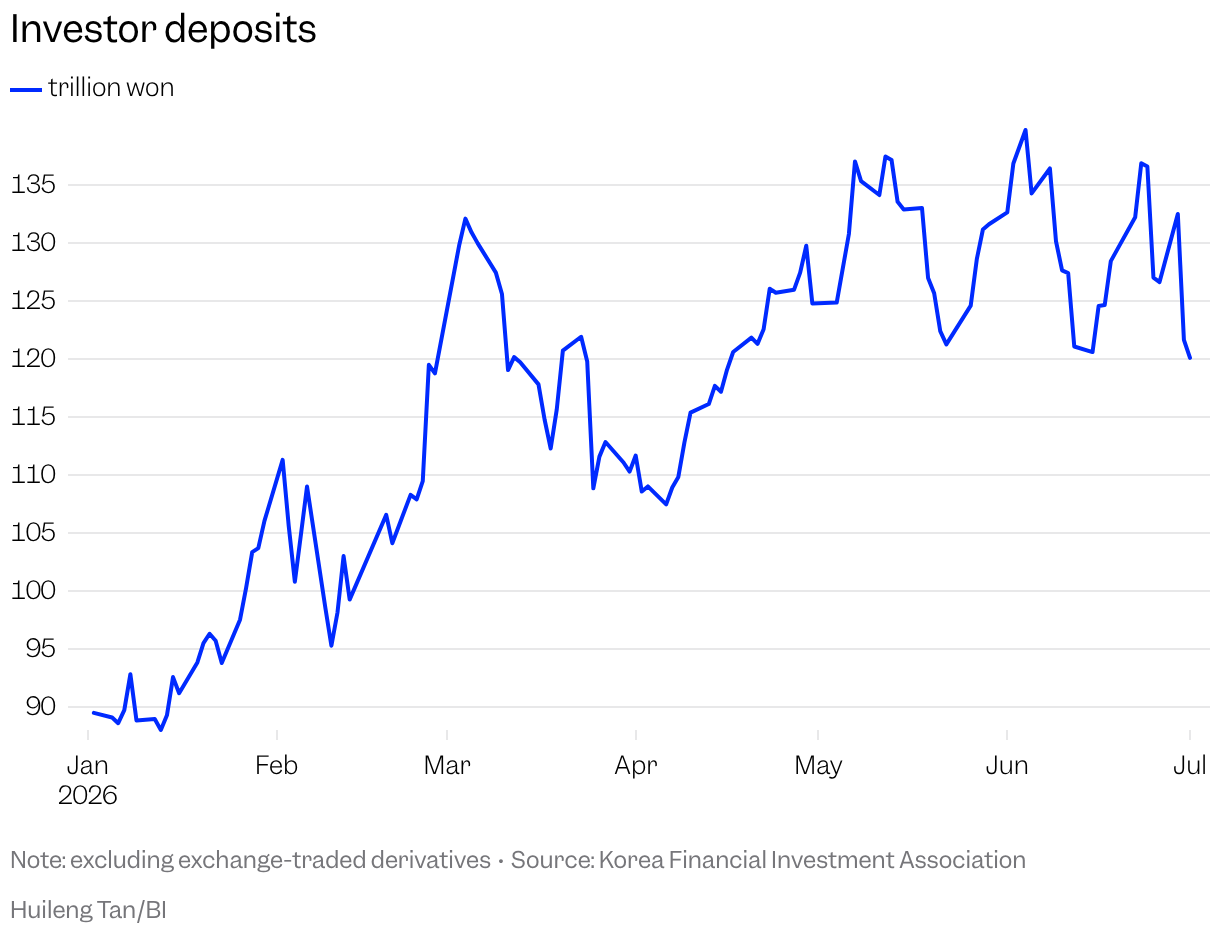
Money available for securities trading rose sharply alongside the rally.
Investor deposits at Korean securities firms climbed from roughly 90 trillion won at the start of the year to more than 135 trillion won at peaks in May and June, before retreating sharply amid the market rout.
The measure is not limited to retail investors, and cash deposited at a brokerage is not necessarily immediately invested.
But it provides a gauge of how much additional money was sitting inside the securities system as enthusiasm for stocks intensified.
3. Korean individuals bought while foreign investors sold
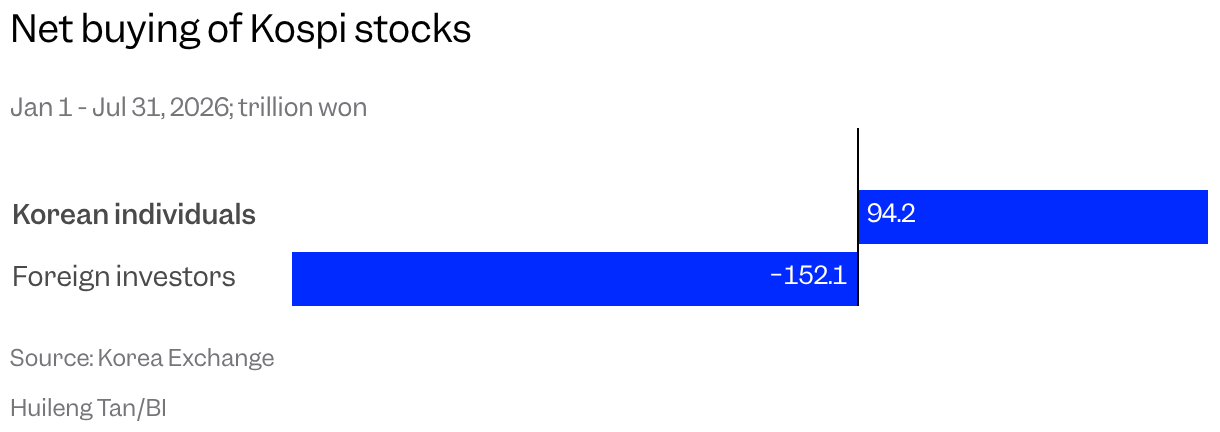
Domestic individuals and overseas investors were on very different sides of the market.
From January 1 through July 31, Korean individuals were net buyers of 94.2 trillion won of Kospi stocks, while foreign investors were net sellers of about 152.1 trillion won.
The contrast shows that domestic individuals accumulated substantial exposure even as overseas investors reduced theirs.
4. Individuals borrowed heavily to buy stocks
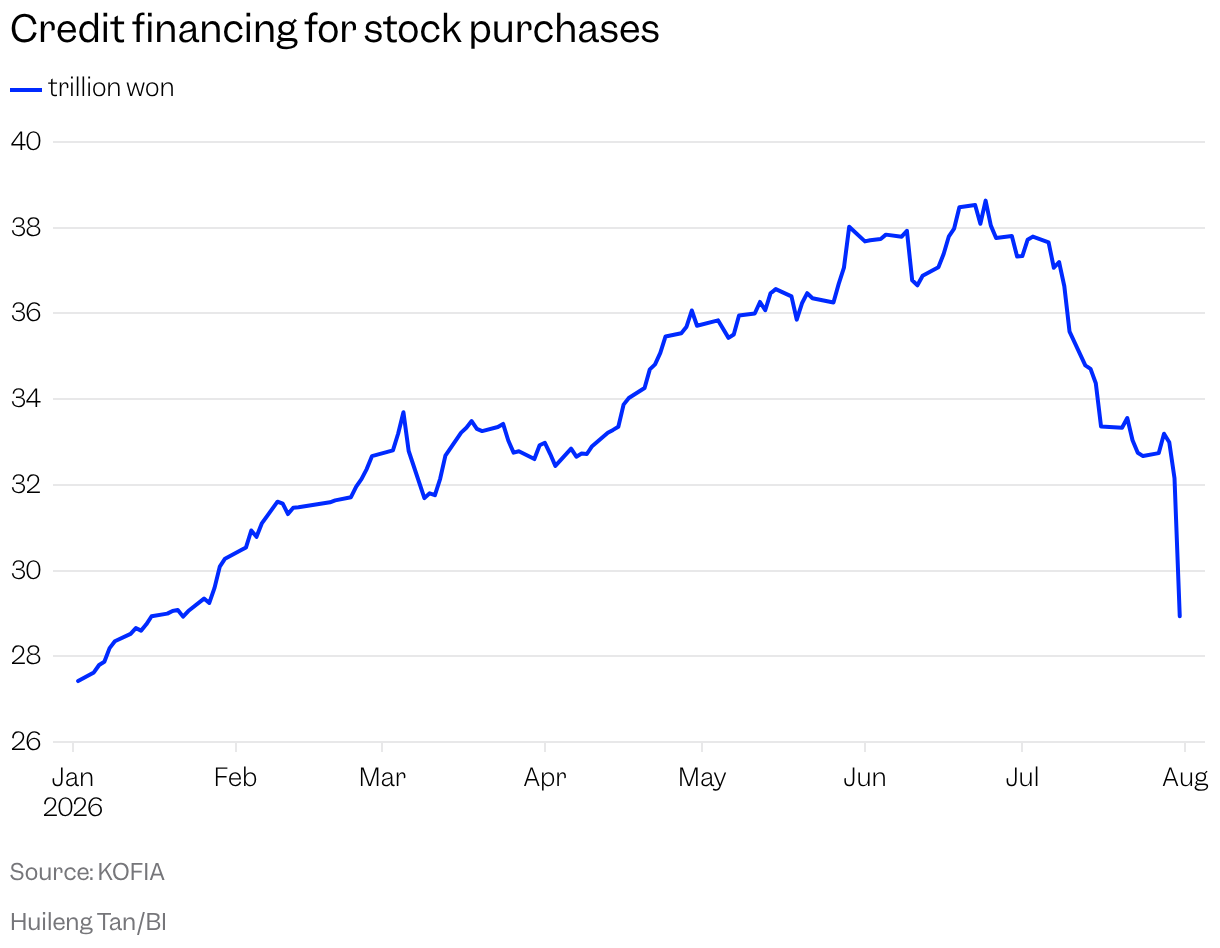
Borrowing to buy stocks also surged during the rally, according to the Korea Financial Investment Association, or Kofia.
Margin-loan balances climbed from about 27 trillion won in early January to a record 38.6 trillion won in late June, before falling sharply as the market weakened.
These loans allow individual investors to borrow from their brokerages to buy stocks, making them a useful gauge of how much leverage retail traders were taking on.
5. Forced selling intensified as volatility hit
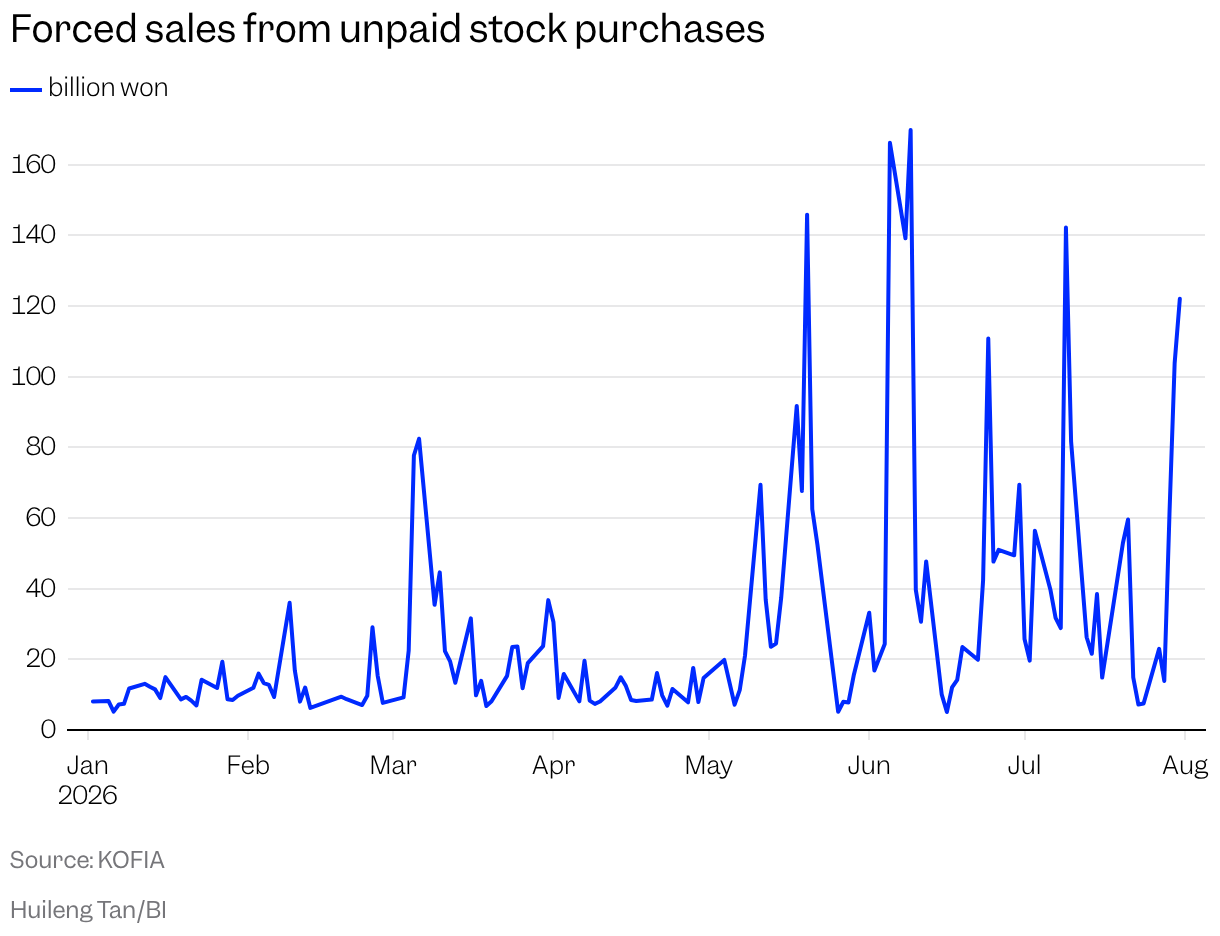
The consequences of short-term credit became apparent when stocks began to swing sharply.
Data from Kofia show forced sales stemming from brokerage settlement shortfalls totaling about 214 billion won in January, 708 billion won in May, and 1.12 trillion won in June. July remained extremely elevated at about 993 billion won.
The forced sales peaked at roughly 170 billion won on June 9. Sales occur when investors buy shares but fail to provide sufficient cash to settle the trade by the deadline.
When that happens, brokerages can sell the shares to recover the money owed — turning a market downturn into a forced exit for investors who can’t cover the shortfall.
Why are Koreans willing to take so much risk?
On social media, young investors have responded to the market’s swings with dark humor, posting screenshots of battered portfolios, dancing videos, and jokes about surviving on instant ramen.
But the willingness to take those risks may reflect something deeper than enthusiasm for stocks.
Young Koreans are also facing mounting pressure from the housing market.
The Bank of Korea said in February that “the negative impacts of rising housing prices are concentrated on vulnerable groups such as the youth.”
It warned that continued increases could deepen inequality between generations and wealth groups.
A separate report from the central bank published in June found that the wealth-building ladder was becoming harder for young Koreans to climb. Among households at the bottom for both income and wealth, the share headed by people in their 20s and 30s nearly doubled between 2020 and 2025.
That backdrop may help explain the appeal of stocks. For younger Koreans struggling to build wealth through wages or property, a booming stock market can look like another way to get ahead — and sitting out a historic rally can feel like falling further behind.