The U.S. Federal Reserve is responsible for keeping inflation under control, which usually means targeting an annual increase of around 2% in the Consumer Price Index (CPI). When the rate of inflation is too high, it can pressure household budgets and corporate profit margins, so the Fed will raise the federal funds rate (overnight interest rates) to cool the economy down.
After a series of hot inflation numbers in the last few months, the Fed hiked the federal funds rate by 25 basis points in September. But the CPI increased at an even faster annualized pace in October (according to the data published on Nov. 10), so Wall Street is now pricing in another rate hike before the end of 2026, which could be bad news for the stock market.
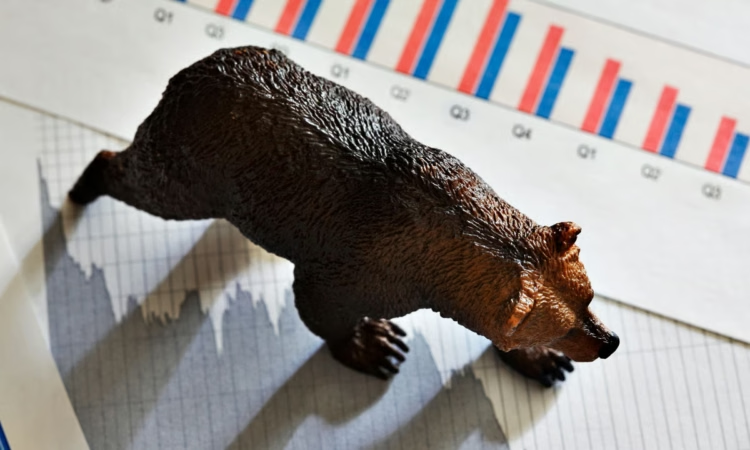
In fact, the Fed’s last rate-hiking cycle triggered a bear-market decline of more than 20% in the S&P 500 (^GSPC -0.38%) index, so is another sharp downturn ahead?

Image source: Getty Images.
Inflation is trending in the wrong direction, and oil prices are mostly to blame
A series of global geopolitical conflicts have roiled the energy markets in 2026. The U.S. and Iran have been at war since February, leading to the closure of the Strait of Hormuz waterway, through which 25% of the world’s seaborne oil transits each day. Saudi Arabia and Yemen are also locked in an ongoing conflict, which has periodically knocked even more oil supply offline. Then there is the war between Ukraine and Russia, which is now in its fourth year.
West Texas Intermediate crude oil trades for $86 per barrel as I write this (Nov. 11), and while that is off its April high of $113, it still represents a sharp gain from its 2026 opening price of $57. As a result, the cost of refined products like gasoline, diesel, and jet fuel have skyrocketed, driving up the price of everything that travels by truck, boat, or plane, from groceries to retail goods.
This is stoking inflation. The Bureau of Labor Statistics didn’t publish inflation data in October 2025 due to the government shutdown, so it was unable to produce a year-over-year reading this October. However, given the month-over-month increase of 0.4% in the CPI, an estimate by the New York Times suggests inflation is currently rising at an annualized rate of around 4%. That marked an acceleration from 3.7% in September, so Wall Street now feels certain about the Fed’s next move.
According to the CME Group‘s FedWatch tool, which calculates the probability of interest rate moves by analyzing the 30-day Fed Funds Futures market, analysts place the odds of a December rate hike at 100%. The odds of additional hikes in January and April 2027 are also rising, suggesting the Street doesn’t expect inflation to cool down any time soon. That means consumers and businesses could be facing a prolonged period of economic pain.
Rising interest rates have triggered stock market corrections in the past
Rising interest rates force consumers to allocate more of their household budgets to debt repayments, leaving less money for discretionary spending. If this persists for a long enough period of time, it can put a serious dent in corporate earnings, and earnings are the main driver of stock prices.
High interest rates also drive up borrowing costs for companies, making them think twice about taking on debt to fund their expansion plans. As a result, investors start pricing in slower future growth, which weighs on valuations. Improved yields on risk-free assets like cash and government Treasury bonds often accelerate the shift away from stocks when the growth outlook weakens.
The Fed’s last rate-hiking cycle spanned from March 2022 to August 2023, and it pushed the S&P 500 down by more than 20% at its lowest point, placing it in an official bear market. Although we can’t predict how long the Fed will continue to raise rates this time around, the S&P 500 is particularly vulnerable to a sharp correction right now because of its valuation.
Today’s Change
(-0.38%) -29.01
Index Level
7,520.93
Key Data Points
Day’s Range
7,470.43 – 7,543.92
52wk Range
6,316.91 – 7,844.52
The S&P is trading at a Shiller Cyclically Adjusted Price-to-Earnings (CAPE) ratio of around 40, a level last seen during the dot-com internet bubble in the leadup to the year 2000. Even a bear-market decline of 20% won’t lower the index’s CAPE ratio to anywhere near its average of 17.5 dating back to the 1800s. In fact, the index crashed by 49% when the internet bubble eventually burst.
I’m not predicting a decline of that magnitude this time around, but I think investors will find it increasingly difficult to stomach rising inflation and interest rates for a prolonged period of time given the market’s valuation. However, it’s important to remember that the S&P 500 tends to recover and set new highs over time, so using a potential dip as a buying opportunity could lead to great results in the long run.
Where to invest $1,000 right now
When our analyst team has a stock tip, it can pay to listen. After all, Stock Advisor’s total average return is 852%* — a market-crushing outperformance compared to 208% for the S&P 500.
They just revealed what they believe are the 10 best stocks for investors to buy right now, available when you join Stock Advisor.
*Stock Advisor returns as of November 11, 2026.