
If a Stock Market Crash Is Coming, History Says Investors Who Do This 1 Thing Always Win Out

The stock market has been shaky lately, with the S&P 500 (^GSPC -1.11%), Nasdaq Composite (^IXIC -2.06%), and Dow Jones Industrial Average (^DJI -0.03%) all slipping from their all-time highs earlier this year.
Investors are feeling the uncertainty, too. The Fear and Greed Index measures investor sentiment on a scale from 0 to 100, with lower numbers indicating greater fear. In early May, the index peaked at 71 — firmly in the “greed” category. As of this writing, it sits at 28, indicating fearful investor sentiment.
In other words, if you’re feeling nervous about the market right now, you’re in good company. Fortunately, history says one simple, proven strategy can help protect your investments right now.

Image source: Getty Images.
Staying invested is more important than ever
If you’re worried about a market crash, it can be tempting to sell your investments now before prices plunge. While that strategy may sound safer, it can be costly.
The market’s short-term performance will always be unpredictable to an extent. When the market stumbles, it’s impossible to know whether it’s just a short-term fluctuation or the beginning of a crash.
For example, earlier this year, the S&P 500 plunged amid fears that the war in Iran would drag the market into a recession. Almost immediately, though, it rebounded. As of this writing, the index is up more than 13% so far this year.
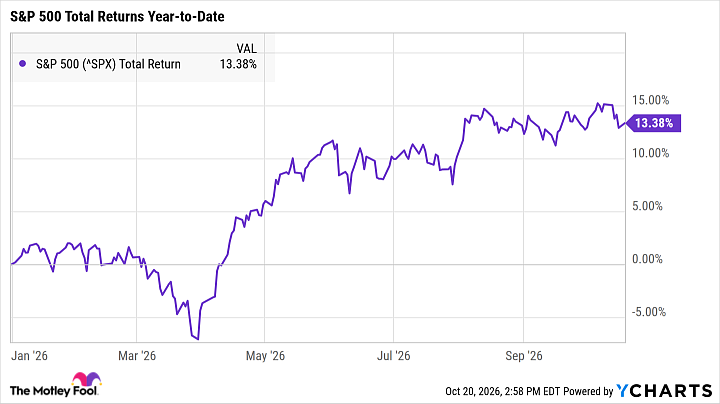
While it may sound counterintuitive, history shows that the single best way to avoid losing money during a downturn is to continue investing consistently. When stock prices plunge, your portfolio may lose value. But you won’t actually lock in losses unless you sell your investments for less than you paid for them.
For example, say you sold your stocks in March of this year, expecting the market to fall further. In that case, you’d have been hit twice: first by selling at discounted prices, and second by having to pay higher prices to reinvest later after the market rebounded.
Timing the market accurately is nearly impossible, and it can often cost you more than you gain.
The market has a flawless track record of long-term growth
Decades’ worth of history proves that staying invested for the long term is the most lucrative way to build wealth in the stock market — even when the short term is volatile.
During the dot-com bubble burst in the early 2000s, for instance, the S&P 500 sank by nearly 50% as the tech sector imploded. It took years for the index to reach a new all-time high, and shortly after it did, the Great Recession began in 2007 — becoming the most severe economic downturn post-WWII.
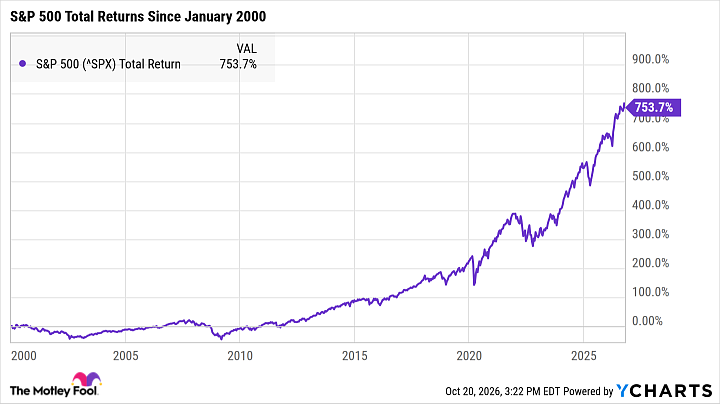
Despite all of this volatility, however, the S&P 500 has soared by more than 750% since January 2000. In other words, if you’d invested $10,000 in an S&P 500 index fund or ETF back then and didn’t contribute another dollar, you’d have more than $85,000 by today.
Along with a long-term outlook, it’s equally important to invest in quality stocks. Not all companies will recover from a market crash or recession, especially if they’re built on shaky foundations. During the dot-com bubble, for instance, many tech stocks surged despite weak finances or unsustainable business models. When the bubble popped, those stocks fared the worst.
No matter what may come this year or beyond, healthy stocks are best positioned for long-term growth. The right investments can help avoid losses during a downturn while setting you up for lucrative gains, too.


