
The US economy would have tumbled down a difficult path were it not for AI, Jeremy Grantham says.
The GMO founder and investing legend issued a cautious message on the state of the US economy and markets last week. Speaking on a recent episode of the Excess Returns podcast, Grantham said he believed the US probably would have slipped into a downturn and seen a steep market crash in 2023 , were it not for the huge investments being poured into AI.
“My guess is that in 2023 we would have moved into a recession and the market would have gone down another 25%. And AI headed it off,” Grantham said.
“We’re in terra incognita,” he added, referring to the US’s “unprecedented” reliance on AI spending as a percentage of GDP.
The boom in artificial intelligence has fueled a massive spending spree among tech giants. Amazon, Google, Meta, and Microsoft have collectively earmarked $725 billion in capex this year, much of which will be spent on the AI buildout, according to company statements. That amount is roughly 2% of US GDP in 2025.
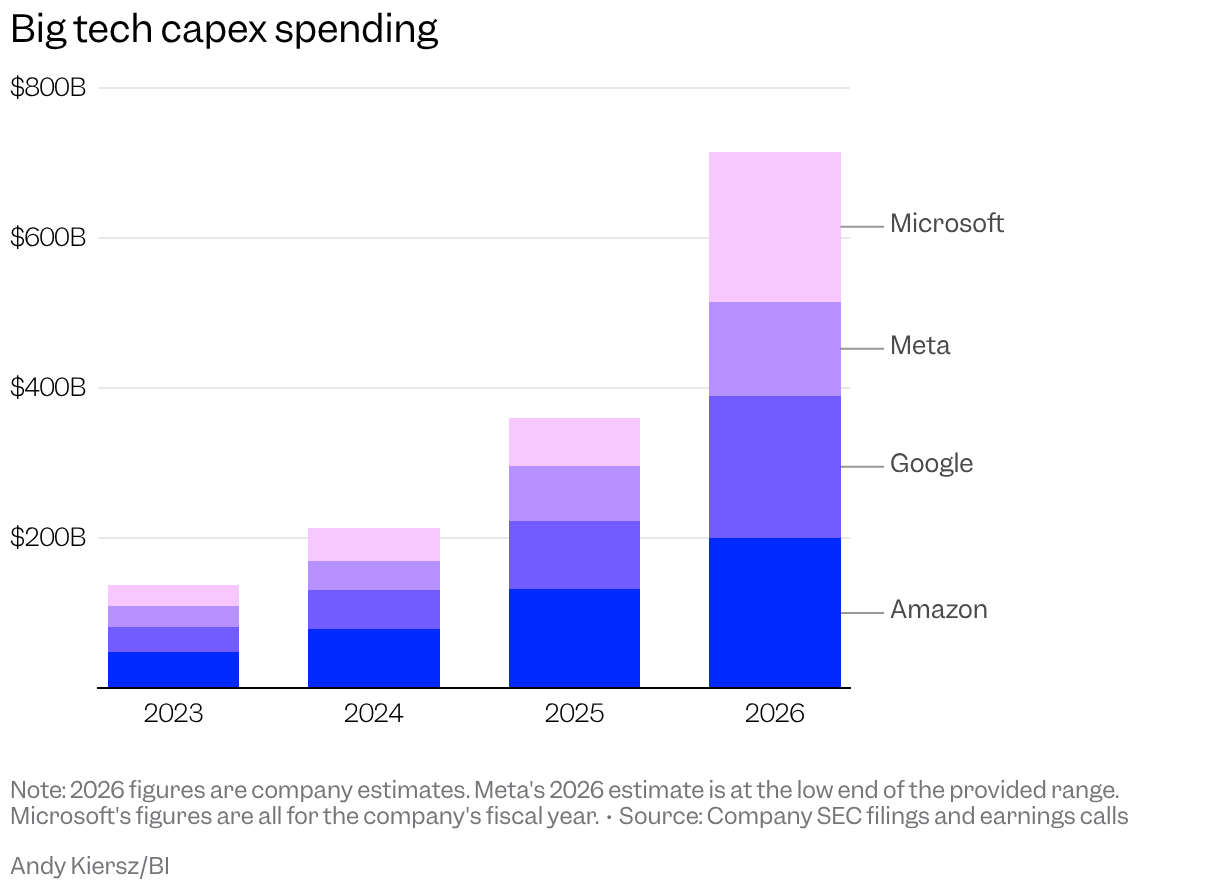
GDP growth likely would have approached 0% in 2023 were it not for AI, Grantham speculated.
AI spending has also acted as a significant crutch for the stock market, Grantham suggested. He pointed to how the Magnificent Seven stocks, the seven group of tech giants at the heart of the AI trade, were largely responsible for dragging the S&P 500 out of its bear market from late 2022 into 2023.
Stocks were already in a partial bubble when the AI hype hit, Grantham said, referring to the major run-up in the tech sector and the fervor for meme stocks in 2022.
“We have a bubble forming out of a bubble that was only halfway completed, only halfway deflated, and then resuscitated,” he said.
Grantham, a longtime bear best known for calling the dot-com bubble, has warned repeatedly of a crash and a coming downturn in recent years.
In his 2026 memoir, “The Making of a Permabear: The Perils of Long-term Investing in a Short-term World,” Grantham said he believed the AI bubble would most likely “at least temporarily deflate.”
Speaking on “The Master Investor” podcast earlier this year, he added that he saw “painful” consequences stemming from the recent spike in oil, noting that the US has never seen a sharp surge in crude prices without tipping into a recession not long after.


