
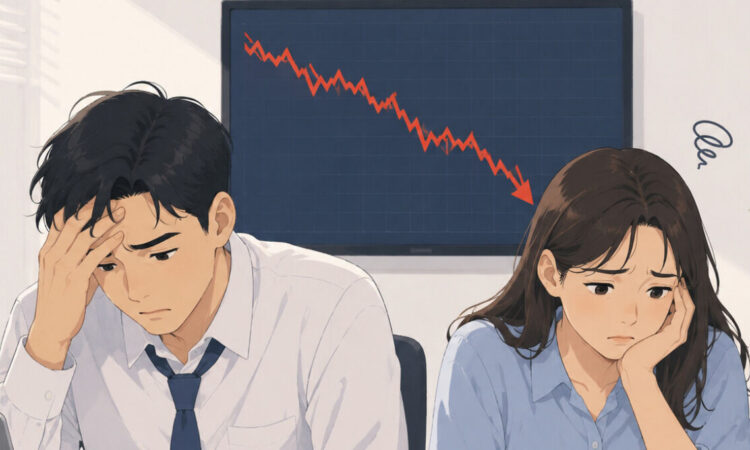
Wild stock swings are driving stressed Korean retail investors to seek counseling, cut spending and rethink risky bets.
The stock market may be a roller coaster, but few expected the ride to end at a psychiatrist’s office. Weeks of market whiplash have left some Korean retail investors stressed, cash-strapped and rethinking their summer plans.
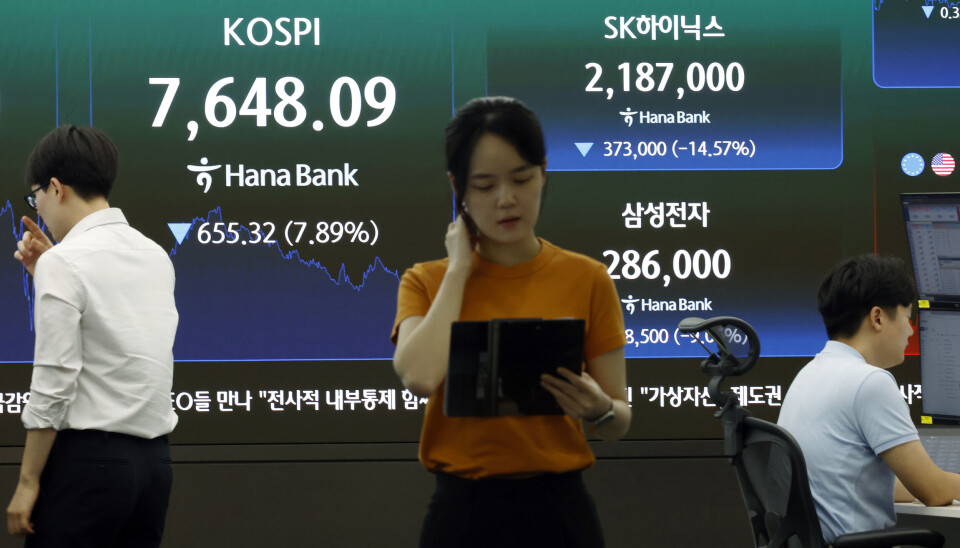
The Kospi closed at 7,291.91 on Thursday, up 0.62 percent from the previous session. The index swung wildly during the day, climbing as high as 7,543.86 before falling to 7,063.76, eventually ending a four-day losing streak.
After reaching 9,114.55 on June 22, the Kospi has remained under pressure amid concerns over slowing semiconductor demand. The tech-heavy Kosdaq gained 1.15 percent to close at 794.
Unlike previous periods of market turmoil driven by wars, pandemics or global financial crises, the recent volatility has persisted without a single clear external trigger, leaving many retail investors emotionally drained.
“I’ve always invested steadily to avoid getting too caught up in daily market moves,” Kim, an office worker in Yeouido, western Seoul, said. “But the [market] volatility has become so intense that I get stressed just looking at my stock portfolio. I deleted my trading app recently. I’ll reinstall it on payday, buy the amount I planned and delete it again.”
Psychiatrists also say more patients are seeking help for market-related stress.
“I’m seeing more patients who say they can’t focus on work because they’re constantly watching stock prices or are overwhelmed by stress from the market,” Kim, a psychiatrist in Yangcheon District, western Seoul, said. “I prescribe antianxiety medication or provide counseling.”
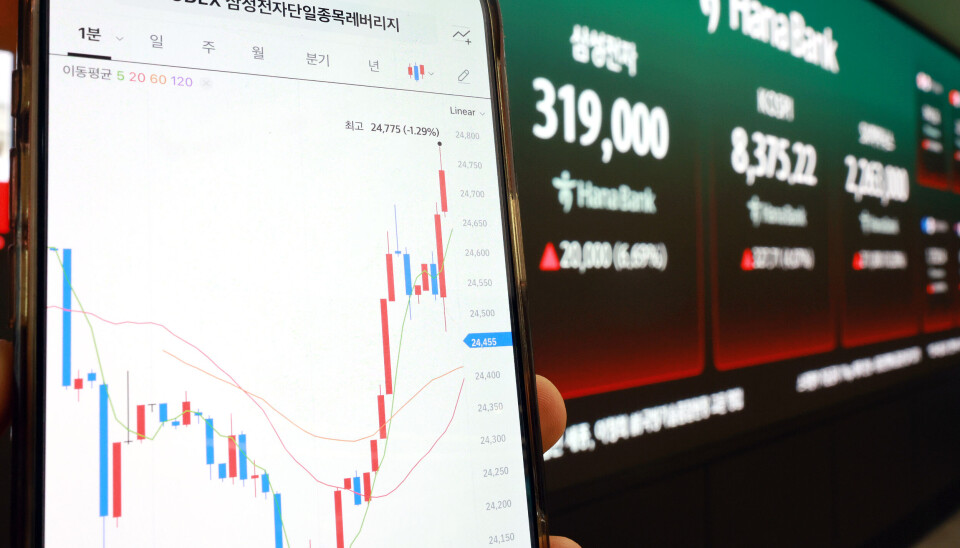
The pain has been even greater for investors who went all in for high-risk products such as leveraged semiconductor exchange-traded funds (ETF).
“I invested a total of 6 million won [$4,000] in semiconductor ETFs and at one point my returns reached as high as 60 percent, but prices kept fluctuating and as of today I’m down 6 percent,” Yoon, a university student, said. “Corporate earnings remain encouraging, but stock prices keep falling, which makes me anxious. I’ve realized that the faster prices rise, the harder the fall can be.”
Leveraged investments carry greater long-term risks during periods of sharp market swings. Not only can they suffer larger daily losses, but they are also subject to the “negative compounding effect,” in which losses accumulate with each trading day.
Many retail investors who jumped into the market out of fear of missing out, or FOMO, during last year’s stock rally are now feeling the pain.
“I bought 4 million won worth of shares in a Kosdaq-listed AI software company in May because I wanted to learn more about investing,” an office worker surnamed Moon said. “I only have 1 million won left now. I got into the market to avoid becoming poor while everyone else got rich, and now I might actually end up poor.”
The recent market slump has left many novice investors nursing steep losses.
“I’ve been setting aside part of my paycheck every month to make small, steady investments, but after the recent market downturn, I’ve lost more than 20 percent [of my investments],” said an office worker surnamed Kim, who began investing in the second half of last year. “It’s devastating to watch the money I worked so hard to save disappear so quickly.”

Some retail investors are tightening their belts in an effort to make up for their losses.
“I realized I was spending about 20,000 won every day just on lunch and coffee, so I started bringing frozen fried rice and other homemade lunches instead,” said a civil servant who has lost about 2 million won on paper.
The market downturn has also forced some investors to rethink how they spend their money.
“I’ve already lost about 10 percent of my investment,” said a retail investor going by Nam, who has put 25 percent of every paycheck into stocks since March. “I don’t have enough money left for a summer vacation, so I sold the electric scooter I used for commuting and started taking public transportation.”
One online user said they stopped eating out to save money and started cooking at home instead.
Similar posts followed, with another user commenting that the market losses had forced them to scrap their summer vacation after putting nearly “all of [their] savings into stocks at the peak.”
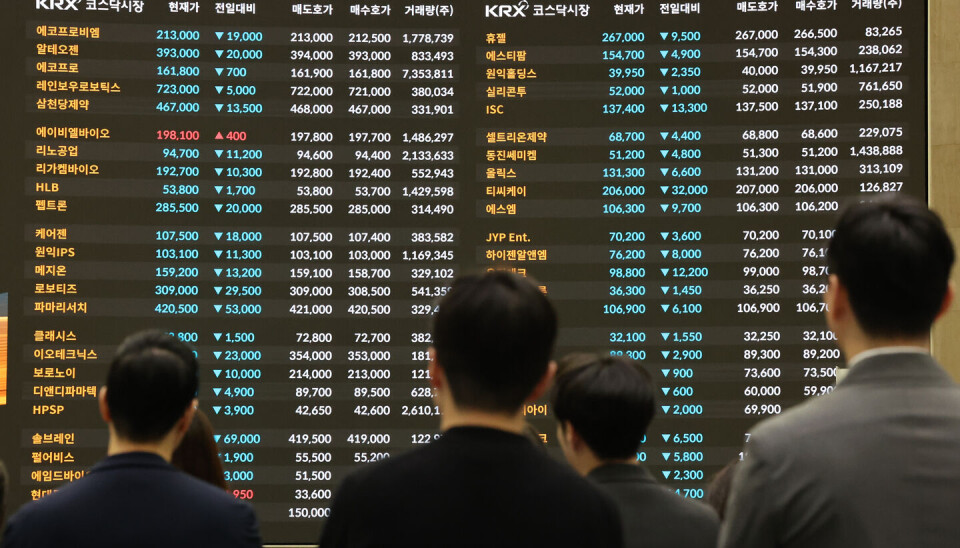
Experts advise investors to take a more conservative approach during periods of heightened market volatility.
“The market had already risen significantly, so even profit-taking alone can trigger sharp declines,” Lee Jeong-hwan, an associate professor at Hanyang University’s College of Economics and Finance, said.
Another expert also warned that the current market environment poses significant risks for individual investors.
“With market volatility this high, it’s difficult for retail investors to generate returns,” Yang Joon-mo, a professor at the Department of Economics at Yonsei University, said. “High-risk investments such as leveraged products should be approached with caution.”
BY OH SAM-GWON, KIM CHANG-YONG, LEE GYU-RIM [lee.jiwon10@joongang.co.kr]


