
Legislative Analyst’s Office warn Newsom budget relies too heavily on stock market gains
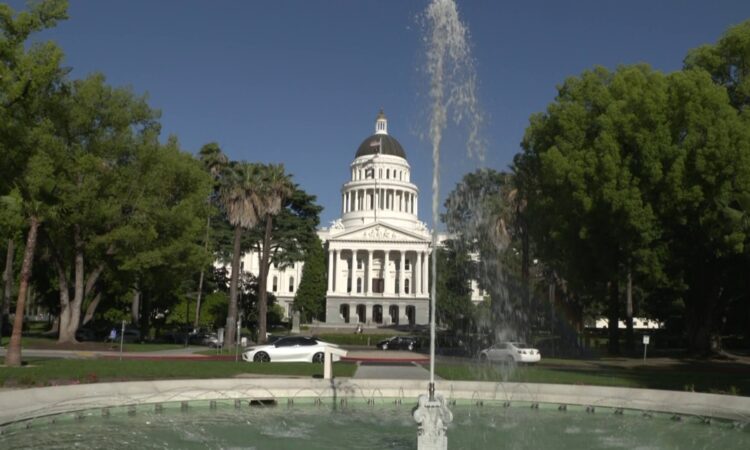
Governor Gavin Newsom defends $350 billion California budget.
California’s latest budget proposal is drawing concerns from the state’s nonpartisan fiscal analysts, who say the spending plan relies too heavily on stock market gains and revenue tied to the artificial intelligence boom.
Last week, Gov. Gavin Newsom released his revised budget, saying the proposal is balanced not only for the upcoming fiscal year, but for the two years after he leaves office.
Following the governor’s proposal, the Legislative Analyst’s Office said the state faces a structural imbalance.
“We think there’s a structural imbalance with the budget, both in the upcoming budget year and in the subsequent years ahead,” Legislative Analyst Gabriel Petek said.
Newsom’s revised budget proposes $350 billion in spending for California’s upcoming fiscal year. Overall, the plan makes no major cuts or additions.
The governor said the state would face no deficit or shortfall over the next two years, citing higher-than-expected income tax revenue driven by the artificial intelligence boom and a strong stock market.
But the Legislative Analyst’s Office said that outlook carries significant risk.
“If we go back to the dot-com bubble, which this looks eerily similar to, the revenue shortfall would be more in the range of $100 billion,” Petek said. “And so, that’s what we’re conscious of.”
Newsom has criticized the Legislative Analyst’s Office’s projections and joked about the difference during his budget presentation.
“I like the LAO. It’s just … I like the fact that they’re off by $53B.”
To reduce the possibility of future budget shortfalls, Newsom is proposing new taxes, including taxes on major technology companies and limits on the amount of tax credits corporations can use each year. His office said the changes could generate about $2.6 billion in annual revenue.
Assemblymember David Tangipa, a Republican and vice chair of the Assembly Budget Committee, said raising taxes is the wrong approach.
“It is a record revenue year. The state of California has never been around $350 billion in spending. And yet the governor is saying that we need to tax more. We need to take more,” Tangipa said.
The Legislative Analyst’s Office recommends the state use the current period to build reserves, but said the governor’s proposal instead relies on that money.
H.D. Palmer, a spokesperson for California’s Department of Finance said:
“The Governor has given the Legislature a plan to balance the budget across two years by banking the bulk of the current surplus and holding the line on new spending – building substantial reserves each year while sustaining core programs.
The LAO proposes to put substantially more in reserves than even the May Revision – but fails to articulate and explain for the Legislature the significant policy implications of either the higher taxes or deep cuts that would necessarily be required to accomplish it.
The Legislature has a clear choice.
Newsom also proposed raising Medi-Cal premiums for undocumented immigrants from a previously scheduled increase from $0 to $30 a month to $50 instead.
The Legislature is required to pass a balanced budget by June 15.


