President Donald Trump Just Called Nov. 5 One of the Stock Market’s “Worst Days in History” Due to Election Results — but Warning Signs Have Been Apparent for Months
Last Thursday, Nov. 5, was a day to remember on Wall Street. When the dust settled, the iconic Dow Jones Industrial Average (DJINDICES:^DJI), benchmark S&P 500 (SNPINDEX:^GSPC), and tech-powered Nasdaq Composite (NASDAQINDEX:^IXIC) had tumbled by 1,833 points, 335 points, and 1,422 points, respectively. The 1,422-point decline in the Nasdaq Composite is by far the largest in its 55-year history.
President Donald Trump took to social media to blame the Nov. 3 midterm elections for the stock market’s poor performance:
Missed Nvidia in 2009? This Rare Signal Is Flashing Again. In 2009, a “Double Down” signal flashed for a little-known chipmaker called Nvidia. For the first time in years, that same “Total Conviction” signal is flashing for a company 1/100th the size of Nvidia. Continue »
The stock market suffered one of the worst days in history based on the results of the election. Such a sad thing to watch!

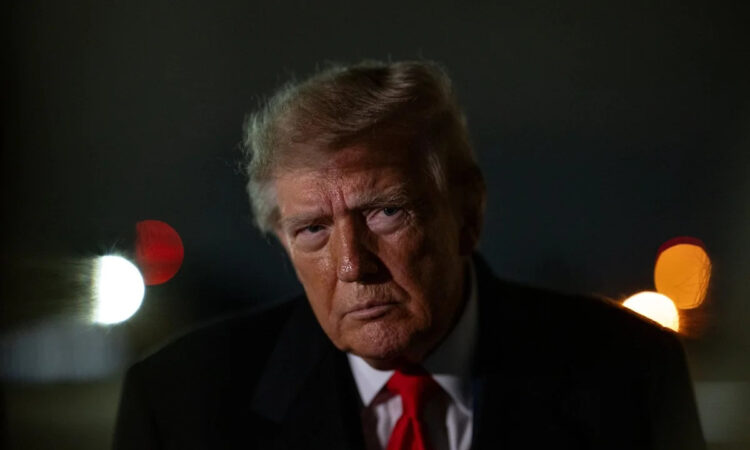
President Trump blames the election results for the stock market’s tumble, but he’s not entirely correct. Image source: Official White House Photo.
While some aspects of Thursday’s stock market plunge can be tied to midterm elections, President Trump’s statement overlooks several equity market warning signs, which have been apparent for months.
A gubernatorial blue wave compromises the AI data center build-out
Arguably, the biggest concern for Wall Street is the blue wave observed at the gubernatorial level. Democratic candidates flipped five Republican governorships, three of which (Texas, Georgia, and Ohio) are in states paramount to the artificial intelligence (AI) data center build-out.
Although President Trump has said he’ll become “Mr. Veto” and use his presidential powers to stop a Democrat-led Congress from passing major legislation, including stricter AI regulations, his veto holds no power at the state level.
Texas Governor-elect Gina Hinojosa has promised to ban data center approvals until her state’s legislature passes laws concerning electricity, water, and air rights. State-level regulation could put a serious dent in AI growth rates in key states.
This is the second-priciest stock market in 156 years
But the Nov. 5 plunge is about much more than just election results. For instance, the stock market entered 2026 at its second-highest valuation in 156 years.
In early June, the S&P 500’s Shiller Price-to-Earnings (P/E) Ratio, also known as the Cyclically Adjusted P/E Ratio (CAPE Ratio), peaked at 42.84. For context, its backtested average multiple since January 1871 is 17.45.