
Stock market today: S&P 500, Nasdaq surge to record highs on Nvidia rally, Chinese shares fall ahead of more Trump-Xi talks
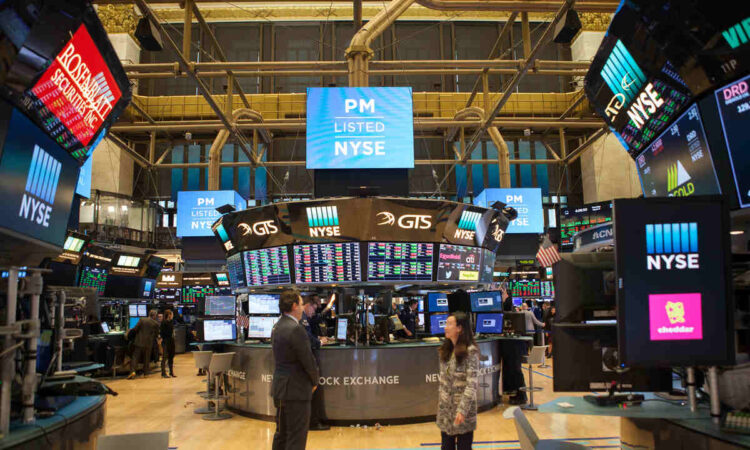
Nvidia jumped 4.4 percent overnight, helping push the S&P 500 and the Nasdaq Composite to fresh record highs
Asian stock markets slipped on Friday as optimism surrounding technology stocks faded, with investors turning their focus to inflation concerns that increased expectations of a U.S. interest rate hike later this year.
Attention remained focused on Beijing, where U.S. President Donald Trump was due to conclude his two-day state visit on Friday. Joining his delegation were Elon Musk, chief executive of Tesla, and Jensen Huang, head of chipmaker Nvidia.
Nvidia jumped 4.4 percent overnight after the United States approved sales of the company’s H200 chips to Chinese firms, helping push the S&P 500 and the Nasdaq Composite to fresh record highs.
Wall Street rally fails to carry over into Asian stock markets
The Wall Street rally failed to carry over into Asian stock markets. MSCI’s broadest index of Asia-Pacific shares outside Japan fell 2.2 percent on Friday, erasing more than this week’s earlier gains.
Japan’s Nikkei 225 also declined 1.81 percent after data showed the country’s wholesale inflation accelerated to 4.9 percent in April, marking the fastest pace in three years and reinforcing expectations that the Bank of Japan will continue raising interest rates.
South Korea’s KOSPI Composite Index briefly climbed above the 8,000-point mark for the first time, before profit-taking emerged and dragged the index down 5.48 percent.
Meanwhile, China’s CSI 300 Index slipped 0.55 percent, while Hong Kong’s Hang Seng Index declined 1.34 percent.
Asian chipmakers also declined, with Japan’s Tokyo Electron and Advantest falling between 2 percent and 8 percent. U.S. Trade Representative Jamieson Greer said that chip export controls were not discussed during Thursday’s U.S.-China talks, adding that it was up to Beijing to decide whether it wanted to purchase American chips.
Greer’s remarks largely overshadowed a report published on Thursday stating that Nvidia had been permitted to sell its H200 chip to 10 Chinese companies. Although the report said no sales had yet taken place, semiconductor stocks rallied sharply on Thursday following the news.
Market focus remains on Trump-Xi meeting
Attention remained firmly on further talks between U.S. President Donald Trump and Chinese President Xi Jinping, which were scheduled to continue later on Friday. The two leaders met on Thursday and signaled optimism about improving ties between the world’s two largest economies.
Trump said in an interview that China had agreed to purchase U.S. oil and buy more aircraft from Boeing. Separately, China’s foreign ministry said Trump and Xi had reached a consensus on several issues, although no further details were provided.
Rising inflation concerns, fueled by the sharp increase in oil prices, have dampened demand for U.S. Treasuries. A series of weak auctions this week, including three-year notes, 10-year notes and 30-year bonds, has highlighted underlying fragility in the bond market.
In currency markets, the U.S. dollar was on track for a weekly gain of 1.2 percent, its strongest in two months, supported by stalled progress in the Gulf region. Strong U.S. retail sales data also led markets to price in a 45 percent chance that the Federal Reserve may need to raise interest rates this year, even under incoming leadership by Kevin Warsh.
The dollar’s strength pushed the yen to the weaker side of 158 per dollar, keeping traders alert for possible intervention from Tokyo.
Meanwhile, sterling slipped to a one-month low of $1.3385, after falling 0.9 percent in the previous session. The move followed the resignation of British health minister Wes Streeting, which added to growing political uncertainty in the UK.


