
Warren Buffett Is Piling Up Cash as the Stock Market Wobbles. Here’s What That Tells Investors.
U.S. airstrikes on Iran kept markets on edge last week, even as stocks near record highs mostly held their ground. For anyone wondering how the market’s most disciplined capital allocator is set up for a moment like this, Berkshire Hathaway (BRKB 0.35%)(BRKA 0.17%) offers a clear answer.
It is holding more cash than at any point in its history.
Famous investor Warren Buffett handed the chief executive job to Greg Abel at the end of 2025 and stayed on as chairman. But the cautious posture he spent years building hasn’t changed. At the end of the first quarter, Berkshire’s cash and short-term Treasury bills reached a record of about $397 billion.
This raises the question: What does a hoard this size from a disciplined conglomerate with a storied history of making good investments say about where prices stand today?
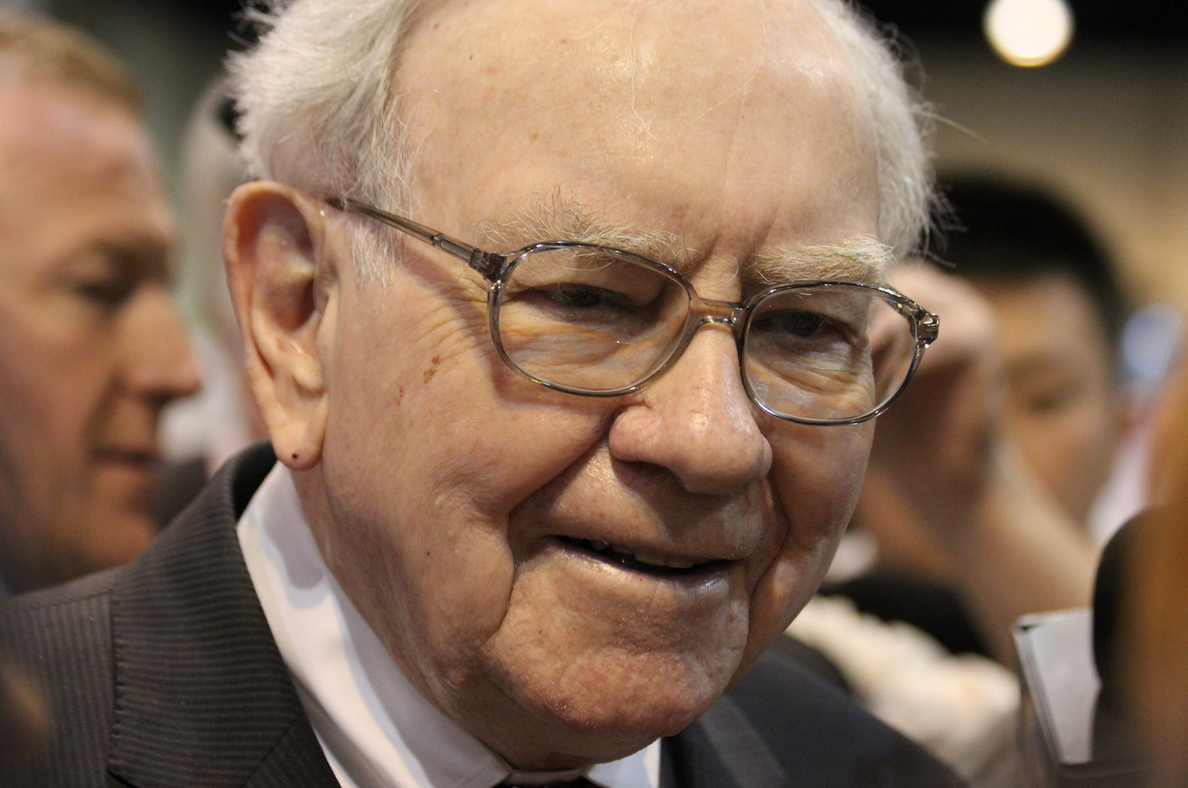
Warren Buffett. Image source: The Motley Fool.
A record pile, and a steady seller
Berkshire’s balance sheet at the end of March held about $58.1 billion in cash and equivalents, plus roughly $339 billion in short-term U.S. Treasury bills. Together, that is close to $397 billion sitting in the safest assets around, equal to more than a third of the entire company’s market value. By Berkshire’s own measure, cash has never stood so high as a share of the company.
And Berkshire keeps adding to it. In the first quarter, the company sold about $24 billion of stocks while buying only about $16 billion. That extends a net-selling streak that now runs more than three years.
The cash is hardly idle, either. At recent Treasury yields near 3.7%, the pile earns something like $12 billion a year in interest, more than many companies in the S&P 500 report in annual profit.
This isn’t necessarily a market call. Buffett has long framed cash as optionality, the ability to move decisively when something cheap comes along, and Berkshire simply hasn’t found enough it wants to buy at today’s prices. After all, the company has to put tens of billions to work to move its own needle, so it can afford to wait for a pitch that smaller investors might swing at sooner.
Still, when the most famous value investor of the past century would rather collect a risk-free 3.7% than buy more of what’s on offer, that itself says something. Personally, I take it as a quiet comment on valuations.

Today’s Change
(-0.35%) $-1.74
Current Price
$493.71
Key Data Points
Market Cap
Day’s Range
$490.70 – $497.30
52wk Range
$455.19 – $516.85
Volume
2.7M
Avg Vol
5.1M
Gross Margin
23.70%
What the cash has signaled before
This isn’t the first time Berkshire has let cash pile up. In the late 1990s, as technology stocks soared, Buffett sat out the mania and took plenty of criticism for it, until the dot-com bust vindicated the patience.
Cash climbed again ahead of the 2008 financial crisis. And when prices finally cracked, Berkshire deployed aggressively, most famously with a $5 billion investment in Goldman Sachs in September 2008 that paid a 10% dividend, on terms an ordinary investor could never get.
The pattern is fairly consistent. Berkshire tends to accumulate cash when it finds few bargains, then spend it when fear creates them.
Of course, that doesn’t mean a crash is coming. Buffett himself has warned against treating his cash position as a market forecast, and Berkshire has held plenty of cash through stretches when stocks just kept climbing.
What’s new this time, however, is who decides when the money gets spent. Abel, not Buffett, now largely controls when this war chest gets put to work. How he deploys it may be the single biggest factor in Berkshire’s returns over the next several years, and so far he has stuck to the same disciplined script. Yes, he’s bought some Alphabet stock and even agreed to acquire Taylor Morrison Home. But as of the end of Q1, Berkshire remained a net seller of stocks.
So what does all of this tell investors? Not that a crash is around the corner. Buffett would likely be the first to reject that conclusion. What it does say is that patience is reasonable when prices are this high, and that Berkshire has quietly positioned itself to act if the mood sours.


