

The low down
International developments are driving intellectual property law in 2026, with key IP cases focusing on disputes involving global brands. As generative AI (GenAI) becomes more ubiquitous and powerful, the creative industries continue to bring cases seeking to protect their work from being used to train GenAI models. Ten years after the Brexit vote, UK judgments are showing both convergence and divergence from EU regulatory regimes; judges are flexing their independence to decide, and setting new precedents, but outcomes are less predictable.

A decade after the Brexit vote, intellectual property law is both converging and diverging. ‘It’s been over ten years since the Brexit vote, but it is still early days for assessing its impact on UK IP law and practice,’ says Nina O’Sullivan, partner and head knowledge lawyer (contentious) at Mishcon de Reya. ‘That’s because most of our domestic IP law was built from EU legislation and EU case law, and that foundation has not disappeared. However, in 2023, the Retained EU Law (Revocation and Reform) Act did remove some key pillars of that system, including supremacy of EU law and the requirement for UK courts to interpret our laws so far as possible in conformity with EU law (the Marleasing principle).’
O’Sullivan explains: ‘Removing Marleasing hasn’t meant that UK and EU IP laws have suddenly diverged… but there is certainly more scope for divergence. We’re already seeing it in specific cases. For example, in Industrial Cleaning Equipment (Southampton) Ltd v Intelligent Cleaning Equipment Holdings Co Ltd [2023], the Court of Appeal deliberately departed from CJEU [Court of Justice of the European Union] case law.’
Bird & Bird partner Peter Brownlow explains that while ‘EU trade marks and designs no longer cover the UK, we retain a lot of European law relating to trade marks and designs, because UK and European law were harmonised pre-Brexit. There haven’t been many cases where UK courts have diverged from Europe’.
Brownlow acknowledges the Industrial Cleaning Equipment landmark ruling on statutory acquiescence, which bars a trade mark owner from challenging a later registered mark if they tolerate its use for five years. Lord Justice Arnold ruled that the five years starts when the owner of the earlier trade mark becomes aware of the use of the later trade mark, which must be registered.
However, other UK judgments follow EU law, notwithstanding the invitation to diverge from it. Iain Connor, consultant at Michelmores, highlights Lord Justice Arnold’s Court of Appeal judgment in Thatchers Cider Company Ltd v Aldi Stores Ltd [2025]. This reversed the previous decision of the Intellectual Property Enterprise Court, ruling that Aldi had infringed Thatchers’ registered trade mark in relation to its cloudy lemon cider packaging resembling Thatchers’ branding.
As Connor observes, Arnold followed the European framework that applied in the landmark High Court and European decision in L’Oréal SA v Bellure NV (Case C-487/07), finding that Aldi unfairly rode on the coattails of Thatchers’ brand reputation.
Bird & Bird partner Nick Aries says that while Brexit has adjusted the competency of UK courts, ‘for example, a UK court cannot grant a pan-European injunction – we have not seen any decline in activity in the courts, or in our practice generally’.
The UK, Aries notes, remains an important market where companies want and need to litigate, regardless of the scope of relief. ‘If they want a remedy in the UK, they have to litigate in the UK,’ he says. ‘From our perspective, we are collaborating more with our [European] offices, working alongside our EU colleagues where EU court proceedings are needed alongside those in the UK.’
‘We can also expect to see more divergence when it comes to legislation and policy reform,’ says O’Sullivan, ‘as UK and EU legislators take different paths on live issues such as AI and copyright, design law and practice, and the obligations placed on online platforms to deal with infringing products on their platforms.’
From copyright to competition
A recent High Court decision in Roadget Business Pte and Shein Distribution UK Ltd v Whaleco UK Limited [2026] dismissed Shein’s copyright infringement claims against Temu in relation to product listing photographs uploaded to the Temu UK website by third-party merchants. Subsequently, Temu succeeded in its counterclaim for loss caused by interim injunctions.
This is notwithstanding the Court of Appeal decision in Montres Breguet SA v Samsung Electronics Co Ltd [2023]. This upheld the High Court ruling that Samsung was liable for primary trade mark infringement regarding third-party digital watch faces. It established that, in particular circumstances, rightsholders can enforce their IP rights against online intermediary platforms in respect of third-party activities. In August, the High Court ordered Samsung to pay the Swatch Group $11.6m (£8.7m) in damages.
Another prominent High Court case involves gambling platforms, Entain Operations Ltd & Ors v Liquidity Trading Ltd & Ors [2026]. Entain sued Liquidity Trading for trade mark and copyright infringement, alleging that its platforms improperly used Entain-owned brand logos and website screenshots to market their services and build consumer trust.
Liquidity Trading argued that usage was purely for reference and educational purposes. Mr Justice Cawson struck down Entain’s copyright infringement claims while allowing the trade mark infringement claims to proceed further.
The Shein dispute also highlights the blurring boundaries between copyright and competition law, and whether using website images is copyright infringement or a competition issue. In September 2026, Mrs Justice Bacon granted Shein UK permission to take the copyright dispute to the Court of Appeal. She noted that it is a landmark UK case on intermediary platform liability. Temu’s separate counterclaim was transferred to the Competition Appeal Tribunal (CAT) and is scheduled for a multi-week trial in 2027.
As Connor explains: ‘This is a theme more generally as the CAT is gaining prominence in consumer cases [which are] often IP adjacent, where individual consumer claims aren’t worth pursuing but collective actions are.’
What’s happening at WIPO?
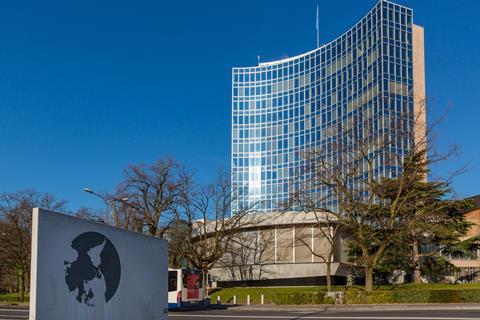
Daren Tang began his second six-year term as director general of the World Intellectual Property Organization (WIPO) on 1 October, indicating continuity in WIPO’s priorities and strategic direction.
Progress is being made towards ratifying two international treaties adopted in 2024: the WIPO Treaty on Intellectual Property, Genetic Resources and Associated Traditional Knowledge (GRATK Treaty) which is the first to integrate patents with sustainability; and the Riyadh Design Law Treaty, which aims to streamline industrial design registration procedures.
While these could be significant for UK life sciences and agri-tech industries, they are not yet close to the required ratification threshold.
In March, WIPO launched its own AI initiative, the Artificial Intelligence Infrastructure Interchange (AIII), to bring together rightsholders, creators, AI developers and technical experts to address practical infrastructure problems created by AI.
Its focus includes metadata, identification and attribution, watermarking, fingerprinting, rights management, provenance and using AI in IP enforcement. A technical network of more than 90 experts is mapping existing systems and identifying gaps. However, AIII is not a forum for creating binding rules; its remit is to establish what technical solutions are feasible and interoperable.
WIPO’s Global Forum on IP and AI next month will cover copyright, patents, trade marks, designs, inventorship and authorship. The key policy question is whether international coordination can deliver practical licensing and attribution systems without waiting for harmonised legislation.
For practitioners, this could change the evidence available in disputes, the way clients reserve rights, and how licences are negotiated and audited. WIPO’s current initiatives are building the infrastructure for an AI licensing market while recognising that infrastructure alone cannot resolve legal questions around consent, infringement, enforcement and remuneration.
Europe’s long-arm jurisdiction
Europe’s Unified Patent Court (UPC) ‘has been a great success since it opened its doors for business in June 2023’, says Mishcon’s O’Sullivan. ‘Albeit there are some concerns as to the impact this success has had on its ability to resolve disputes within a one-year timescale, one of the key selling points of the court.’
Although the UK is not part of the UPC regime (for political reasons, because, ultimately, the UPC falls under the remit of the CJEU), it can fall within its ‘long-arm jurisdiction’. If the defendant to a patent infringement action is domiciled in a contracting member state, the UPC can extend its jurisdiction and determine the infringement action in every country where those patents apply, including jurisdictions (such as the UK) which do not participate in the regime.
While some UPC cases have tested the boundaries of its long-arm jurisdiction, 2026 saw the UPC’s first-ever referral to the CJEU.
Dyson v Dreame & Eurep concerned the distribution of Dreame’s multi-functional hairdryers. The UPC Court of Appeal split the case, ruling on the merits for UPC territory and submitting questions to the CJEU regarding proceedings in Spain, which is a non-UPC state. Connor observes: ‘Whether there’s divergence or convergence, this shows that 10 years on, practitioners are still struggling to work out when EU law is applicable in the UK, at least from an enforcement perspective.’
Reciprocity has long been a key consideration in Brexit discussions. Brownlow and Aries highlight the post-Brexit asymmetry in relation to the UPC’s remit and in the regime for exhaustion and parallel imports.
They say: ‘If a UK trade mark owner brings goods into Germany and someone buys them in Germany and resells them in the UK, the trade mark owner cannot use their trade mark rights to stop that. However, if the goods are on the market in the UK first, and a third party tried to bring them into the EU, the trade mark owner could assert their rights and object to that commercialisation in the EU.’
Creative industries and AI
There are more than 150 generative AI (GenAI) copyright cases worldwide. While most are in the US, significant cases are progressing through courts, notably in Germany, India, Canada, China – and the CJEU.
The UK’s most significant AI copyright infringement case is Getty Images (US) Inc and Ors v Stability AI [2025]. Getty Images claims that 12m images were scraped from its website, without consent, to train and develop Stable Diffusion, Stability AI’s text-to-image GenAI model. The claim having been rejected in the High Court, O’Sullivan notes, the Court of Appeal will hear argument on Getty’s appeal in November. ‘The result will matter a great deal, though of course it could go further to the Supreme Court.’
Connor is also interested in the forthcoming Getty decision in light of GEMA v Suno in the Munich District Court. There, the collecting society GEMA claimed that Suno, a US GenAI music generator, was memorising musical compositions in Germany to train its GenAI model in the US so that users could retrieve them via a simple, open-ended prompt.
The court ruled that this was an infringement and held Suno liable. Connor says: ‘The really important question is whether or not the Court of Appeal decides to follow the Munich District Court’s decision on GEMA v Suno. This would be to conclude that the model must have retained the original images to be able to produce that degree of reproduction, even though the AI companies argue that they don’t “store” the information they use to train their models.
‘Another issue is that it has been acknowledged that all the training took place outside the UK, so the Court of Appeal may not have sufficient evidence to assess the memorisation that the Munich court has referenced.’
UK ‘wait and see’ policy U-turn
In March the government published its statutory Report and Impact Assessment on Copyright and Artificial Intelligence. This is required under sections 135–136 of the Data (Use and Access) Act 2025, which confirms its retreat from its previous preference for a broad text and data mining (TDM) exception which would allow AI developers to train models on copyrighted content unless copyright owners proactively opted out.
Instead, O’Sullivan observes, the report takes ‘a “wait and see” approach to key issues, including the specific question before the court in Getty: what should happen when AI models are trained overseas but then imported into and used in the UK. For now, it looks like the government is content to let the Getty case play out in the courts before deciding whether and how to act’.
Connor references the Artificial Superintelligence Bill. This is a private member’s bill by non-profit ControlAI and presented to parliament by Labour MP Alex Sobel. It seeks to ban the development of artificial superintelligence, establish a framework to monitor and restrict precursors to superintelligent AI systems (such as high-end chips and supply chain chokepoints), and promote international consensus on banning superintelligent AI. However, as a private member’s bill without government support, it is unlikely to become law.
Copycats: design rights and protections
O’Sullivan highlights new directions in design rights and protections. These include the impact of AI on design rights – whether computer-generated designs are protectable – and UK Intellectual Property Office (UKIPO) plans to simplify the UK’s complex design protection landscape, which became even more complicated post-Brexit. ‘The UKIPO ran a consultation on the UK’s design law framework at the end of 2025 and its response is due soon,’ she says.
The design consultation covers ‘thorny issues including the difficult question of cross-border protection of unregistered designs’, explains O’Sullivan. ‘A German court ruling previously interpreted EU design law as meaning that designs first disclosed outside the EU, including in the UK, do not qualify for EU unregistered design protection.’
Assuming that this interpretation holds (it remains to be tested before the CJEU) and is adopted in the UK (i.e. to the effect that designs first disclosed in the EU cannot be protected in the UK through unregistered design protection), O’Sullivan notes ‘it can create a trap for unwary designers’.
She says: ‘Well-advised designers are already taking the cautious route and disclosing in both jurisdictions simultaneously, or incurring the expense of registering designs in the relevant territories. This issue matters for designers commercially too: while most businesses prefer to launch online, a sizeable number still launch at trade shows, and getting their disclosure strategy wrong could cost them protection in a key market. It will be interesting to see how the government intends to deal with this issue given the underlying policy complexity.’
Connor highlights a high-profile design dispute between two well-established brands. In Jellycat Ltd v Hamleys of London, Jellycat claims that Hamleys is copying its global brand of soft toy products, which are individually registered designs on the UK IPO’s register and the WIPO Design Database.
Jellycat sells products online and in stores. It also has a strong social media presence with over 3 million followers on Instagram and 2.6 million on TikTok. Jellycat claims that Hamleys’ Food Plush products infringe its registered design rights.
‘The dispute is between a global market leader and a retail institution with a great reputation,’ says Connor. ‘It will be interesting to see how Hamleys deals with this allegation. Jellycat seems to have a good portfolio of rights and Hamleys has at least taken the themes of these plush toys and reproduced them.’
Hamleys denied any wrongdoing, but nevertheless ‘voluntarily withdrew’ its ‘Food Plush’ products from sale in May after it got Jellycat’s letter before action in April.
Deepfakes and personality rights
The government’s report on copyright and AI promised a consultation on ‘digital replicas’ for summer 2026 (it has yet to appear), and an interim report on labelling AI-generated content for autumn 2026.
‘The labelling report will be particularly interesting because businesses using AI in their advertising and marketing are already grappling with the requirements on labelling deepfakes under the EU AI Act,’ says O’Sullivan. ‘These began to apply from 2 August and are broader than most people think. A “deepfake” covers any AI-generated or manipulated image, audio or video that resembles a real person, object, place, entity or event and which could be mistaken for authentic.’
Getting AI labelling wrong carries real financial risk, she notes, ‘and now needs to be a standard check in signing off creative content’.
Connor explains that ‘in the UK we don’t have any personality rights, so for most people, there isn’t a way of stopping anyone cloning and using your image’. Only sexually explicit images are unlawful, notes Bird & Bird’s Aries.
While there have been no IP cases involving AI-generated deepfakes or AI-generated design, Aries says trade mark conferences include discussions on the potential impact of agentic commerce on brands and brand owners, and whether generative engine optimisation in comparative advertising will lead to more disputes.
In the decade after the Brexit vote, IP law has arguably not diverged as much as originally anticipated. However, this may change as new systems like the Unified Patent Court and issues around rapidly evolving technology like GenAI alter the landscape. In the new post-Brexit normal, UK courts have shown they are using their freedom to think differently, diverging from Europe when appropriate, while considering the need for reciprocity when it comes to harmonisation and enforcement.
Joanna Goodman is a freelance journalist


