

 This month, in addition to including the local property market data I normally use, I also decided to ask AI whether there might be a different way of interpreting and presenting the data.
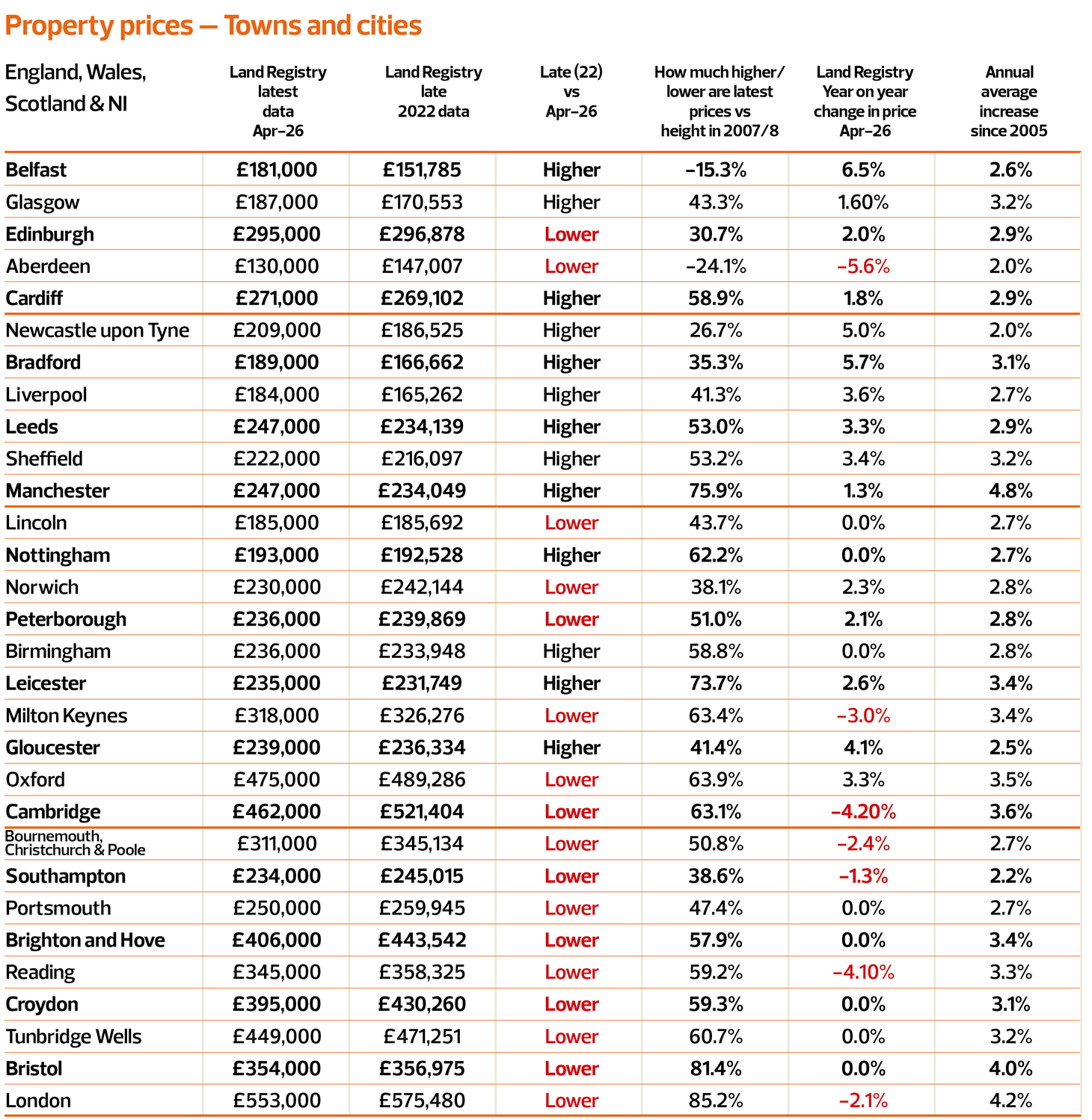
Firstly, the table below covers 30 UK cities and includes:
– The latest average property price from HM Land Registry.
– The previous market peak for each city.
– Whether prices are higher or lower than they were in 2022.
– How far prices have recovered since the credit crunch in 2007/08.
– Annual house price growth.
– The average annual rate of house price growth since 2005.
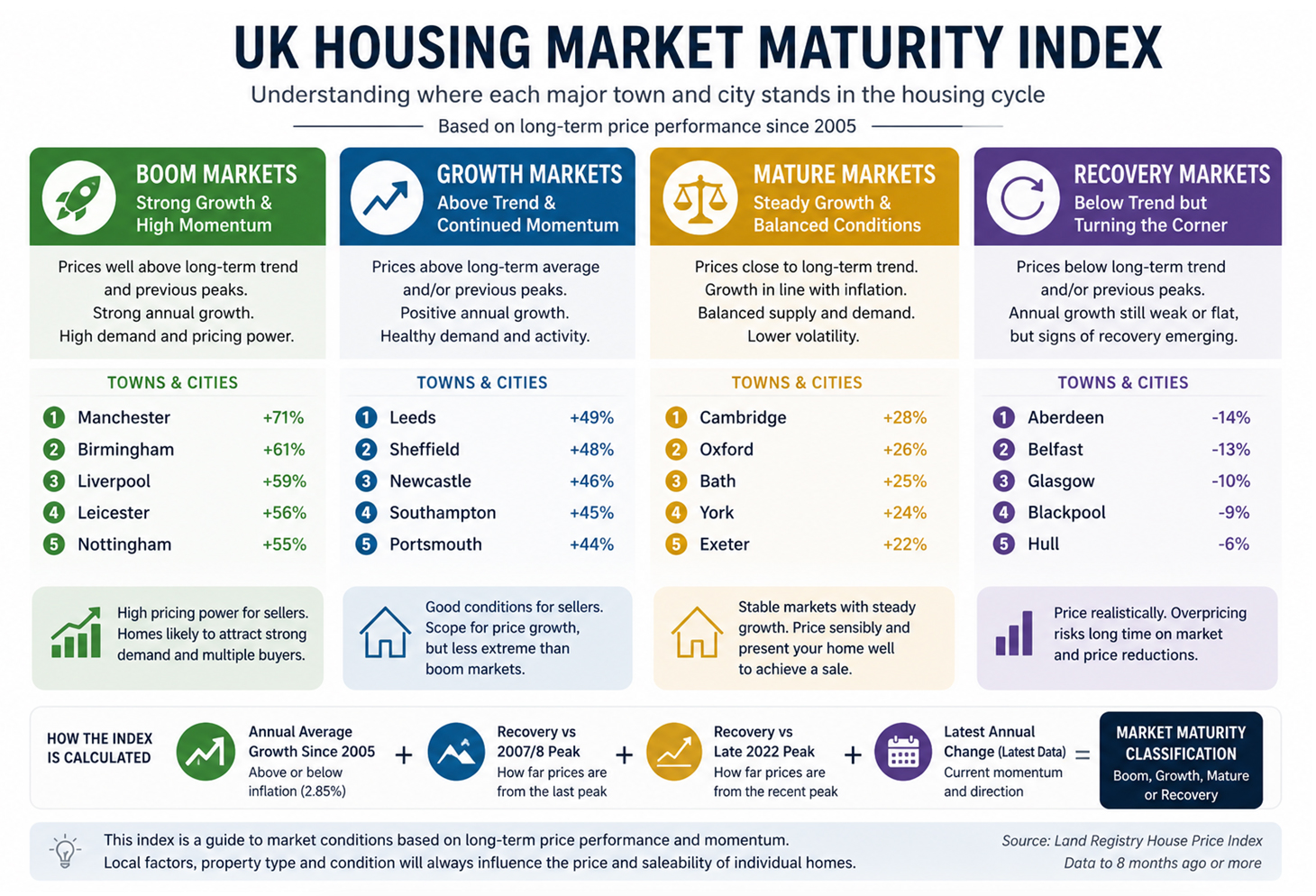
Normally, I would use these measures to highlight which cities are performing well and which are lagging behind. Then I consulted AI and although some of the suggestions weren’t particularly useful, one idea that stood out was creating a Housing Market Maturity Index.
The concept isn’t perfect and I’m not sure the idea is 100% right, plus it would need refining before it could become a formal measure, but what it does illustrate well is that different cities are at very different stages of the property market cycle.
Some markets are still recovering, others are growing steadily, while some appear to have reached a more mature phase of their cycle.
Of course, the same principle applies within every city. There will always be neighbourhoods, streets and individual properties that are booming, growing steadily, maturing or still recovering. No single index can replace local market knowledge, which is why all buyers, sellers and investors need to talk to local agents before making their property decisions – and the good news is I don’t think AI will every replace that!
AI has enormous potential to help present housing market data in ways that are far more visual and easier to understand.”
What this exercise has shown me, however, is that AI has enormous potential to help present housing market data in ways that are far more visual and easier to understand than traditional spreadsheets – even if, like me, you don’t have the skill set or time to do this yourself.
Rather than replacing the analysis, AI can help communicate it more effectively, making complex market information more accessible for agents, buyers, sellers and investors.
So, if you haven’t yet started experimenting with AI, it’s worth giving it a go when you have a moment. Used well, it can help generate fresh ideas and present information in ways that simply weren’t possible a year or two ago. I suspect it will transform not only how we analyse the property market, but also how the industry communicates with clients and delivers its services over the coming years.
Appendix: City/town property indices price tracking
For city/town tracking, we use Land Registry (government data) and Zoopla/Hometrack. The Land Registry data is useful because we can analyse how property prices have changed over time and this helps us to put today’s price information into context.


