
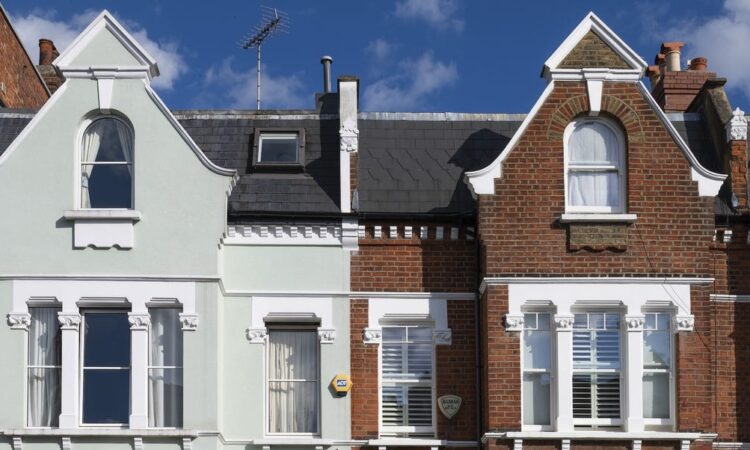
Two record-breaking heatwaves have ignited a public debate over air conditioning and whether UK homes are equipped to cope with rising temperatures. While additional interventions might well become necessary as the climate warms, period homes already have a built-in feature designed to keep homes cooler in the summer – one that many homeowners don’t realise they’re using incorrectly.
We’re well into summer, and during the late June heatwave, the Met Office recorded a high of 37.3 °C at Santon Downham in Suffolk. The unprecedented temperatures sparked widespread discussion, with newspaper headlines, magazine features and social media posts all questioning how well Britain’s ageing housing stock can withstand extreme heat.
According to analysis by The Health Foundation, the UK has the oldest housing stock in Europe, with a significant number of Georgian, Victorian and Edwardian builds. While period features such as ornate cornicing, fireplaces and decorative balustrades remain hugely desirable, these older homes can struggle to keep their owners comfortable during prolonged spells of hot weather.


Georgian properties in Lincoln
As extreme heat becomes more common, measures such as external shutters and reflective paint on roofs may become increasingly important. But one hallmark feature found in many period homes can already help improve conditions: sash windows.
Made up of two movable panels, or sashes, positioned one above the other, sash windows are designed to let warm air escape through the top opening while drawing cooler air in through the bottom. According to industry experts, however, many people aren’t aware of how this natural cooling effect works.
‘Most homeowners have no idea these windows were designed to naturally cool a room,’ says Nick Smith, owner and director of NJS Sash Windows. ‘By opening both the top and bottom sash, air circulates naturally, and warm air escaping through the top sash is replaced with cooler air drawn in through the bottom sash.’


Science backs this up. In 2022, researchers at the University of Cambridge published a paper examining the fluid mechanics of sash windows, finding that they can provide highly effective natural ventilation – provided they are opened correctly.
Unlike a side-hinged casement window, a sash window can be open simultaneously at the top and bottom. This creates what’s known as ‘displacement ventilation’: warm, stale air naturally rises and escapes through the upper opening, while cooler air outside is drawn in through the lower opening.
The researchers found that this significantly improves indoor air quality by removing indoor pollutants and, crucially during the summer, excess heat. However, they also found that performance heavily depends on how the window is opened.


Resist the temptation to open just one sash as wide as possible
The highest ventilation rates were achieved when both panels were opened by the same amount – and the ideal gap is smaller than you might expect. NJS recommends opening the top and bottom sashes by only around 10 to 15cm each.
Timing also matters. During hot weather, it’s best to open sash windows in the early morning and evening, when temperatures outside are still comparatively low. During the hottest part of the day, keep windows shut and draw curtains or blinds to reduce solar heat gain.
So, if you live in a period property with sash windows, resist the temptation to open just one sash as wide as possible during the next heatwave. Instead, open both the top and bottom sashes to take advantage of the natural airflow they were originally designed to create.
Follow House Beautiful on Instagram, TikTok and Pinterest
The Cooling Edit

HOMFINE Cooling Blanket

Shark FlexBreeze HydroGo Pink Misting Pedestal Fan

M&S Stay Cool Lyocell Rich Deep Fitted Sheet

Fogarty 4.5 Tog Summer Duvet

Uberstar Uberstar Silicone Diamond Ice Tray


