The convention of dividing policy documents into green and white papers – outline ideas and firmer statements respectively – is not quite as steeped in tradition as I’d assumed.

Lem Bingley, PW editor
In the sepia days of empire, frock-coated MPs did not wave green pamphlets at each other across the Commons, given the terminology only dates back to 1967.
So Reform UK, which usually places great weight on tradition, might be forgiven for dreaming up a novel term – teal paper – to describe its current thinking on the planning system and business rates.
Set out over just eight pages of proposals, its ideas are very much at the semi-baked stage. However, those pages do provide some of the most clearly articulated position statements yet from a party already in control of numerous councils, and aiming to take big swathes of votes at the next general election.
Perhaps encouragingly, the text contains numerous requests for ideas and feedback. The property industry will, I trust, engage constructively.
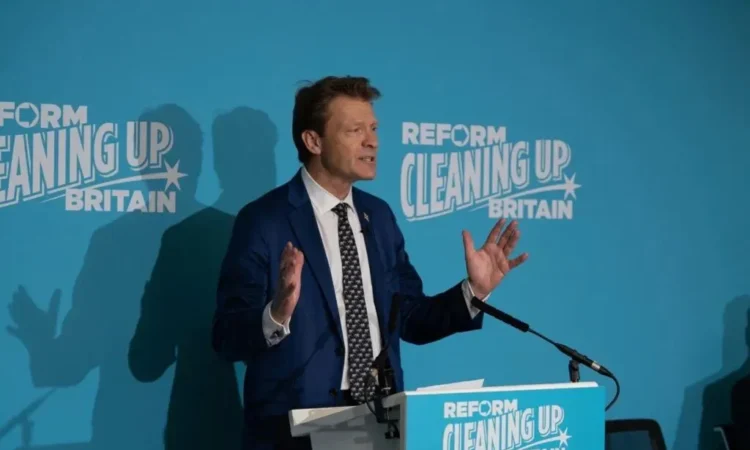
In his foreword, Reform UK deputy leader Richard Tice writes: “I spent most of my career in housebuilding, have run successful development companies and have delivered thousands of homes for British men and women. […] I therefore know better than most how harmful ill-thought-through policies can be to industry.”
Set out over just eight pages of proposals, its ideas are very much at the semi-baked stage
The party has asked for responses by 31 December, and pledged to publish a planning policy at some point next year.
A section on “incentivising development generally” contains a number of ideas that the industry might applaud, for providing clarity if nothing else.
National planning policies should be laid out as statutory rules, Reform suggests, rather than guidance with significant weight. It also wants legally enforceable national policy to set out a “strictly limited set of circumstances” under which planning permission might be refused by local councillors.
It says detailed planning approval should be moved into the private sector, just as building control is today, and that non-safety Building Regulations should not be considered at the planning stage. Presumably regulations governing, for example, minimum ceiling heights would be checked during the construction phase, rather than scrapped altogether. The intent is ambiguous.
Other ideas might be more divisive across the industry, such as the emphasis placed on design codes “to give local democratic oversight of the look of new buildings”.
Thoughts are also set out on how to address business rates, with a call for ideas on how to “rebalance the taxation of pure brick-and-mortar businesses with companies that have multiple distribution channels” – digital ones, particularly.
Most owners of high street assets would warmly welcome a reduction in rates balanced by a digital sales tax, though any such measure would severely strain the apparent friendship between Reform leader Nigel Farage and US president Donald Trump.
The US leader has vowed to impose 100% tariffs on any nation that levies a digital services tax on American online giants like Amazon.
In time we will learn which policy notions survive the feedback phase, and to what extent the teal paper colours the thinking of other parties.