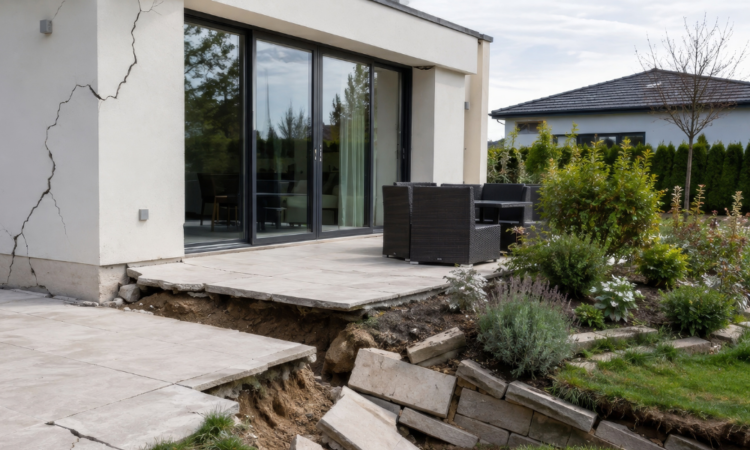
Other insurers describe the same trend. Hastings Direct received record subsidence claims in August 2026, up 140 per cent on a year earlier. Axa, one of the UK’s biggest home insurers, called this a “surge year”.
Dry summers shrink the ground beneath a home, and wetter winters cause it to expand, which can do further damage.
The British Geological Survey (BGS) estimates that up to 11 per cent of UK homes, more than 4.2 million properties, could be at risk by 2070 under its highest-emissions scenario. Older properties with shallow foundations and homes on clay-rich soil face the greatest threat. London, Essex, Kent and the area around Oxford are among the most vulnerable.
What does subsidence mean for lenders?
The Independent has reported that subsidence can significantly affect a property’s value, and that many lenders will not offer a mortgage until the building has been stabilised. New research suggests climate risk is eroding UK mortgage collateral faster than lenders know, and Mortgage Introducer has also examined how converted office homes pose a hidden subsidence risk for mortgage lenders.
Blanc said homeowners can reduce the risk by watching drains, pipes and gutters and fixing leaks. The ABI gives similar advice for older properties: maintain nearby trees and drains, and repair leaking pipes.