
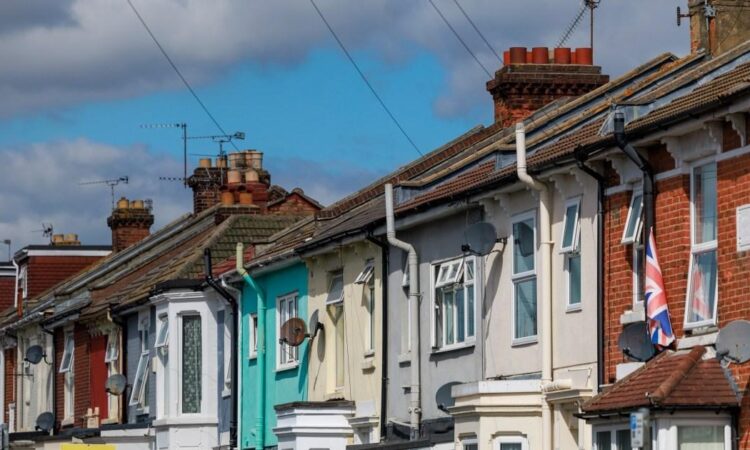

The UK property market is becoming increasingly divided, with some homeowners seeing gains of almost £10,000 while others watch prices plummet.
New figures from Zoopla reveal the typical home has increased in value by £3,400 over the past year, taking the nationwide average to £272,800.
However, annual price growth has slowed to 1.3%, down from 1.7% at the same point last year, which the agent puts down to increased housing stock ‘giving buyers more room to negotiate.’
The number of sales agreed has dropped 9% compared with a year ago too, as buyers adopt a ‘wait-and-see approach’ amid higher mortgage costs and economic uncertainty.
But a number of regions across the country are bucking this trend.
Ask Metro
Use AI to go deeper into the stories you care about – powered by Metro and trusted publications.
Northern Ireland was the strongest performer in terms of annual cash increase, with the average home — now worth £197,200 — rising by £9,610 over the past 12 months.
Ready to start your homebuying journey?
You can access completely fee-free mortgage advice with London & Country (L&C) Mortgages, a partner of Metro. Customers benefit from:
– Award winning service from the UK’s leading mortgage broker
– Expert advisors on hand 7 days a week
– Access to 1000s of mortgage deals from across the market
Unlike many mortgage brokers, L&C won’t charge you a fee for their advice.
Find out how much you could borrow online
Mortgage service provided by London & Country Mortgages (L&C), which is authorised and regulated by the Financial Conduct Authority (registered number: 143002). The FCA does not regulate most Buy to Let mortgages. Your home or property may be repossessed if you do not keep up repayments on your mortgage.
The North West recorded the second highest jump, with average values climbing £7,100, followed by Scotland (+£5,220), the West Midlands (+£5,000) and the North East (+£4,600).
Further south though, the market has taken something of a nosedive.
London saw the biggest annual fall, with the average house price dropping £3,270 over the past year to £527,100.
The situation is much the same in the South East, where values have dipped £1,480 year on year, while prices in the South West are also down, albeit by a far less dramatic £110.

Looking at percentage growth rather than cash values reveals a similar pattern.
Once again, Northern Ireland continues to lead the table, with annual price growth of 5.1%, although this has eased from the 7.5% recorded in June last year.
Annual growth rates have actually gone up in some regions, particular in the North West, North East and Scotland, making them among the few parts of the country where momentum has clearly strengthened.
By contrast however, London’s growth has gone from 0.7% to -0.6% within the same 12-month period, and the South East has also moved into negative territory.
Local property hotspots
Warrington, Hull and Dundee were highlighted by Zoopla as the UK’s standout local markets, with sales agreed continuing to rise alongside faster house price growth.
According to the agent, the upward trend seen in these areas is down to ‘tighter supply and smaller mortgage cost increases relative to home values.’
Meanwhile, Bath, Oxford and Harrow are moving in the opposite direction; not only have sales agreed fallen consistently here, price growth has slipped from positive 12 months ago to flat or negative now.
‘This data shows how market conditions can differ sharply between neighbouring towns, and even by property type on the same street,’ adds Zoopla. ‘Buyers, sellers, agents and builders need to consider local dynamics, not just national or regional figures, to make better decisions.’
What’s causing the South’s house price slump?
Commenting on its findings, Zoopla says it’s likely the case that higher borrowing costs are weighing on buyer confidence.
Average mortgage rates eased from almost 5% in April to around 4.65% in June before edging back up to roughly 4.75% in July as tensions in the Middle East pushed up wholesale funding costs.
Since January, those increases have added around £125 a month – or £1,500 a year – to the cost of a typical mortgage.
And with households buying in more expensive areas feeling the biggest financial impact, many are choosing to delay their moves until costs become more predictable.
Do you have a story you’d like to share? Get in touch by emailing MetroLifestyleTeam@metro.co.uk
MORE: Lincolnshire swingers club called Chunky Muffins goes on sale for £1,100,000
MORE: The little-known renting scheme that lets you buy your home after two years
MORE: I left London for the suburbs — within a month I was begging to go back


