
With regulatory change set to have a profound impact on the property sector – think Energy Performance Certificates (EPCs) and building safety – manufacturers need to stay ahead of the curve and start developing products early to meet new demands.

Aisling Sands is technical director, UK and Ireland, at Kingspan Insulated Panels

Phil Smith is managing director, UK and Ireland, at Kingspan Insulated Panels
Knowing precisely what will change is the challenge, though, particularly with inflation on the up and confidence low. The cost of that early investment could be higher, but the impact could also be considerable.
Kingspan Insulated Panels’ technical director for the UK and Ireland, Aisling Sands, and managing director, UK and Ireland, Phil Smith tell Property Week what they expect the sector’s growth markets to be, and how they are preparing for those opportunities.
Where do you see the biggest drivers for growth and investment in the non-domestic property market, both currently and in the future?
Smith: The obvious one is data centres. Barely an hour goes by where someone doesn’t mention artificial intelligence (AI). We’re already heavily involved in data centres, particularly through our Euroclad business in Cardiff, and about 40% of the mineral fibre panels that are produced in Cardiff are being used in the data centre market across Europe.
Our involvement to date is largely external walls and internal fitout. But we’re developing a range of fully tested roofing solutions designed for that application. That gives us the ability to tap into the roofing sector – so we’re almost doubling the size of our opportunity in the data centre market.
The government is keen to roll out a lot of support around data centres to keep up with competitors. For the foreseeable future, you will see continuing growth in this area. It might be that the size of these facilities changes over time from a small number of larger ones to larger numbers of smaller, local ones.
But the total volume of products that we supply is going to be significantly higher than it currently is.
However, I think the bigger, longer-term opportunity is in the refurb of existing buildings. We think there are about 53,000 non-domestic buildings above 1,000 sq m that wouldn’t comply with the Minimum Energy Efficiency Standards (MEES), due to come in by 2031. Effectively they would become stranded assets.
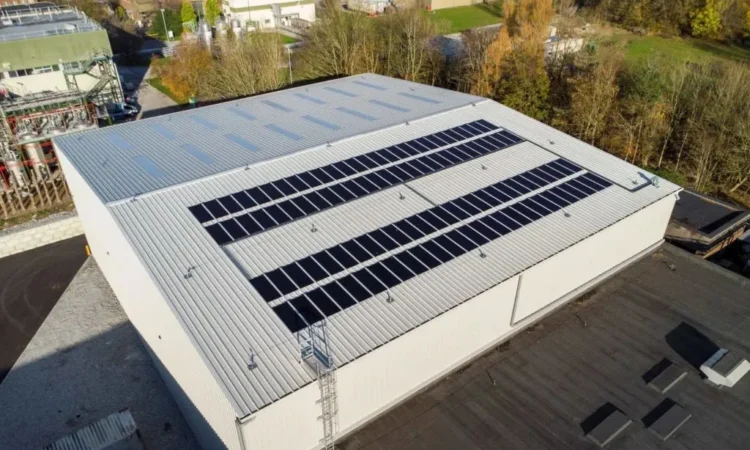
There’s also a huge amount of focus on renewables. We see non-domestic rooftops as a great opportunity. There are millions of square metres of roofs that can have photovoltaics (PV) applied to them – that can add significant value for building owners.
What are the biggest challenges facing the market?
Smith: The ongoing conflict in the Middle East just adds uncertainty, increases costs and delays projects.
One of the biggest challenges around data centres is power infrastructure. There’s going to be a lot of reliance on grid upgrades and how quickly they can happen. That could have an impact on data centre development.
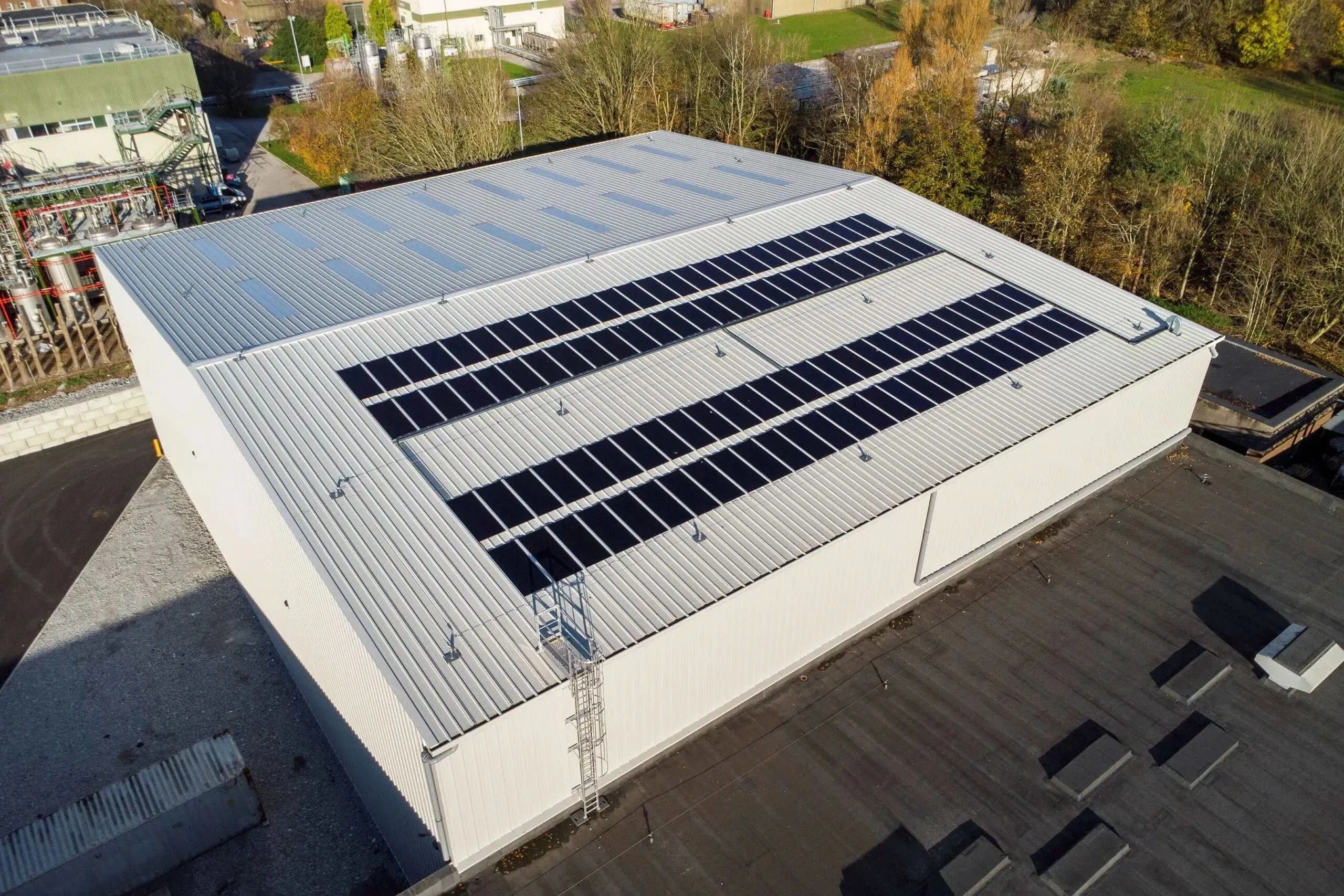 There’s also a limiting factor on the amount of PV. If someone wants to put a big PV scheme on a roof – more than one megawatt – that’s subject to review by the network providers.
One of the challenges with PV is there’s a significant skills gap. It’s difficult to see where the initiatives are to bring that level of skills into the industry to make sure that these arrays have been installed competently.
What strategies has Kingspan Insulated Panels employed to anticipate and meet the needs of this evolving market?
Smith: There’s a massive opportunity in refurb. We’ve teamed up with a company called Zestec Renewable Energy, part of Octopus Energy. Zestec provides a funding model for solar, generally funded by a power purchase agreement (PPA), so the client pays for the power it generates, but significantly less than the grid cost.
We’re working on a model where the PPA might be slightly higher than just for the PV, but it would cover a big percentage of the upgrade of the building fabric. So, the client would have improved building performance and see a saving against his current grid costs.
We talk a lot about solar. But what the industry is not so focused on is the insurers. We’ve seen lots of damage caused by badly fitted PV modules on roofs. Over the past two winters, there has been significant damage caused by PV modules blowing loose from
roofs. It’s one of the areas we’re heavily focusing on with the insurers, designers and developers, saying: “You need to consider the structural capability of your modules fixed to the roof.” That’s an area of education we are focusing on.
We also cover different roof options: typically, on data centres, the roofs tend to be flat or low-pitched – we had to create an extended offer because our offer in flat roofing was a bit limited, so we’ve been going through that testing process.
What do you see as the most important regulatory changes people need to be aware of?
Sands: There are three big areas we should be keeping an eye on. The first is fire performance. We’ve seen a lot of change in the regulatory environment over recent years. I think we’re still on that journey.
The second is energy performance. We’ve seen a strong policy direction towards rapid solar deployment to reach net zero by 2050. Solar PV plays a major part in that upcoming requirement. We’d argue that renewables aren’t the only answer. If we’re serious about achieving the UK’s carbon-reduction targets, we need to reduce energy demand through insulating building envelopes; then you can look at renewables as part of the wider strategy.
The third area is MEES. The conversation around EPC ‘B’ certainly hasn’t gone away.
What kind of solutions should people be looking at to make sure that property is future-ready and resilient?
Sands: My advice now would be to build or refurbish to the proposed 2031 standards. If you’re making an investment decision, it’s worth thinking about where requirements may be in five, 10 or even 15 years, and from an energy perspective, that starts with the building envelope.
In short, future-ready buildings are the ones you want to push in terms of energy performance, renewable generation, fire resilience and durability, instead of treating them as separate issues.
What do you predict is coming down the track?
Sands: I think we’ll see greater clarity around Part B and fire performance requirements. The industry has made significant progress around compliance, but there’s still a desire for clearer guidance and greater consistency in how the requirements are interpreted and applied.
I would also expect continued tightening of energy performance requirements. You’ve got future building standards requirements alongside the evolving MEES requirements, and that will continue to push new and existing commercial buildings towards higher levels of energy efficiency.
The other trend is climate resilience. Historically, we’ve focused heavily on energy and carbon. Now, we’re seeing more attention on extreme weather, wind, flooding and the durability of buildings. For me, sustainability isn’t just about reducing emissions; it’s about how we create buildings that can perform reliably for decades in a rapidly changing climate.
Finally, we can have the right regulations, the right products and the right building design, but we still need people with the right expertise to deliver them, and that’s the biggest challenge. Good outcomes depend on skilled installation and quality workmanship.
Aisling Sands is technical director, UK and Ireland, and Phil Smith is managing director, UK and Ireland, both at Kingspan Insulated Panels
About Kingspan Insulated Panels
 Kingspan Insulated Panels is the world’s largest and leading manufacturer of high-performance insulated panel systems. Offering a range of insulation cores from A-class mineral fibre to its flagship QuadCore technology, Kingspan Insulated Panels has a solution that suits all regulatory regimes while delivering a faster speed of construction. The firm’s insulated panel systems help to support excellent build quality and air tightness, underpinned by a guaranteed lifetime thermal performance.


