
Bangladesh doesn’t have the stability necessary for new investment, says Riad Mahmud
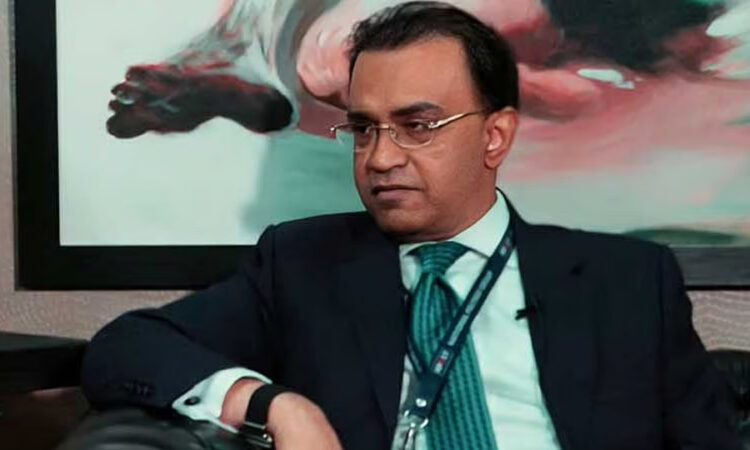
Entrepreneur and businessman Riad Mahmud says global uncertainty has raised concerns about the investment situation in Bangladesh.
He says that before the February general election, investors were expecting political stability in the country, but global economic headwinds have disrupted the economic stability necessary for new investment.
He also raised questions about the country’s banks, claiming they have “lost their capacity”.
Riad, the managing director and CEO of National Polymer Industries, spoke openly about the country’s business and trade situation on the bdnews24.com interview programme “Chinwag with the Chiefs”. He also spoke about the status of his company and the upcoming budget.
Following the political changeover on Aug 5, 2024, the interim government took office. However, due to concerns about the investment environment and a crisis of investor confidence, domestic and foreign investment registrations with the Bangladesh Investment Development Authority (BIDA) decreased by about 58 percent in the fiscal year 2024-25.
In April, the United Nations Conference on Trade and Development (UNCTAD) published “Report on the Implementation of the Investment Policy Review of Bangladesh”, which stated that the combined effects of a foreign exchange crisis, currency depreciation, delays in energy imports, supply chain shortages, and political and social uncertainty have created long-term instability in the country’s macroeconomic environment for a long time.
This instability is weakening the confidence of foreign investors, who are losing interest in new investments and are more cautious in their decision-making. This caution is directly impacting the flow of foreign direct investment (FDI).
Businessmen and investors had hoped the investment environment would improve if an elected government took power, but the situation has not changed significantly since the BNP government won the February elections.
“It depends on many variables,” said Riad. “If we consider the situation prior to February, whether it was domestic investors or foreign investors, they were waiting for stability, waiting for a stable political government that could act predictably.
“When the February elections were held, and the government started work in March, we all viewed that beginning with a very optimistic outlook. We thought about significant investments, we thought about expanding business.”
But those expectations did not materialise, the National Polymer CEO said.
“I can’t really blame the government either. Because a war started, the fuel supply decreased, which created problems with power. The price of diesel also increased,” he said.
“This has increased manufacturing costs and the cost of transporting goods. So, all in all, we are in a state of instability.”
Riad said, “Once the situation is stable, we will consider investing in new things, but that stability is not there now. That is why no entrepreneur is thinking about investing more at the moment.”
The businessman also pointed to the weakness of the banking system as the second major reason for the lack of investment.
He said, “Many banks have lost their capacity, for various reasons and due to their pursuit of the wrong policies. If there is no proper recovery in the sector, it will be difficult to make investments with equity. If we invest, where will we get the working capital?”
Regarding the situation at National Polymer Industries, Riad said: “We, the business community and entrepreneurs, especially entrepreneurs from Bangladesh, are always optimistic and positive.
“What I want to say about National Polymer is that if a business survives these circumstances, it is doing very well. In that case, we can say, we are surviving.”
National Polymer has been a familiar name in the country’s market for decades.
Riad said there is one word behind this success – “Quality, quality, quality”.
“When we first started, we maintained our quality. We had few customers at the time. Back then, the market was controlled by local, small machine-based, oligopolistic market-centric companies, which did not have any quality standards. They did not maintain BSTI standards, British standards, nor IS standards. But we did.”
Asked about the ongoing fuel and gas crisis, Riad said: “This is a great big problem.”
“Today, the production in our factories is still ongoing because we have captive power. But if I were completely dependent on the power grid, there would be load shedding several times a day. This would have increased the stress on those of us who depend on continuous production. Ours is not growing, but that is another matter. Overall, the manufacturing sector is definitely suffering.”
The managing director of National Polymer also spoke about the impact of decreasing consumer purchasing power on businesses.
Highlighting his expectations for the upcoming budget, Riad said manufacturing units are now under pressure and it would be better for business if the government did not increase duties on raw materials.
“I am not talking about reducing it. We also know that the government needs revenue. (But if duties are increased) the prices of our products will increase past the purchasing power of our buyers, our sales will fall, and our production capacity will remain idle.”
Riad welcomed Bangladesh Bank’s recent announcement of a Tk 600bn credit package to “revive the economy”, reopen factories, and create jobs nationwide.
However, he added: “We want to state unambiguously — We don’t need charity. We have the capacity, but at this time, those who are unable to properly utilise that capacity due to lack of working capital support should get support from this fund.
“If not, we will see that the operating companies will gradually close due to lack of working capital. And that day is not far away. So, if it is a budget issue, these matters should definitely be considered.”
In addition to his other roles, Riad is also the honorary consul of the European country of Georgia. Regarding the trade relations between Bangladesh and Georgia, he said: “Georgia’s diplomatic relations with Bangladesh are very friendly. Exports from Bangladesh to Georgia go through Turkey.
“We have another emerging industry—footwear. We are trying to popularise it in Georgia.”


