
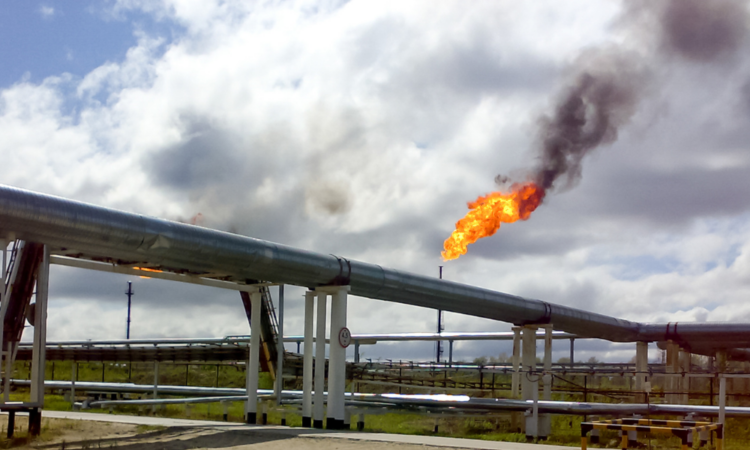
A growing number of climate experts and advocates are voicing opposition to a proposal to include oil and gas abatement projects in a forthcoming Canadian sustainable investment framework aimed at attracting billions in new capital to address the climate crisis.
The framework, to be known as the Canadian Sustainable Finance Taxonomy, will act as a kind of voluntary rule book for the financial industry. Its chief contribution will be to establish a consensus for activities that are considered acceptable investments under the Paris Agreement on climate change.
The project will provide guidance to investors to steer dollars toward investments that help mitigate global warming. The taxonomy’s architects and advocates hope it will attract at least some of the estimated $140 billion a year needed for Canada to reach its goal of a net-zero economy by 2050.
After five years of study, work on the taxonomy is finally underway. Operating with federal funding but independent from government, a planning council to lead the initiative was appointed earlier this year from representatives of the financial industry, universities and climate organizations. The Canadian Climate Institute is providing research and administrative support.
The shape of the debate
As the wars in Ukraine and Iran drive up fuel prices, demand is growing both for new sources of oil and gas and for non-fossil-fuel alternatives. The financial industry is looking for sustainable investment guidance on this energy crisis, setting the stage for a debate over the Canadian version of what are now about 50 sustainable finance taxonomies in use or under development around the world.
The debate boils down to whether there’s a place for oil and gas in the taxonomy. In April, about 30 climate organizations under the name Credible Taxonomy Canada called for the oil and gas sector to be excluded from the taxonomy to eliminate the possibility the industry could use it as cover to expand fossil-fuel production at a time when the scientific community is calling for it to be phased out.
In contrast, the taxonomy planning council has recently proposed that there should be an abatement category aimed at encouraging the oil and gas industry to reduce its carbon emissions. The category would define conditions under which the fossil-fuel industry could label investments in carbon reduction as a legitimate sustainable finance activity under the taxonomy.
The planning council laid out this proposal in a consultation paper issued last month. Ordinarily, carbon abatement in any industry is welcomed by climate advocates. But the fear is that the taxonomy will provide a seal of approval for minor emission reductions that enable the oil and gas industry to ramp up production, locking in long-term carbon emissions. “Creating an ‘abatement’ category risks legitimizing continued fossil‑fuel growth rather than aligning finance with science‑based pathways that actually reduce emissions,” states a submission to the consultation portal from the energy-sector-management research unit of the HEC business school at the University of Montreal. “Abatement measures risk becoming a greenwashing mechanism that legitimizes continued fossil fuel growth rather than supporting a credible, Paris-aligned taxonomy.”
Zero Waste Canada, a pollution-reduction non-profit, said in a submission that the proposed abatement category could give a false “sustainable-finance designation” to fossil-fuel emission-reduction investments. “These industries should be required to reduce emissions and pollution, but those obligations do not automatically constitute sustainable investment.”
A third wheel
According to the consultation paper, “green” investments would include net-zero activities such as renewable-energy generation and storage and electric vehicle manufacturing. The “transition” category would include investment in high-emitting activities to support a transition to net-zero, such as the electrification of steelmaking. “Abatement” activities are defined as significant near-term emission-reduction activities in high-emitting industries not aligned with the Paris Agreement, such as oil and gas. Capping methane emissions from leaking oil and gas wells is an example of an abatement investment.
The council has named six sectors for priority in establishing green and transition guidelines: electricity, buildings and transportation in 2026; and mining, manufacturing and agriculture/forestry in 2027. If approved, finalization of the abatement category wouldn’t happen until 2028.
Marlene Puffer, chair of the taxonomy planning council, says it’s not sufficient to focus only on green and transition activities. She says it’s also important to define abatement activities in industries expected to decline with the climate transition. Otherwise, the financial industry and the oil and gas sector could create their own definitions of acceptable abatement, challenging the relevance of the taxonomy. “There’s value in creating very clear definitions and distinctions between what fits into this taxonomy, into which category and under what conditions, and what doesn’t,” she says in an interview. “Leaving the abatement category out would leave a black hole in the Canadian marketplace.”
The success of the abatement category will depend on the strength of taxonomy “guardrails,” the yet-to-be-defined rules setting the conditions for investments in each category, says Jonathan Arnold, head of sustainable finance at the Canadian Climate Institute and chief researcher for the taxonomy council. “The real test for the abatement category is: Can you get emissions reductions in the short term without locking in emissions in the long term?”
Some of the potential guardrails cited in the report include allowing abatement on existing assets only, not new projects; limiting the abatement category to measures that don’t extend the life of fossil-fuel assets; stipulating that abatement projects achieve a significant reduction in emissions; and requiring that assets are decommissioned by a certain date.
Abatement without expansion
When asked whether the abatement category could be applied to the proposed Alberta oil sands carbon-capture project, Puffer, a seasoned pension industry executive, says: “It’s too early to speculate on the inclusion of any specific project. We need to do a lot more work related to the guardrails and criteria. But, really, clearly, the purpose of this category is not to support the expansion of oil and gas production in Canada. It’s to address and abate current emissions that are already in place.”
Despite these assurances, opposition to the abatement category is increasing on the consultation portal as the submission deadline of August 13 approaches.
“We need to move more capital into Paris-aligned investments,” writes one individual contributor to the consultation (submissions by individuals on the portal are anonymous). “This cannot include fossil fuel production which is the biggest source of greenhouse gas emissions in Canada and continues to grow every year.”
Some of the experts appointed to a technical group advising the planning council warn of a greenwashing risk in the abatement category. “It feels like this category has been created to appease the oil and gas lobby, to appease the financial sector that is heavily invested in the oil and gas industry,” says Kyra Bell-Pasht, a member of the technical advisory group. “The only way it would appease them is if they could use it to justify continued investment activities, which would require greenwashing.”
Will abated assets be decommissioned?
One of the problems with the abatement category guardrails is the absence of a guarantee that the guardrail conditions will be enforced after an abated investment is made. Bell-Pasht uses the example of a potential requirement to decommission oil and gas assets by a certain date, ensuring that they don’t continue to produce end-use emissions indefinitely after their well or terminal emissions are abated. With no mechanism to enforce the decommissioning, she says a company could simply ignore the wind-down date and continue operating the asset.
Puffer pushes back on this. Any company offering an abatement project or financial institution issuing an abatement investment — and then reneging on the guardrail conditions — would face serious reputational damage in the market, she says. Companies or financial institutions offering abatement investments under the taxonomy and then ignoring the guardrails “are not going to issue again for a very long time,” she says.
Aaron Cosbey, a member of the taxonomy planning council and chair of the technical advisory group, says abatement investments with stringent guardrails could help Canada to meet its climate goals of a net-zero economy by 2050. “They would foster compliance with Paris targets because they’re decreasing emissions, and not increasing the viability of [oil and gas] sectors, which should be phasing down along the road to Paris compliance,” says Cosbey, senior associate with the International Institute for Sustainable Development.
Eugene Ellmen writes on sustainable business and finance. He is a former executive director of the Canadian Social Investment Organization (now the Responsible Investment Association).
The Weekly Roundup
Get all our stories in one place, every Wednesday at noon EST.


