Five years into his real-estate investing journey, Hunter Foote grew disillusioned. Starting in 2010, he had flipped a few homes and purchased several multi-family units. The cash flow was solid, but the tenants made his life challenging.
“I have a long history of being frustrated and evicting tenants and dealing with some folks who weren’t at the best time of their lives,” he says.
He wanted to provide housing and help people, but evictions were not only costly, but disheartening. He wasn’t sure he could continue.
Cue Thanksgiving 2015. His sister-in-law works in the recovery space as a program manager in central Connecticut. In talking about her work, Foote says, “she was in tears about how folks who get out of treatment have nowhere to go.”
People get sober but haven’t yet made sober friends who can provide a couch to surf or room to rent. The person’s family typically wants them to have more time clean before they welcome them home or lend financial support. The end result is that many people find themselves sober but without housing options.
Foote was intrigued, and liked the idea of helping people while still investing in real estate.
“I’m a bit of a nerd and spent a year doing research,” he says. The problem was that, back then, there was no infrastructure to guide someone in starting a sober-living home.
“It was the Wild West with people calling it different names and everyone was doing different things,” he adds.
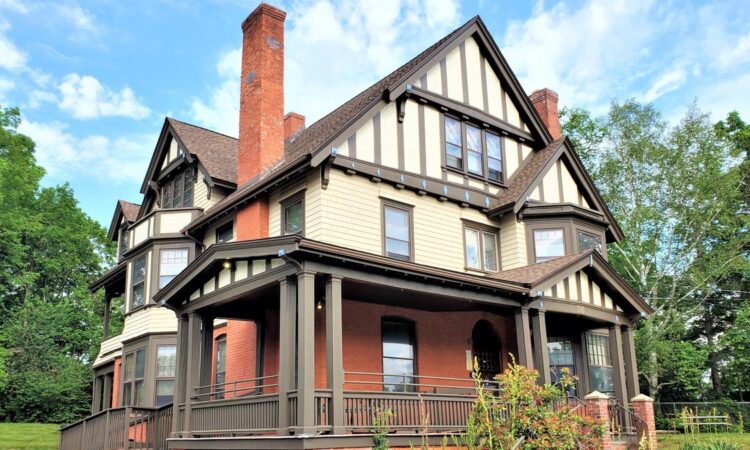
In 2016, he bought a seven-bedroom home for $360,000 in Worcester, MA. The home was zoned as a two-family unit with six bedrooms upstairs and a basement apartment that, combined, “didn’t fit the bill for a lot of investors.” It had been listed for $480,000 but had sat on the market for more than 200 days, which is how Foote picked it up at a discount.
He used hard money to buy the property at 12% interest with two points. He had 12 months to either pay off the loan or figure out financing–eventually refinancing out using a DSCR loan.
Getting the property fixed up and furnished was easy. Getting the beds filled, less so.
“Everyone says there is just demand everywhere,” he says. “But to get the right people, you really need to work hard.”
He had to network quickly, meeting with people from jail pre-release programs, drug courts and treatment centers.
“You have to get your name out there to get the right referrals. The key to success is getting the right people in there in the first place.”
It took six months to break even. At nine months, he was profitable.
Once the home was operating at capacity, it generated around $13,000 in monthly revenue. Operating expenses totaled roughly $4,000, leaving $9,000 in net operating income. After accounting for property taxes, insurance and the mortgage, the home netted approximately $5,000 a month.
Sober living isn’t just about “filling the beds.”
The average stay is between six and nine months. However, that doesn’t account for the folks who leave after “three weeks, three days or three hours.”
Sometimes men are dropped off and only committed to sober living so that jail or the recovery program would release them–the person never had any intention of staying clean and committing to a sober house.
“They stay until the car drives away, and then all they think about is that they are free,” Foote says.
Others “didn’t think the rules would apply” to them. Still others have drug paraphernalia in their bags that’s discovered during the check-in bag search.
“These guys try to tell me marijuana is legal in Massachusetts,” he says. “It is, but it’s not allowed in a sober living house.”
In the beginning, Foote was losing money every time someone committed and then dropped out.
He has learned he has to charge a $200 nonrefundable fee to cover the intake process, which includes a drug screening and bag search.
It’s just one of the systems he has learned in his 10 years of owning about 10 sober-living homes and managing many more. Foote bought homes primarily in New England, where he learned which towns have more lenient permitting. Worcester was “one of the toughest” cities to operate in because it required additional features in the home.
“They made us put in sprinklers and extra fire alarms that other cities weren’t requiring,” he says.
Foote’s homes are NARR Level II certified recovery residences, which means there is no paid staff on site. Each home houses only one gender, and the home has a house mentor who lives there for free in exchange for helping manage the day-to-day.
These days, Foote spends less time managing his own rentals, and more time helping others with theirs.
“We transitioned out of running homes so that we could launch some software offerings” to help others in the sober living space. They’re in the process of launching a software called Sober Desk that helps sober-living landlords manage their homes. For example, this software helps homeowners collect weekly rent, a common practice in the sober-living space.
“Logging the drug screens is also not something you can do in Buildium” for example.
He has also launched a management company, Vanderburgh Sober Living, to help run other people’s sober-living homes. His company also assists investors with finding the right property and launching.
When it comes to choosing a house, “the bigger, the better” but location dictates what works. For example, in Texas, “there are so many inexpensive four-bedroom homes” where “eight beds in four bedrooms” can work really well.
Regardless of where in the country the house is, Foote believes that there is a way to make sober living work both financially and for the community. It’s a model he strongly believes in.
“People would be surprised that they can make a difference in the community and still make money—you don’t have to pick between them.”