
Kansas Site Ranked No. 1 for Aerospace and Defense Investment | Manufacturing News Desk
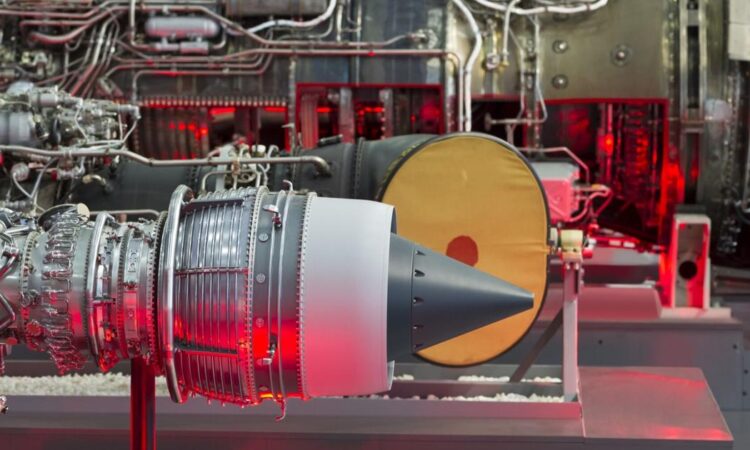


Wichita, Kan., is the top U.S. metro region for aerospace and defense, a Global Location Strategies report says.
Wichita, Kan., is the top spot for aerospace and defense (A&D) industry investment, but cities in Michigan and Indiana are also in contention.
That’s according to a recently released report from Global Location Strategies (GLS), a site selection advisory firm. The report identifies the most competitive areas for A&D industry investment out of 387 U.S. metro areas.
The report’s findings reveal a shift in the A&D industry, according to Didi Caldwell, founder and president of Global Location Strategies.
“For decades, aerospace and defense companies competed on technological superiority,” Caldwell said in a press statement. “Today, the competitive advantage is increasingly defined by industrial readiness. The regions that can build, hire and scale manufacturing quickly will attract the next generation of investment.”
GLS ranked cities on more than 120 criteria, including workforce availability, engineering talent, supplier availability, operating costs, business climate and infrastructure.
While longtime industrial manufacturing hubs dominate the list, markets with growing engineering talent and advanced manufacturing operations are seeing more opportunities, the report said.
Top 10 Locales
The Top 10 A&D metro areas, according to the report, are:
-
Wichita, Kan.
-
Ogden, Utah
-
Dayton, Ohio
-
Salt Lake City
-
Huntsville, Ala.
-
Palm Bay-Melbourne-Titusville, Fla.
-
Grand Rapids, Mich.
-
Phoenix
-
Dallas-Fort Worth
-
Indianapolis
GLS said Utah is among the fastest-growing aerospace manufacturing states, accounting for its two spots in the Top 10. North Carolina, Florida, Georgia, Alabama and Texas are dominant in the Southeast and Southwest. North Carolina saw a large boost in A&D manufacturing during 2021-2025. And 84 metropolitan areas saw aerospace and defense projects in the last five years, up from about 60 from 2016-2020.
Additional Findings
Other findings in the report:
-
The industry is shifting from an innovation-first model to one centered on production readiness, manufacturing scale and supply chain resilience. This will impact future investment locations, the report said.
-
Workforce and supplier constraints have replaced demand uncertainty as the industry’s primary growth barriers, making industrial capacity a key advantage.
-
Federal spending is increasingly concentrated in missiles, munitions, space systems, autonomous technologies and advanced electronics, creating new opportunities for capable regions.
-
U.S.-based companies account for approximately 70% of announced industry manufacturing projects. European firms represent more than half of all foreign direct investment.
-
Industry employment has grown about 11% since 2021, compared with roughly 4% for manufacturing overall.
-
Weekly job postings nearly doubled between January 2025 and May 2026.
-
76% of companies say critical engineering jobs are the hardest to fill. Skilled manufacturing roles face similar challenges.
-
About one-quarter of the industry’s workforce is age 55 or older, indicating numerous retirements could hit the industry within a decade.
-
Many critical defense programs rely on just one or two qualified suppliers for key components, creating supply chain bottlenecks.
-
Bottlenecks are constraining production in areas such as propulsion systems, castings, forgings, precision-machined parts, microelectronics, energetics and other specialized components.
The full report is available here.


