
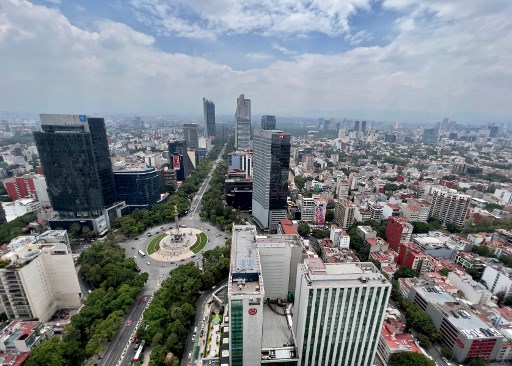
Mexico attracted a record 593.222 billion (bn) pesos (US$34.968bn) in Foreign Direct Investment (FDI) during the first half of 2026, an increase of 2.1% compared to the same period in 2025, the Ministry of Economy (SE) reported in a statement.
Growth was driven by the manufacturing industry, which attracted 228.718 million (mn) pesos (US$13.482bn), a 9.3% annual increase and 38.6% of the total flow. Financial and insurance services totaled 172.192mn pesos (US$10.150bn), with growth of 10.9%.
Of the total collected, 525.176mn pesos (US$30.957bn) corresponded to reinvested earnings, 88.5% of the flow. New investments amounted to just 46.246mn pesos (US$2.726bn), 7.8%, and intercompany accounts contributed 21.800mn pesos (US$1.285bn), 3.7%.
Despite the record for the half-year, the second quarter of 2026 recorded an annual drop of 3.5%, falling from 184.033mn pesos (US$10.848bn) in the same period of 2025 to 177.519mn pesos (US$10.464bn). The SE attributed the decline to the “atypical growth” observed a year earlier.
The breakdown of the figure raised red flags for Gabriela Siller, director of economic analysis at Banco Base, who pointed out on the social network X that “in the second quarter it decreased, quarter-on-quarter and year-on-year” and questioned the composition of the inflow captured.
Siller warned that “the reinvestment of profits continues to be the largest share. Although it is positive that foreign companies leave their money in Mexico, it does not imply that they invest it in machinery, equipment or construction. Therefore, FDI does not necessarily turn into fixed investment.”
The analyst highlighted that between 2023 and 2026 new investment represented on average 6.82% of the total in first halves, compared to 26.69% between 2018 and 2022. In addition, in the first half of 2026, new investments fell 13.10% year-on-year compared to preliminary figures for 2025.
Regarding the subsector that most boosted manufacturing —computer equipment, communication and electronic components, with an increase of 19.925 billion pesos (US$1.174,5 billion)—, Siller pointed out that it “leads investment in manufacturing, but it still represents a low share of the total and its growth remains well below the growth of exports in that sector”.
The specialist also identified a divestment of 3.325bn pesos (US$196mn) in computer equipment manufacturing during the second quarter, and warned that exports from that sector, although they have been boosting the country’s external sales since 2025, “have low added value.”
The United States remained the main source of FDI, with 286.211mn pesos (US$16.871bn), 48.2% of the total, followed by Spain with 84.043mn pesos (US$4.954bn). Mexico City captured 286.059mn pesos (US$16.862bn), and Nuevo León, 62.973mn pesos (US$3.712bn).
For investors evaluating the Mexican market, the contrast between the official headline and Siller’s reading raises a central question: the FDI record reflects macroeconomic strength, but the sustained drop in new investment suggests business caution in the face of the uncertainty surrounding the country.
(The original version of this content was written in Spanish)
—


