
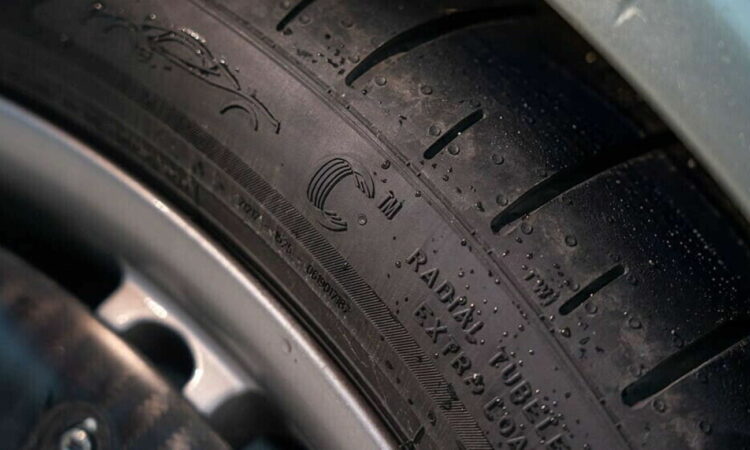
Following Pirelli’s announcement in May that it would begin producing its Cyber Tyres in Georgia, reports claim that a multi-year investment plan worth between $1 billion and $1.2bn will be submitted to the company’s new board for approval at an upcoming meeting.
In May 2026, Pirelli announced that its US plant in Rome, Georgia would begin to produce connected tyres featuring the brand’s Cyber Tyre technology. It described the move as reinforcing the company’s long-term commitment to the US, highlighting the strategic importance of the country to Pirelli’s global growth roadmap.
“The start of Cyber Tyre production in our Rome, Georgia plant is a significant milestone for Pirelli in this country,” said Claudio Zanardo, CEO of Pirelli North America. “It reflects our commitment to bringing advanced technologies like Cyber Tyre closer to the market, further strengthening our industrial footprint and innovation capabilities in the United States.”
Pirelli said this move has laid the groundwork for growth in production capacity at the Rome site and will further strengthen Pirelli’s presence in the US – which it claimed is one of its most important and strategic markets.
Now, according to reports, the newly elected board of Pirelli has been informed of a multi-year investment plan for the US totalling $1bn to $1.2bn. The plan is expected to be officially submitted to the board for approval at an upcoming meeting.
Concern over Chinese ownership impacting US growth
Pirelli’s shareholders recently appointed a new board after the Italian government intervened to limit the influence of Sinochem – a Chinese state-owned conglomerate that owns 34.1% of Pirelli.
Italy’s prime minister Georgia Meloni imposed a series of limitations through the country’s Golden Power rules, concerned that the Chinese investor’s stake in Pirelli could pose a risk to the tyremaker’s growth ambitions in the US.
While the government ruled that Sinochem was entitled to submit a list of candidates for Pirelli’s board renewal in June, it restricted the total number of board members from Sinochem to three, two of whom must be independant. When the board renewal took place, Sinochem was able to secure the election of three representatives to Pirelli’s board – which is comprised of 15 members.
Pirelli has confirmed that, as per the government’s ruling, Sinochem board members are not permitted to hold the highest corporate offices such as chairman or chief executive. The Italian government also stated that Sinochem must not exerting any influence over the group, and Pirelli has made clear that it is under no obligation to share sensitive information with its Chinese investor.
The Italian government’s intervention in Pirelli’s ownership structure reflects broader concerns over Chinese ties amongst companies seeking to expand in the US, as the Trump Administration continues to pursue tariffs and trade policies aimed at reducing Chinese economic influence and addressing national security risks.


